
Introduction
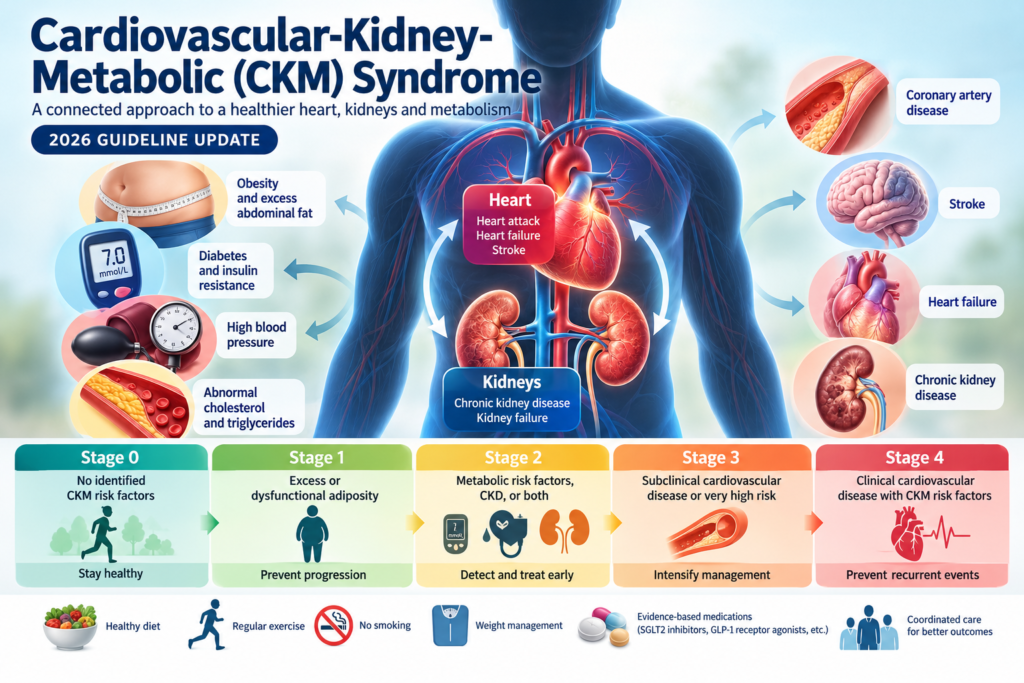
Cardiovascular-kidney-metabolic (CKM) syndrome is a health condition that describes the close relationship between heart disease, chronic kidney disease (CKD), obesity, high blood pressure, abnormal cholesterol levels, and diabetes.
These conditions frequently occur together and can worsen one another. For example, obesity and insulin resistance can contribute to type 2 diabetes and hypertension. Over time, these conditions may damage the kidneys and blood vessels, increasing the risk of heart attack, stroke, and heart failure.
The important message is that cardiovascular, kidney, and metabolic diseases should not be managed as completely separate problems. They are interconnected and often require a coordinated approach to prevention, screening, and treatment.
The 2026 American Heart Association (AHA), American College of Cardiology (ACC), American Diabetes Association (ADA), and American Society of Nephrology (ASN) guideline provides an updated framework for identifying CKM risk early, assessing cardiovascular risk, and selecting appropriate preventive and therapeutic strategies.
Early recognition and comprehensive treatment can reduce complications, preserve kidney function, and improve long-term health.
What Is Cardiovascular-Kidney-Metabolic Syndrome?
CKM syndrome refers to the interconnected effects of metabolic risk factors, kidney disease, and cardiovascular disease.
The major components include:
- Metabolic conditions: Obesity, abdominal obesity, insulin resistance, prediabetes, type 2 diabetes, and high triglyceride levels.
- Kidney disease: Reduced kidney function or increased urinary albumin, which may indicate early kidney damage.
- Cardiovascular conditions: Coronary artery disease, heart failure, stroke, peripheral artery disease, and other cardiovascular disorders.
These conditions share several underlying mechanisms, including insulin resistance, chronic inflammation, endothelial dysfunction, abnormal lipid metabolism, increased blood pressure, and activation of pathways that promote fluid retention and vascular damage.
For example, diabetes can damage the small blood vessels in the kidneys, while CKD increases cardiovascular risk through hypertension, inflammation, altered mineral metabolism, and other mechanisms. Heart failure can also impair kidney function by reducing effective circulation and increasing venous congestion.
Recognizing these connections helps clinicians treat the patient’s overall risk rather than focusing on only one organ.
What Causes CKM Syndrome?
CKM syndrome develops through a combination of genetic susceptibility, lifestyle factors, aging, and underlying medical conditions.
1. Excess body fat and abdominal obesity
Excess visceral fat around the abdominal organs is metabolically active. It can contribute to insulin resistance, inflammation, abnormal cholesterol levels, and high blood pressure.
Abdominal obesity is an important early warning sign, even when a person’s body weight does not appear markedly elevated.
2. Insulin resistance and diabetes
Insulin resistance occurs when the body’s cells respond less effectively to insulin. The pancreas initially compensates by producing more insulin, but blood glucose may eventually rise.
Prediabetes and type 2 diabetes increase the risk of cardiovascular disease and diabetic kidney disease.
3. High blood pressure
Hypertension damages blood vessels and places additional strain on the heart and kidneys. It is both a component and a major driver of CKM syndrome.
4. Abnormal cholesterol and triglycerides
High LDL cholesterol promotes atherosclerotic plaque formation. Elevated triglycerides, often associated with insulin resistance, may occur alongside low HDL cholesterol and other metabolic abnormalities.
5. Chronic kidney disease
CKD is associated with a higher risk of cardiovascular events, heart failure, and premature death. Kidney dysfunction can also complicate medication selection and the management of blood pressure, glucose, and fluid balance.
6. Lifestyle and other contributing factors
Important contributors include:
- A diet high in sodium, refined carbohydrates, and highly processed foods.
- Physical inactivity.
- Smoking and tobacco exposure.
- Excessive alcohol consumption.
- Poor sleep and obstructive sleep apnea.
- Family history of diabetes, kidney disease, or cardiovascular disease.
- Increasing age and certain social or environmental factors that limit access to preventive healthcare.
Not every person with CKM syndrome has all these risk factors. Some individuals develop CKD or cardiovascular disease because of genetic, inflammatory, structural, or other nonmetabolic conditions.
The Five Stages of CKM Health: Stage 0 to Stage 4
The 2026 guideline describes CKM syndrome using five stages, from stage 0 to stage 4. Staging helps healthcare professionals identify the severity of risk and determine the appropriate intensity of prevention and treatment.
Stage 0: No identified CKM risk factors
At this stage, the individual has no identified excess or dysfunctional adiposity, major metabolic risk factors, CKD, or cardiovascular disease.
Management goals:
- Maintain a healthy body weight and waist circumference.
- Eat a balanced diet.
- Exercise regularly.
- Avoid tobacco.
- Monitor blood pressure and other health indicators according to age and clinical risk.
The priority is preventing the development of CKM risk factors.
Stage 1: Excess or dysfunctional adiposity
This stage includes excess body fat, abdominal obesity, or prediabetes in the absence of the additional conditions that define stage 2 or higher.
Examples include:
- Overweight or obesity.
- Increased waist circumference.
- Fasting blood glucose of 100–125 mg/dL.
- HbA1c of 5.7–6.4%.
For adults of Asian ancestry, lower BMI thresholds may identify increased risk. The 2026 staging criteria include a BMI of at least 23 kg/m² or Asian-specific waist circumference thresholds of at least 80 cm in women and 90 cm in men.
Management goals:
- Achieve sustainable weight reduction when appropriate.
- Improve dietary quality and physical activity.
- Assess glucose, lipids, kidney function, and blood pressure at intervals appropriate to risk.
- Prevent progression to diabetes, hypertension, and CKD.
Stage 2: Metabolic risk factors, CKD, or both
This stage includes people with one or more important metabolic risk factors, moderate- to high-risk CKD, or both.
Examples include:
- Hypertension.
- Type 2 diabetes.
- High triglycerides.
- Metabolic syndrome.
- CKD with increased cardiovascular or kidney risk.
Management goals:
- Control blood pressure.
- Improve glucose management.
- Reduce LDL cholesterol according to cardiovascular risk.
- Assess both eGFR and urine albumin-to-creatinine ratio (UACR).
- Use kidney- and cardiovascular-protective medications when indicated.
- Provide structured lifestyle and weight-management support.
Stage 3: Subclinical cardiovascular disease or very high predicted risk
At this stage, a person may have evidence of cardiovascular damage before developing obvious symptoms. Examples include subclinical coronary atherosclerosis or pre-heart failure.
Some people also meet stage 3 criteria because they have very high-risk CKD or a high predicted 10-year cardiovascular disease risk, including a PREVENT-CVD estimate of at least 20%.
Management goals:
- Intensify management of cardiovascular risk factors.
- Consider further testing when clinically indicated.
- Evaluate for heart failure or coronary disease when appropriate.
- Optimize lipid-lowering, blood pressure, diabetes, and kidney-protective treatment.
- Arrange coordinated care for patients with multiple organ systems involved.
Stage 4: Clinical cardiovascular disease with CKM risk factors
Stage 4 includes people with established cardiovascular disease and overlapping CKM risk factors.
Examples include:
- Coronary artery disease or previous myocardial infarction.
- Heart failure.
- Stroke.
- Peripheral artery disease.
- Atrial fibrillation.
Management goals:
- Prevent recurrent cardiovascular events.
- Optimize treatment of the underlying cardiovascular condition.
- Protect kidney function and control metabolic risk factors.
- Review medication safety and interactions.
- Coordinate care among primary care physicians, cardiologists, endocrinologists, and nephrologists as appropriate.
CKM stages are not necessarily permanent. With effective treatment, some risk factors and markers of disease can improve, although established organ damage may not be fully reversible.
How Is CKM Syndrome Diagnosed?
CKM syndrome is assessed by evaluating metabolic health, kidney function, cardiovascular status, and overall cardiovascular risk.
There is no single blood test that diagnoses every aspect of the syndrome.
1. Medical history and physical examination
The assessment may include:
- Personal and family history of cardiovascular disease, diabetes, and CKD.
- Blood pressure measurement.
- Weight, height, BMI, and waist circumference.
- Smoking status, physical activity, dietary habits, and sleep history.
- Symptoms such as chest pain, shortness of breath, leg swelling, or reduced exercise tolerance.
2. Blood tests
Common tests include:
- Fasting glucose and HbA1c: To identify diabetes or prediabetes.
- Lipid profile: Including LDL cholesterol, HDL cholesterol, total cholesterol, and triglycerides.
- Serum creatinine and eGFR: To assess kidney filtration.
- Electrolytes: Particularly when CKD, hypertension, or relevant medications are present.
Additional tests, such as liver enzymes, may be appropriate when metabolic dysfunction-associated steatotic liver disease is suspected.
3. Urine albumin-to-creatinine ratio
UACR measures albumin in the urine relative to creatinine. Increased urinary albumin can indicate kidney damage even when eGFR is relatively preserved.
For people with stage 2 or higher CKM syndrome, the 2026 guideline recommends assessing both eGFR and UACR at least annually. Testing may need to be more frequent in advanced CKD or when treatment is being adjusted.
CKD is generally defined by abnormalities of kidney structure or function that persist for at least three months. An abnormal result should be interpreted in context and, when appropriate, confirmed with repeat testing.
4. Cardiovascular risk assessment
The 2026 guideline emphasizes the use of the AHA PREVENT equations to estimate cardiovascular risk and help guide preventive treatment.
Depending on the clinical situation, further assessment may include:
- Coronary artery calcium scoring for selected individuals when treatment decisions remain uncertain.
- ECG or echocardiography when cardiovascular disease or heart failure is suspected.
- BNP or NT-proBNP and other cardiac biomarkers in selected patients at increased heart failure risk.
- Additional cardiac investigations based on symptoms and examination findings.
Not every person with CKM syndrome needs advanced cardiac imaging. Testing should be selected according to symptoms, estimated risk, and whether the result is likely to change management.
Treatment of CKM Syndrome: Evidence-Based Management in 2026
The goal is to reduce cardiovascular events, prevent or slow CKD progression, improve metabolic health, and preserve quality of life.
Treatment should be individualized according to the patient’s CKM stage, cardiovascular risk, kidney function, comorbidities, treatment preferences, and access to care.
1. Lifestyle modification
Lifestyle measures are important at every stage.
Healthy eating
Emphasize:
- Vegetables and fruits in appropriate portions.
- Whole grains and high-fiber foods.
- Beans, legumes, nuts, and other minimally processed foods.
- Fish and other suitable lean protein sources.
- Unsaturated fats in place of saturated and trans fats.
Limit excessive sodium, sugary drinks, refined carbohydrates, processed meats, and highly processed foods.
People with CKD may require individualized advice regarding sodium, potassium, phosphorus, protein, and fluid intake, depending on kidney function, laboratory results, and treatment.
Physical activity
Most adults should aim for at least 150 minutes per week of moderate-intensity aerobic activity, adjusted for their functional capacity and medical condition. Muscle-strengthening activity is also beneficial when safe.
People with established cardiovascular disease or significant exercise symptoms should seek appropriate medical assessment before starting strenuous exercise.
Weight management
For individuals with overweight or obesity, sustained weight reduction can improve blood pressure, glucose control, triglycerides, sleep apnea, and other CKM risk factors.
A structured approach may combine dietary changes, behavioral support, physical activity, and medication or bariatric surgery when clinically appropriate.
Smoking cessation and sleep
Stopping tobacco use reduces cardiovascular risk. Adequate sleep and assessment for obstructive sleep apnea are also important when clinically indicated.
2. Blood pressure management
Blood pressure targets should be individualized according to cardiovascular risk, CKD, diabetes, age, frailty, treatment tolerance, and measurement method.
For many adults with hypertension and elevated cardiovascular risk, clinicians may aim for a systolic blood pressure below 130 mmHg when safely tolerated. Some patients require a different target.
Important treatment principles include:
- Accurate blood pressure measurement.
- Home blood pressure monitoring when feasible.
- Reducing excess sodium intake.
- Reviewing adherence and medicines that may raise blood pressure.
- Using appropriate antihypertensive therapy.
ACE inhibitors or ARBs are particularly important in many patients with hypertension and albuminuric CKD. Potassium and kidney function should be monitored after initiation or dose escalation.
3. Cholesterol management
LDL cholesterol reduction is a key component of cardiovascular prevention.
Statins are commonly first-line therapy for patients who meet treatment criteria. The intensity and LDL-C goal depend on established cardiovascular disease, baseline LDL-C, CKD, diabetes, and overall risk.
When needed, additional therapies may include ezetimibe, PCSK9-targeted treatments, or other evidence-based lipid-lowering agents.
The 2026 dyslipidemia guideline and the CKM guideline support a risk-based approach, including PREVENT assessment in appropriate primary-prevention patients. LDL-C goals should follow the applicable guideline and the patient’s risk category.
4. Diabetes and glucose management
For people with diabetes, treatment should address both glycemic control and the prevention of cardiovascular and kidney complications.
HbA1c targets are individualized. A target around 7% is appropriate for many nonpregnant adults, but less stringent or more stringent goals may be appropriate depending on hypoglycemia risk, comorbidities, life expectancy, and patient preferences.
Medication selection should consider cardiovascular and kidney benefits, not just glucose reduction.
SGLT2 inhibitors
Sodium-glucose cotransporter-2 inhibitors can reduce the risk of heart failure hospitalization and slow CKD progression in appropriately selected patients. Some are indicated for heart failure or CKD even in people without diabetes.
Eligibility depends on the drug, eGFR, clinical indication, contraindications, and local prescribing guidance.
GLP-1 receptor agonists
Selected GLP-1 receptor agonists can support weight reduction and improve glycemic control. Some have demonstrated cardiovascular benefits, and particular agents have evidence for kidney-related benefits in appropriate populations.
They may be useful for selected patients with type 2 diabetes, obesity, or established cardiovascular disease, according to their indications and individual circumstances.
Other glucose-lowering medicines
Metformin and other glucose-lowering therapies may be appropriate depending on kidney function, glycemic requirements, adverse-effect risks, and comorbidities.
Medication choices should be reviewed as CKD progresses because dosing, safety, and hypoglycemia risk can change.
5. Kidney protection
Kidney-protective care aims to reduce albuminuria, slow eGFR decline, and lower cardiovascular risk.
Depending on the patient, treatment may include:
- An ACE inhibitor or ARB for appropriate patients, particularly those with albuminuric CKD.
- An SGLT2 inhibitor when indicated.
- Finerenone, a nonsteroidal mineralocorticoid receptor antagonist, for selected patients with type 2 diabetes and CKD who meet eligibility criteria.
- A GLP-1 receptor agonist when appropriate.
- Blood pressure and glucose management.
- Avoidance of unnecessary nephrotoxic medicines and appropriate adjustment of drug doses.
Finerenone can increase potassium levels, so serum potassium and kidney function require monitoring. ACE inhibitors, ARBs, SGLT2 inhibitors, and other therapies also have specific monitoring requirements.
Not every patient needs every medication. Treatment should be based on clinical indications, contraindications, kidney function, potassium level, and affordability.
6. Heart failure prevention and treatment
Heart failure may develop in patients with obesity, diabetes, hypertension, CKD, or coronary artery disease.
Prevention includes controlling blood pressure, managing diabetes and obesity, treating dyslipidemia, and using therapies with proven heart failure benefits when indicated.
Patients with established heart failure require treatment based on heart failure phenotype, ejection fraction, kidney function, blood pressure, and other clinical factors. SGLT2 inhibitors have an important role in many patients with heart failure, including selected patients without diabetes.
New or worsening breathlessness, leg swelling, rapid unexplained weight gain, or difficulty lying flat should prompt medical evaluation.
7. Coordinated, patient-centered care
Because CKM syndrome involves multiple interacting conditions, coordinated care can improve treatment consistency and safety.
Depending on the patient’s needs, the healthcare team may include:
- Primary care or internal medicine physicians.
- Cardiologists.
- Endocrinologists.
- Nephrologists.
- Dietitians, nurses, pharmacists, and other allied healthcare professionals.
Care should include medication reconciliation, monitoring plans, patient education, and shared decision-making.
How Often Should CKM Risk Factors Be Checked?
The 2026 guideline provides a stage-based approach to routine assessment.
- All adults: Measure blood pressure at least annually and assess BMI and waist circumference at least annually when at risk for CKM syndrome.
- Stage 0: Assess lipids, glucose, and kidney function at least every five years, with more frequent testing when age, risk factors, or clinical circumstances warrant.
- Stage 1: Assess lipids, glucose, and eGFR at least every two to three years.
- Stage 2 and above: Assess blood pressure, lipids, and glycemic status at least annually, as appropriate, and check both eGFR and UACR at least annually.
These are guideline-based minimum intervals for the relevant groups, not substitutes for clinical judgment. Abnormal results, medication changes, advanced CKD, or poorly controlled risk factors may require more frequent monitoring.
Warning Signs That Need Urgent Medical Attention
CKM syndrome can progress silently. However, certain symptoms may indicate a cardiovascular emergency.
Seek emergency medical care for:
- Chest pressure or pain, especially with sweating, nausea, or shortness of breath.
- Sudden weakness or numbness on one side, facial drooping, or difficulty speaking.
- Severe or sudden shortness of breath.
- Fainting with chest pain or severe breathlessness.
- Severe breathlessness at rest or other signs of acute heart failure.
Persistent leg swelling, unexplained reduction in urine output, worsening exercise tolerance, or persistently high blood pressure also require prompt medical assessment.
Can CKM Syndrome Be Prevented?
Many CKM risk factors are modifiable. Prevention should begin before diabetes, CKD, or cardiovascular disease develops.
Practical steps include:
- Maintain a healthy weight and waist circumference.
- Follow a balanced, minimally processed diet.
- Exercise regularly within safe limits.
- Monitor blood pressure, glucose, cholesterol, and kidney function according to risk.
- Stop smoking and avoid tobacco.
- Take prescribed medicines consistently.
- Attend regular follow-up appointments.
- Address sleep problems and other contributing medical conditions.
Early treatment can prevent some complications and slow progression. Even when a person already has CKD or cardiovascular disease, effective risk-factor management can reduce the chance of further events.
Conclusion
Cardiovascular-kidney-metabolic syndrome highlights the important relationship between heart health, kidney function, obesity, diabetes, and other metabolic risk factors.
The 2026 AHA/ACC/ADA/ASN guideline promotes earlier detection, CKM staging, individualized cardiovascular risk assessment, and coordinated treatment. Routine measurement of blood pressure, body composition, glucose, lipids, eGFR, and urine albumin can help identify people who need earlier intervention.
Lifestyle modification remains essential, while appropriate use of blood pressure medicines, lipid-lowering therapy, SGLT2 inhibitors, GLP-1 receptor agonists, and other protective treatments can improve outcomes in selected patients.
The key message is simple: protecting the heart, kidneys, and metabolic health together is more effective than treating each condition in isolation.
Frequently Asked Questions (FAQ)
1. What does CKM syndrome stand for?
CKM stands for cardiovascular-kidney-metabolic syndrome. It describes the interconnected effects of cardiovascular disease, kidney disease, obesity, diabetes, and related metabolic risk factors.
2. Is CKM syndrome a new disease?
CKM syndrome is a newer clinical framework for understanding established diseases that frequently occur together. It helps healthcare professionals assess combined risk and coordinate prevention and treatment.
3. What are the stages of CKM syndrome?
There are five stages, numbered 0 through 4. Stage 0 indicates no identified CKM risk factors, while stages 1 and 2 reflect increasing adiposity and metabolic or kidney abnormalities. Stage 3 includes subclinical cardiovascular disease or very high predicted risk, and stage 4 includes clinical cardiovascular disease with overlapping CKM risk factors.
4. Can CKM syndrome cause a heart attack?
Yes. The combination of diabetes, hypertension, abnormal cholesterol, obesity, and CKD can increase the risk of coronary artery disease and heart attack. The degree of risk varies between individuals.
5. Can CKM syndrome cause kidney failure?
CKM syndrome can contribute to progressive CKD and, in some patients, kidney failure. Early diagnosis, blood pressure control, appropriate diabetes treatment, kidney-protective medication, and regular monitoring can help reduce this risk.
6. Which tests are most important for detecting CKM syndrome?
Important assessments include blood pressure, BMI and waist circumference, fasting glucose or HbA1c, lipid profile, serum creatinine with eGFR, and urine albumin-to-creatinine ratio. Additional tests depend on symptoms and cardiovascular risk.
7. Why are both eGFR and UACR needed?
eGFR estimates how well the kidneys filter blood, while UACR detects excess albumin in urine. Either may be abnormal when kidney disease is present. Together, they provide more complete information about kidney and cardiovascular risk.
8. What is the role of SGLT2 inhibitors in CKM syndrome?
SGLT2 inhibitors can lower the risk of heart failure hospitalization and slow CKD progression in appropriately selected patients. Their benefits may extend beyond glucose lowering, including to some people without diabetes. The appropriate medicine and starting criteria depend on kidney function, indication, and individual clinical factors.
9. Do GLP-1 receptor agonists help people with CKM syndrome?
Selected GLP-1 receptor agonists can improve glucose control and support weight reduction. Some also reduce cardiovascular events, and certain agents have demonstrated kidney-related benefits in appropriate patients. They are not necessary or suitable for everyone.
10. Can CKM syndrome be reversed?
Some risk factors and early abnormalities can improve substantially with weight loss, lifestyle changes, and appropriate medication. However, established heart disease or chronic kidney damage may not be completely reversible. Treatment can still reduce complications and slow further progression.
11. How often should kidney function be checked in CKM syndrome?
For people with stage 2 or higher CKM syndrome, eGFR and UACR should generally be assessed at least annually. More frequent testing may be needed in advanced CKD, after medication changes, or when kidney function or potassium levels are unstable.
12. Which doctor should manage CKM syndrome?
An internal medicine or primary care physician can coordinate initial assessment and treatment. A cardiologist, nephrologist, endocrinologist, or other specialist may be involved depending on the person’s cardiovascular disease, kidney function, diabetes, and overall risk.
Medical Disclaimer
This article is intended for educational purposes and does not replace an individualized medical consultation, diagnosis, or treatment plan. Screening intervals, blood pressure targets, medication selection, and treatment goals should be tailored to the patient’s clinical condition and current guidelines. Do not start or stop prescribed medicines without consulting a qualified healthcare professional.
References and Further Reading
The following sources support the article’s clinical recommendations and are suitable for publication on your website.
1. American Heart Association, American College of Cardiology, American Diabetes Association, and American Society of Nephrology. 2026 Guideline for the Prevention, Detection, Evaluation, and Management of Cardiovascular-Kidney-Metabolic Syndrome. Journal of the American College of Cardiology. 2026. Read the full guideline.
2. Ndumele CE, Rangaswami J, Chow SL, et al. Cardiovascular-Kidney-Metabolic Health: A Presidential Advisory From the American Heart Association. Circulation. 2023;148:1606–1635. Read the publication.
3. Kidney Disease: Improving Global Outcomes (KDIGO) CKD Work Group. KDIGO 2024 Clinical Practice Guideline for the Evaluation and Management of Chronic Kidney Disease. Kidney International. 2024;105(4S):S117–S314. Read the guideline.
4. American Diabetes Association Professional Practice Committee. Standards of Care in Diabetes—2026. Access the ADA Standards of Care.
5. American Heart Association. A Guide to Cardiovascular-Kidney-Metabolic Health. Read the patient education resource.
6. American Heart Association and American College of Cardiology. Use of Predicted Risk and Expected Benefit to Guide Decision-Making in Cardiovascular-Kidney-Metabolic Syndrome for the Primary Prevention of Cardiovascular Disease: A Scientific Statement. 2026. Read the publication.