
Introduction
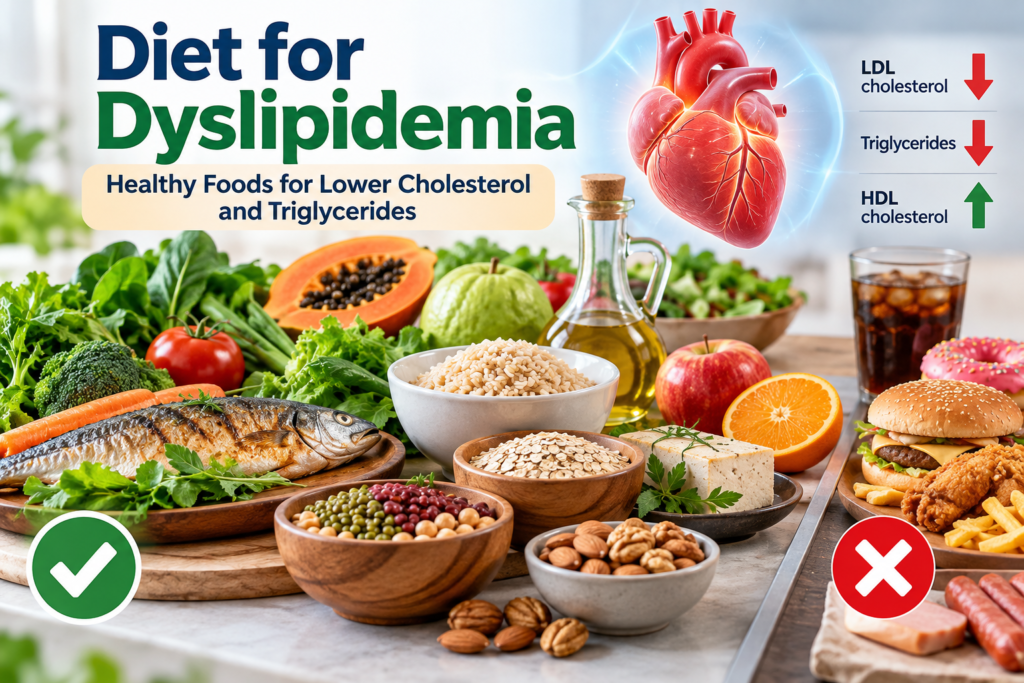
Dyslipidemia is a condition characterized by abnormal levels of blood lipids, including low-density lipoprotein cholesterol (LDL-C), triglycerides (TG), and high-density lipoprotein cholesterol (HDL-C). It is an important risk factor for atherosclerotic cardiovascular disease (ASCVD), including coronary artery disease, heart attack, and ischemic stroke.
Diet plays a major role in managing dyslipidemia. Choosing healthier fats, increasing dietary fiber, limiting added sugar, maintaining a healthy body weight, and reducing alcohol intake can improve lipid profiles and lower cardiovascular risk.
For people living in Cambodia and other Southeast Asian countries, a heart-healthy diet does not require abandoning traditional foods such as rice, fish, vegetables, soups, or fruit. The key is to adjust portion sizes, cooking methods, ingredients, and food choices.
This article explains the best foods for dyslipidemia, foods to limit or avoid, practical meal-planning strategies, and when medication may also be necessary.
1. Understanding Dyslipidemia
Dyslipidemia includes one or more of the following abnormalities:
- High LDL cholesterol: Promotes cholesterol accumulation in artery walls and increases cardiovascular risk.
- High triglycerides: Often associated with excess refined carbohydrates, obesity, insulin resistance, diabetes, and alcohol intake.
- Low HDL cholesterol: Frequently associated with metabolic syndrome, physical inactivity, smoking, and insulin resistance.
- Elevated non-HDL cholesterol or apolipoprotein B (ApoB): May indicate an increased burden of atherogenic lipoprotein particles.
The dietary approach should depend on the specific lipid abnormality and the patient’s overall cardiovascular risk.
For example, reducing saturated fat is particularly important for elevated LDL-C, while reducing added sugars, refined starches, and alcohol can be especially helpful for elevated triglycerides.
2. The Best Dietary Pattern for Dyslipidemia
Contemporary cardiovascular prevention guidance supports a dietary pattern emphasizing minimally processed plant foods, healthy unsaturated fats, whole grains, legumes, nuts, fish, and other lean protein sources.
Two well-studied approaches are the Mediterranean diet and the DASH (Dietary Approaches to Stop Hypertension) diet. Both emphasize vegetables, fruits, whole grains, legumes, nuts, and healthier fats while limiting foods high in saturated fat and added sugar.
A practical Cambodian-style heart-healthy diet can follow the same principles.
Key dietary principles
- Replace saturated fats with unsaturated fats.
- Increase soluble fiber from oats, beans, vegetables, and fruit.
- Choose whole or minimally processed carbohydrate sources.
- Eat fish and other lean protein sources regularly.
- Limit sugary drinks, sweets, and highly refined foods.
- Reduce sodium, particularly when hypertension is also present.
- Maintain a healthy body weight and regular physical activity.
3. Foods That Help Lower LDL Cholesterol
A. Foods rich in soluble fiber
Soluble fiber helps reduce intestinal cholesterol absorption and can lower LDL-C.
Good sources include:
- Oats and barley
- Beans, lentils, and peas
- Guava, apples, pears, and citrus fruits
- Eggplant and okra
- Other vegetables and legumes
Practical tip: Include oats or beans regularly. Increasing fiber gradually and drinking adequate fluids can help minimize bloating and constipation.
Psyllium, a soluble fiber supplement, may also help lower LDL-C when used appropriately.
B. Foods containing unsaturated fats
Replacing saturated fat with unsaturated fat can reduce LDL-C and cardiovascular risk.
Choose:
- Fish
- Unsalted nuts, such as peanuts, almonds, and walnuts
- Seeds
- Olive, canola, soybean, or other unsaturated vegetable oils
- Avocado, where available
The benefit comes mainly from replacing less healthy fats rather than simply adding extra oil or nuts to the existing diet.
C. Fish and other lean protein sources
Fish provides protein, and oily fish such as sardines, salmon, and mackerel contains omega-3 fatty acids.
Other useful protein choices include:
- Fresh fish prepared by steaming, grilling, or baking
- Tofu and soy foods
- Beans and lentils
- Skinless poultry
Fish can be part of a healthy diet, but deep-frying fish or using large amounts of salty sauces can reduce the overall benefit.
D. Vegetables and whole fruit
Vegetables and whole fruits provide fiber, vitamins, minerals, and other beneficial compounds.
Examples include:
- Morning glory and other leafy greens
- Cabbage, broccoli, and cauliflower
- Eggplant and okra
- Guava, papaya, oranges, and apples
Prefer whole fruit rather than juice. Whole fruit generally provides more fiber and is less likely to deliver a large amount of sugar quickly.
4. Foods to Limit or Avoid
A. Foods high in saturated fat
Saturated fat can raise LDL-C, especially when consumed in place of unsaturated fats.
Limit:
- Fatty cuts of pork and beef
- Chicken skin
- Butter, ghee, and lard
- Fatty processed meats and sausages
- Large amounts of coconut oil and coconut cream
- Palm oil and foods made with substantial amounts of it
- High-fat dairy products
Important: Coconut oil is often considered healthy, but it is rich in saturated fat and is not the preferred everyday cooking oil for lowering LDL-C. Unsaturated vegetable oils are generally better substitutes.
B. Trans fats and heavily processed foods
Avoid partially hydrogenated oils where present, and minimize foods containing industrial trans fats.
Limit:
- Commercial pastries and shortening-based baked goods
- Some packaged crackers and fried snacks
- Repeatedly deep-fried foods
- Fast foods high in saturated fat and sodium
Not all fried foods contain trans fats, but frequent deep-frying often increases energy intake and may worsen overall dietary quality.
C. Sugar and refined carbohydrates
Excess added sugar and refined carbohydrates can raise triglycerides, particularly in people with insulin resistance or diabetes.
Reduce:
- Soft drinks and energy drinks
- Sweetened iced coffee and milk tea
- Sugar-sweetened fruit drinks
- Cakes, cookies, and sweets
- Large portions of white bread and other refined starches
- Frequent consumption of sweetened condensed milk
White rice does not need to be completely eliminated. Instead, adjust the portion and combine it with vegetables and lean protein. Where practical, replace some refined grains with brown rice, oats, barley, or other whole grains.
D. Alcohol
Alcohol can increase triglycerides, sometimes substantially, and can worsen metabolic health.
People with elevated triglycerides should limit or avoid alcohol according to their clinical circumstances. If triglycerides are severely elevated, abstinence is generally recommended while the cause is evaluated and treatment is initiated.
E. Excess sodium
High sodium intake can worsen blood pressure, increasing overall cardiovascular risk.
Reduce the use of:
- Fish sauce
- Soy sauce
- Salted fish
- Instant noodles and seasoning packets
- Processed meats
- Salty preserved foods
Use herbs, garlic, lime, pepper, and other seasonings to improve flavor without adding excessive salt.
5. Dietary Recommendations According to Lipid Abnormality
For high LDL cholesterol
Focus on:
- Reducing saturated fat
- Replacing saturated fat with unsaturated fat
- Increasing soluble fiber
- Eating more legumes, vegetables, and whole fruit
- Limiting processed meats and foods rich in saturated fat
For high triglycerides
Focus on:
- Reducing added sugar and sugary beverages
- Limiting refined carbohydrates and excessive portions
- Avoiding alcohol when triglycerides are elevated, particularly when markedly elevated
- Improving diabetes control
- Losing excess weight when appropriate
- Increasing physical activity
Important: Triglycerides of 500 mg/dL (5.6 mmol/L) or higher require prompt clinical assessment. At levels of 1,000 mg/dL (11.3 mmol/L) or higher, the risk of pancreatitis becomes particularly concerning. A very-low-fat diet may be necessary temporarily under clinical supervision, especially when triglycerides are extremely high.
For low HDL cholesterol
There is no need to target HDL-C by eating particular foods or taking supplements intended solely to raise HDL-C.
Instead:
- Exercise regularly.
- Stop smoking.
- Improve insulin resistance and diabetes control.
- Maintain a healthy weight.
- Replace saturated fats with unsaturated fats.
- Reduce refined carbohydrates when triglycerides are elevated.
Raising HDL-C alone does not necessarily reduce cardiovascular events; management should focus on overall cardiovascular risk and atherogenic lipoproteins.
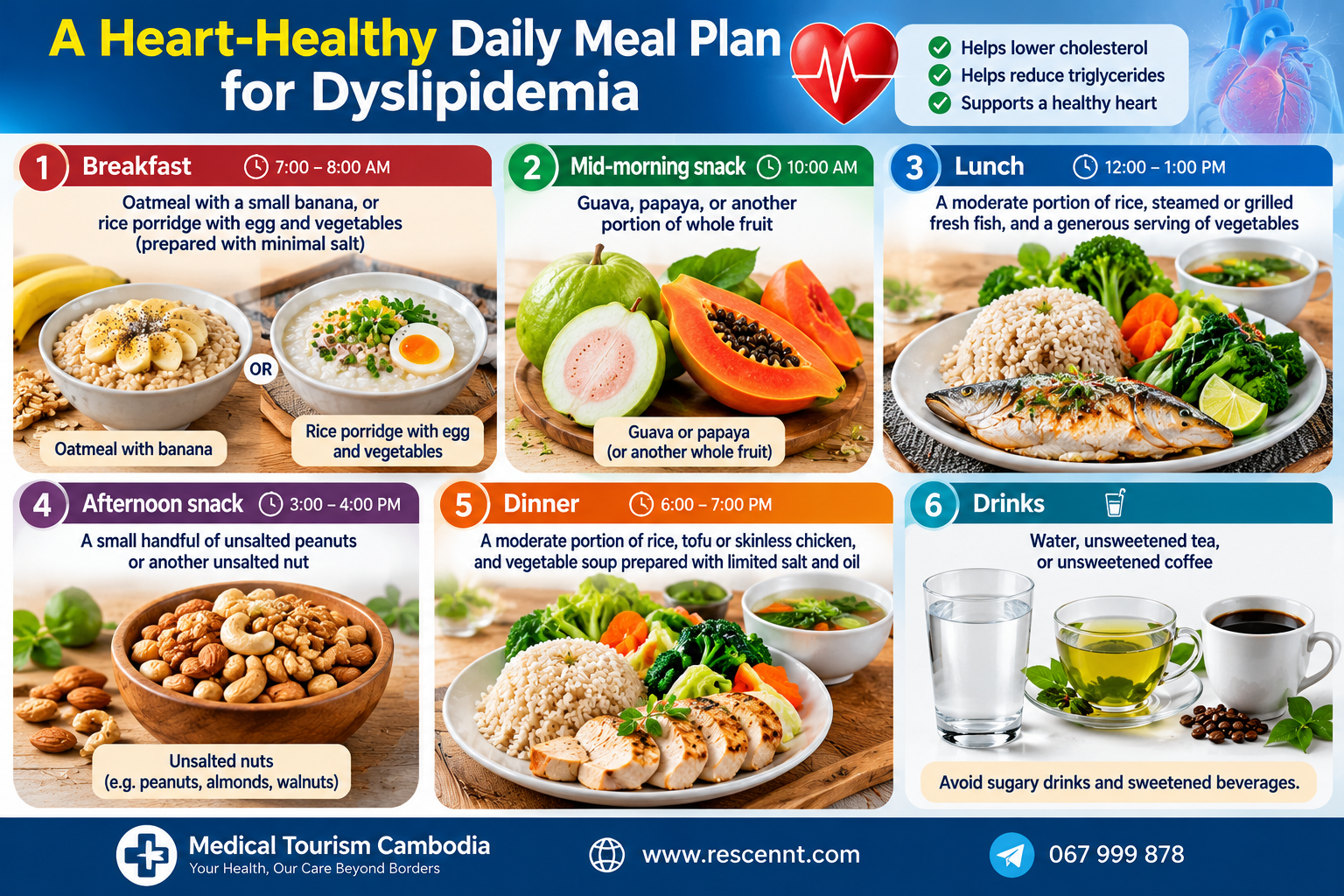
6. Sample One-Day Cambodian-Style Meal Plan
This example demonstrates a balanced approach. Portion sizes should be individualized according to body weight, energy requirements, diabetes status, kidney function, and other medical conditions.
| Meal | Recommended foods |
|---|---|
| Breakfast | Oatmeal with a small banana, or rice porridge with egg and vegetables prepared with minimal salt |
| Mid-morning snack | Guava, papaya, or another portion of whole fruit |
| Lunch | A moderate portion of rice, steamed or grilled fresh fish, and a generous serving of vegetables |
| Afternoon snack | A small handful of unsalted peanuts or another unsalted nut |
| Dinner | A moderate portion of rice, tofu or skinless chicken, and vegetable soup prepared with limited salt and oil |
| Drinks | Water, unsweetened tea, or unsweetened coffee |
Healthy cooking methods
Prefer:
- Steaming
- Boiling
- Grilling
- Baking
- Stir-frying with a small amount of unsaturated oil
Limit deep-frying and cooking methods that require large quantities of lard, butter, or coconut cream.
Traditional foods can fit into a heart-healthy diet. The main goals are to control portions, choose healthier fats, increase vegetables and fiber, and reduce excess sugar and sodium.
7. Lifestyle Changes That Improve Cholesterol
Diet works best when combined with other healthy habits.
Maintain a healthy body weight
For people with overweight or obesity, gradual weight loss can improve triglycerides, insulin sensitivity, and other metabolic risk factors.
Exercise regularly
Aim for at least 150 minutes per week of moderate-intensity aerobic activity, or 75 minutes of vigorous activity, as tolerated. Muscle-strengthening activity on at least two days per week is also beneficial.
Stop smoking
Smoking increases cardiovascular risk. Smoking cessation is an important component of prevention, even when cholesterol levels are not markedly elevated.
Control diabetes and hypertension
Diabetes, hypertension, chronic kidney disease, and other conditions can increase cardiovascular risk. Managing these conditions alongside dyslipidemia is essential.
Monitor your lipid profile
Repeat lipid testing according to your clinician’s recommendations, particularly after a major lifestyle change or initiation or adjustment of lipid-lowering medication.
8. Can Diet Alone Treat Dyslipidemia?
Diet is essential, but it is not always sufficient.
Some patients need medication because of:
- Very high LDL-C
- Established cardiovascular disease
- Familial hypercholesterolemia
- Diabetes or chronic kidney disease with increased cardiovascular risk
- Persistent dyslipidemia despite lifestyle changes
- Severe hypertriglyceridemia
Statins are the mainstay of LDL-C-lowering therapy for many patients who require medication. Depending on cardiovascular risk and the lipid abnormality, clinicians may also consider ezetimibe, PCSK9-targeting therapies, bempedoic acid, or triglyceride-lowering treatments.
Medication decisions should be based on LDL-C, non-HDL-C or ApoB when appropriate, triglyceride levels, medical history, overall cardiovascular risk, and current clinical guidelines.
Do not stop prescribed cholesterol medication simply because your lipid profile improves after dietary changes. Continue treatment unless your clinician recommends a change.
Conclusion
A heart-healthy diet is a foundation of dyslipidemia management. Replacing saturated fats with unsaturated fats, increasing soluble fiber, eating vegetables and whole fruit, choosing lean proteins, reducing added sugar, and limiting alcohol can improve lipid levels and help lower cardiovascular risk.
For Cambodian patients, simple changes to familiar meals—such as eating more vegetables, choosing fresh fish or tofu, reducing sugary drinks, using less cooking oil, and moderating rice portions—can make a meaningful difference.
Dietary changes should be combined with physical activity, smoking cessation, appropriate medical assessment, and lipid-lowering medication when indicated. The most effective strategy is individualized according to the patient’s lipid profile and overall cardiovascular risk.
Frequently Asked Questions (FAQ)
1. What is the best diet for dyslipidemia?
A Mediterranean-style or DASH-style eating pattern is a good choice. Emphasize vegetables, whole fruit, legumes, whole grains, nuts, fish, and unsaturated oils while limiting saturated fat, added sugar, and highly processed foods.
2. Which foods lower LDL cholesterol fastest?
Oats, barley, beans, lentils, and other soluble-fiber-rich foods can help lower LDL-C. Replacing butter, lard, fatty meat, and coconut oil with unsaturated fats can also help. The response varies between individuals, and meaningful changes generally require consistent dietary habits.
3. Can I eat eggs if I have high cholesterol?
Many people can include eggs in moderation as part of a balanced diet. The overall dietary pattern, saturated-fat intake, individual LDL-C response, diabetes status, and cardiovascular risk matter more than focusing on a single food. People with familial hypercholesterolemia or difficult-to-control LDL-C may need more individualized advice.
4. Is white rice bad for cholesterol?
White rice does not directly contain cholesterol and does not need to be completely avoided. However, large portions can contribute to excess energy and carbohydrate intake, potentially worsening triglycerides in susceptible individuals. Moderate portions combined with vegetables, legumes, and lean protein are a practical approach.
5. Is coconut oil good for high cholesterol?
Coconut oil is high in saturated fat and can raise LDL-C. For people trying to lower LDL-C, unsaturated oils such as soybean, canola, or olive oil are generally preferable.
6. Which fruits are best for dyslipidemia?
Guava, apples, pears, oranges, and other whole fruits provide fiber and can be part of a healthy diet. Whole fruit is preferable to fruit juice, especially for people with elevated triglycerides or diabetes.
7. What foods should I avoid if my triglycerides are high?
Limit sugary drinks, sweets, excessive refined carbohydrates, and alcohol. When triglycerides are severely elevated, dietary fat intake may also need to be restricted under medical supervision.
8. Can exercise lower cholesterol?
Regular physical activity can lower triglycerides, improve insulin sensitivity, support weight management, and modestly improve HDL-C. It is beneficial even when the effect on LDL-C is limited.
9. How long does it take for diet to improve cholesterol?
Changes may be detectable within several weeks. A repeat lipid profile is commonly considered after approximately 4–12 weeks of a major lifestyle change or initiation or adjustment of lipid-lowering therapy, depending on the clinical situation.
10. Do I still need a statin if I eat a healthy diet?
Possibly. Diet is important, but patients with established ASCVD, very high LDL-C, familial hypercholesterolemia, or sufficiently high cardiovascular risk may need medication even when their diet is excellent. Discuss your individual risk and treatment targets with your clinician.
11. Should I take omega-3 supplements for high triglycerides?
Over-the-counter fish oil products vary in dose and purity and should not be considered equivalent to prescription omega-3 therapy. Prescription products may be appropriate for selected patients with high triglycerides or specific cardiovascular-risk profiles. The decision depends on triglyceride levels, cardiovascular risk, other medications, and potential adverse effects.
12. Is a low-fat diet always best for dyslipidemia?
No. For high LDL-C, replacing saturated fat with unsaturated fat is often more important than reducing total fat. For very high triglycerides, a very-low-fat diet may be required temporarily. The dietary approach should match the specific lipid abnormality.
References
- Mach F, Baigent C, Catapano AL, et al. 2019 ESC/EAS Guidelines for the management of dyslipidaemias: lipid modification to reduce cardiovascular risk. European Heart Journal. 2020;41(1):111–188. doi:10.1093/eurheartj/ehz455.
- Visseren FLJ, Mach F, Smulders YM, et al. 2021 ESC Guidelines on cardiovascular disease prevention in clinical practice. European Heart Journal. 2021;42(34):3227–3337. doi:10.1093/eurheartj/ehab484.
- Lichtenstein AH, Appel LJ, Vadiveloo M, et al. 2021 Dietary Guidance to Improve Cardiovascular Health: A Scientific Statement From the American Heart Association. Circulation. 2021;144(23)–e487. doi:10.1161/CIR.0000000000001031.
- Grundy SM, Stone NJ, Bailey AL, et al. 2018 AHA/ACC/AACVPR/AAPA/ABC/ACPM/ADA/AGS/APhA/ASPC/NLA/PCNA Guideline on the Management of Blood Cholesterol. Circulation. 2019;139(25)–e1143. doi:10.1161/CIR.0000000000000625.
- American Diabetes Association Professional Practice Committee. Standards of Care in Diabetes—2026. American Diabetes Association. Use the relevant sections on cardiovascular risk management and nutrition for patients with diabetes.
- Virani SS, Morris PB, Agarwala A, et al. 2021 ACC Expert Consensus Decision Pathway on the Management of ASCVD Risk Reduction in Patients With Persistent Hypertriglyceridemia. Journal of the American College of Cardiology. 2021;78(9):960–993. doi:10.1016/j.jacc.2021.06.011.
- National Lipid Association. Scientific statements and clinical guidance on nutrition, lifestyle, and lipid management. Consult the current guidance applicable to the patient’s clinical circumstances.
Medical disclaimer: This article is for educational purposes and does not replace an individualized medical consultation. Patients with very high cholesterol, severe hypertriglyceridemia, established cardiovascular disease, diabetes, kidney disease, or suspected familial hypercholesterolemia should receive individualized assessment and treatment.