
Introduction
High blood pressure, also known as hypertension, is a major risk factor for heart disease, stroke, chronic kidney disease, and premature death. Although medication is often necessary, dietary changes are among the most effective ways to prevent and manage hypertension.
A healthy diet can help lower blood pressure, improve cholesterol levels, support healthy body weight, and reduce the long-term risk of cardiovascular complications.
The 2025 American Heart Association (AHA)/American College of Cardiology (ACC) hypertension guideline recommends a heart-healthy eating pattern, particularly the Dietary Approaches to Stop Hypertension (DASH) diet, together with sodium reduction and other lifestyle modifications.
For people living in Cambodia and other Southeast Asian countries, practical changes include reducing fish sauce and salty sauces, limiting instant noodles and processed foods, choosing fresh vegetables and fruit, and preparing meals with less salt.
This article explains what to eat, what to limit, and how to follow a practical hypertension diet.
1. What Is the Best Diet for High Blood Pressure?
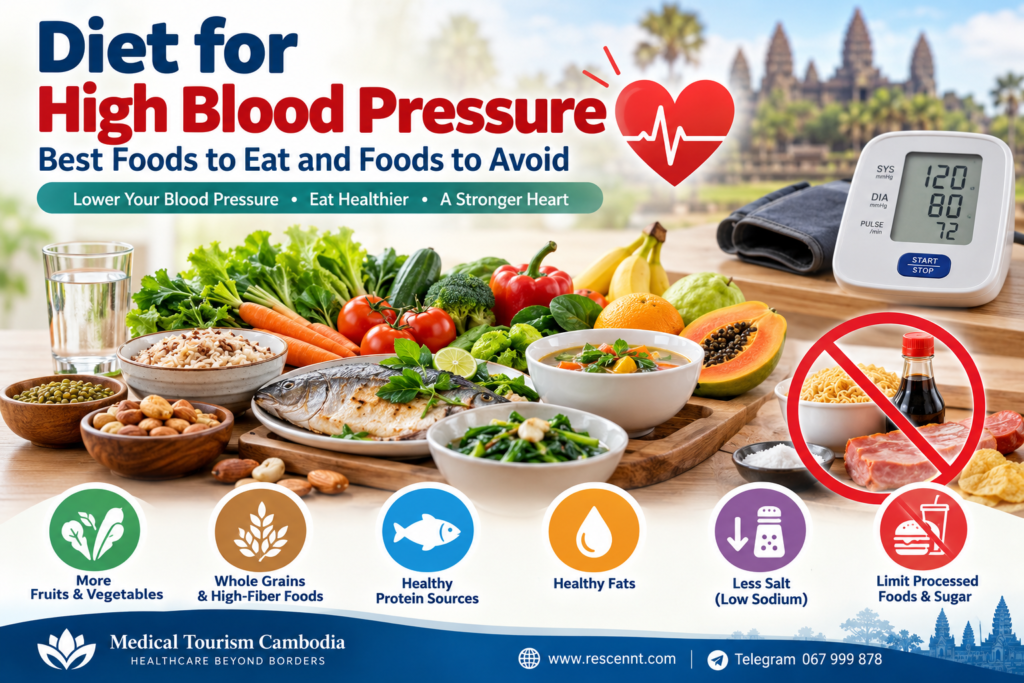
The DASH diet is one of the best-studied dietary approaches for lowering blood pressure. It emphasizes foods rich in potassium, magnesium, calcium, fiber, and other nutrients that support cardiovascular health.
The DASH eating pattern includes:
- Fruits and vegetables.
- Whole grains and other high-fiber foods.
- Beans, lentils, and other legumes.
- Fish, skinless poultry, and other lean protein sources.
- Low-fat or unsweetened dairy products, where appropriate.
- Nuts, seeds, and unsaturated vegetable oils.
It limits foods high in sodium, saturated fat, added sugar, and highly processed ingredients.
A Mediterranean-style eating pattern is another reasonable option. The most important consideration is choosing a sustainable diet that emphasizes minimally processed foods and limits excess salt.
2. Reduce Salt and Sodium Intake
Reducing sodium is one of the most important dietary interventions for hypertension.
Sodium promotes fluid retention and can increase blood pressure, particularly in people who are salt-sensitive, older adults, and patients with kidney disease.
How much salt should you consume?
The World Health Organization (WHO) recommends that adults consume less than 2,000 mg of sodium per day, equivalent to less than 5 grams of salt from all sources.
The 2025 AHA/ACC guideline recommends reducing sodium intake to less than 2,300 mg per day and moving toward an ideal limit of less than 1,500 mg per day for most adults.
For many patients with hypertension, a practical starting goal is less than 2,000 mg of sodium daily, with an individualized target based on clinical circumstances and dietary feasibility.
Important distinction:
- 1 gram of sodium is approximately 2.5 grams of salt.
- 2,000 mg of sodium is approximately 5 grams of salt.
- The limit includes salt already present in food, not just the salt added during cooking.
Common high-sodium foods to limit
In Cambodia, sodium can come from both table salt and commonly used condiments.
| Food or ingredient | Practical recommendation |
|---|---|
| Fish sauce | Use a smaller amount; choose lower-sodium varieties if available. |
| Soy sauce | Reduce the quantity and avoid adding it automatically at the table. |
| Salted or fermented fish | Eat less frequently and use smaller portions. |
| Prahok and salty pastes | Reduce the amount used in cooking. |
| Instant noodles | Use less seasoning powder and choose lower-sodium products. |
| Processed meats | Limit sausages, bacon, ham, and other salty preserved meats. |
| Pickled vegetables | Limit large portions and frequent consumption. |
| Packaged snacks | Choose unsalted nuts or fresh fruit instead. |
| Restaurant soups and broths | Ask for less salt and sauces when possible. |
| Stock cubes and seasoning powders | Use sparingly or replace some with herbs, garlic, ginger, lime, and spices. |
Practical ways to reduce salt
- Taste food before adding salt or fish sauce.
- Reduce salty seasonings gradually so your taste preferences can adapt.
- Use lime juice, garlic, ginger, lemongrass, pepper, and fresh herbs for flavor.
- Prepare more meals at home.
- Compare sodium values on food labels.
- Remember that several small sources of sodium can add up throughout the day.
Reducing sodium intake can lower blood pressure, and the benefit is often greater when combined with the DASH diet and weight management.
3. Eat More Fruits and Vegetables
Fruits and vegetables provide fiber, potassium, magnesium, and other nutrients associated with better cardiovascular health.
Potassium can help counter some of the blood-pressure-raising effects of sodium by promoting sodium excretion and supporting normal blood vessel function.
Good choices include:
- Leafy green vegetables.
- Cabbage, cauliflower, and broccoli.
- Cucumbers, tomatoes, and carrots.
- Eggplant and other fresh vegetables.
- Bananas, oranges, guava, papaya, and other whole fruits.
- Beans and other legumes.
Choose whole fruit more often than fruit juice, because whole fruit generally provides more fiber and is more filling.
Fresh, frozen, or appropriately selected canned vegetables can all be useful. For canned products, choose no-salt-added or lower-sodium options when available.
How much should you eat?
A practical goal is to include vegetables at lunch and dinner and fruit as a snack or part of breakfast. Aim for a varied intake every day rather than relying on a single so-called blood-pressure-lowering food.
Caution: Patients with chronic kidney disease, hyperkalemia, or those taking medications that can raise potassium may need to limit certain potassium-rich foods. Dietary advice should be individualized according to kidney function and serum potassium.
4. Choose Whole Grains and High-Fiber Foods
Whole grains provide fiber and other nutrients that support healthy weight, blood glucose, cholesterol, and cardiovascular health.
Suitable choices include:
- Brown rice.
- Oats.
- Whole-wheat bread.
- Whole-grain cereals with little added sugar.
- Corn and other minimally processed grains.
- Beans, lentils, and peas.
White rice can still be part of a healthy diet, including for Cambodian families. However, replacing some refined grains with whole grains, when practical and affordable, can improve overall dietary quality.
Pay attention to portion sizes, especially if you also have diabetes, obesity, or high triglycerides.
5. Select Healthy Protein Sources
Protein is important for maintaining muscle mass and general health. For people with hypertension, the source and preparation of protein are particularly important.
Better choices
- Fresh fish prepared by steaming, grilling, or baking.
- Skinless chicken.
- Beans, lentils, and other legumes.
- Unsalted nuts and seeds in moderate portions.
- Eggs as part of a balanced diet.
- Low-fat, unsweetened dairy products if tolerated.
Foods to limit
- Processed meats such as sausages and bacon.
- Fatty cuts of meat eaten frequently.
- Deep-fried meats and fish.
- Heavily salted or preserved fish.
- Meat prepared with large quantities of salty sauces.
Fish is a useful protein source, but salted, dried, or heavily fermented fish can contain substantial sodium. Fresh fish prepared with less salt is generally a better choice for blood pressure.
6. Choose Healthier Fats
The quality of dietary fat affects cardiovascular risk, particularly in people with hypertension and dyslipidemia.
Prefer unsaturated fats from sources such as:
- Olive, canola, soybean, or other suitable unsaturated vegetable oils.
- Nuts and seeds.
- Fish.
- Avocado, where available.
Limit frequent consumption of foods rich in saturated or trans fats, including fatty processed meats, commercial baked goods containing unhealthy fats, and deep-fried foods.
Coconut and palm oils contain substantial saturated fat. They do not need to be treated as medicines or prohibited in every circumstance, but using unsaturated vegetable oils more often is generally preferable for cardiovascular health.
7. Limit Added Sugar and Highly Processed Foods
Sugary drinks and foods high in added sugar can contribute to excess calorie intake, weight gain, insulin resistance, and increased cardiometabolic risk.
Limit:
- Soft drinks and energy drinks with added sugar.
- Sweetened tea and coffee.
- Packaged fruit drinks.
- Cakes, pastries, and sweets.
- Frequent consumption of highly processed snacks.
Choose water or unsweetened drinks most often. If you drink coffee or tea, be aware that caffeine can temporarily raise blood pressure in some people.
8. Alcohol and High Blood Pressure
Alcohol can raise blood pressure, and higher intake is associated with greater cardiovascular risk.
For people who drink alcohol, reducing intake or avoiding alcohol altogether is a reasonable strategy for blood-pressure control. Alcohol should not be started for supposed heart-health benefits.
If you drink regularly, discuss an appropriate reduction plan with your clinician. People who may be physically dependent on alcohol should seek medical advice before abruptly stopping, because withdrawal can be dangerous.
9. Should You Use Potassium-Based Salt Substitutes?
Potassium-based salt substitutes replace some or most sodium chloride with potassium chloride. They can help reduce sodium intake and may lower blood pressure.
However, they are not suitable for everyone.
Avoid starting a potassium-containing salt substitute without medical advice if you have:
- Chronic kidney disease or impaired potassium excretion.
- A history of high serum potassium.
- Treatment with medications that can increase potassium, such as ACE inhibitors, ARBs, or mineralocorticoid receptor antagonists.
These medications are often beneficial for hypertension, heart failure, and kidney disease, so the answer is not to stop prescribed medication. Instead, discuss potassium monitoring and the safety of salt substitutes with your clinician.
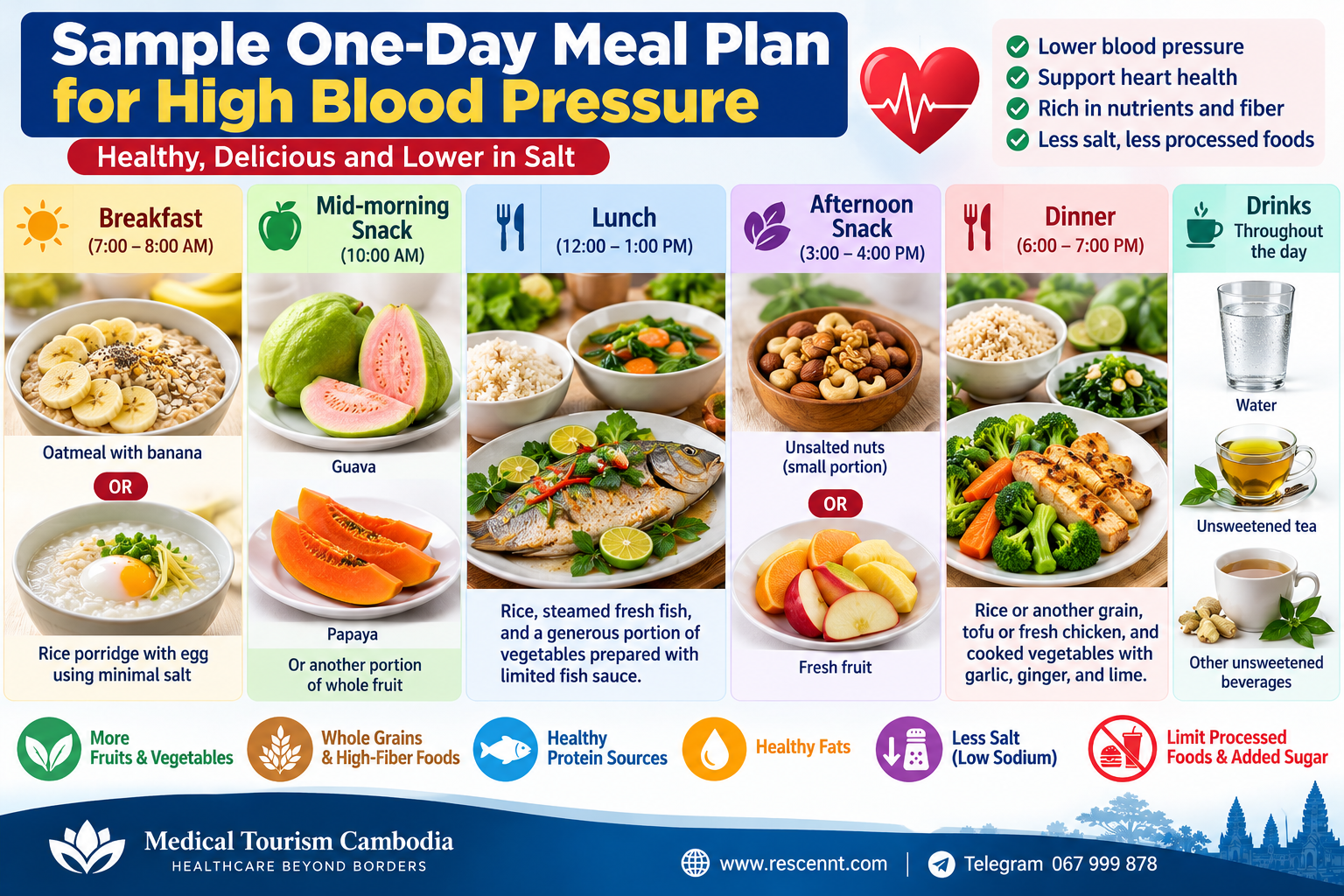
10. A Practical One-Day Hypertension Meal Plan
The following is an example of a lower-sodium eating pattern using familiar foods. Portion sizes should be adjusted to energy needs, body weight, diabetes status, and kidney function.
| Meal | Example |
|---|---|
| Breakfast | Oatmeal with banana, or rice porridge with egg prepared using minimal salt. |
| Mid-morning snack | Guava, papaya, or another portion of whole fruit. |
| Lunch | Rice, steamed fresh fish, and a generous portion of vegetables prepared with limited fish sauce. |
| Afternoon snack | Unsalted nuts in a small portion, or fresh fruit. |
| Dinner | Rice or another grain, tofu or fresh chicken, and cooked vegetables with garlic, ginger, and lime. |
| Drinks | Water, unsweetened tea, or other unsweetened beverages. |
Tips for making the plan work
- Keep fish sauce, soy sauce, and salty condiments to a minimum.
- Avoid adding stock cubes or seasoning powders automatically.
- Prefer steaming, boiling, grilling, or stir-frying with modest amounts of oil over deep-frying.
- Choose fresh ingredients whenever practical.
- Avoid making large dietary changes that are difficult to maintain; consistency is more important than perfection.
11. Other Lifestyle Changes That Improve Blood Pressure
Diet works best as part of a broader treatment plan.
The 2025 AHA/ACC guideline supports the following measures:
Maintain a healthy weight. For adults with overweight or obesity, sustained weight loss can reduce blood pressure and improve metabolic health.
Exercise regularly. Aim for at least 150 minutes per week of moderate-intensity aerobic activity, together with resistance exercise on two or more days per week when appropriate.
Monitor blood pressure. Use a validated upper-arm monitor and follow a consistent home measurement technique.
Sleep adequately. Poor sleep and obstructive sleep apnea can contribute to difficult-to-control hypertension.
Take prescribed medications. Continue antihypertensive medication as directed. Do not stop or reduce medication because your blood pressure improves after dietary changes.
Attend follow-up appointments. Blood pressure, kidney function, electrolytes, and cardiovascular risk may need periodic assessment.
12. When Is Diet Alone Not Enough?
Dietary changes can meaningfully lower blood pressure, but they do not replace medication when medication is indicated.
Under the 2025 AHA/ACC guideline, medication is recommended for adults with an average blood pressure of at least 140/90 mmHg and for selected adults with blood pressure of at least 130/80 mmHg, depending on cardiovascular disease, previous stroke, diabetes, chronic kidney disease, and estimated cardiovascular risk.
Patients with markedly elevated readings, evidence of organ damage, or high cardiovascular risk should not delay assessment while trying dietary changes alone.
If blood pressure is above 180/120 mmHg, repeat the measurement after a short rest. If it remains very high, seek urgent medical assessment. If it is accompanied by chest pain, shortness of breath, new weakness, confusion, severe headache, or visual changes, seek emergency care immediately.
Conclusion
A healthy diet is a cornerstone of hypertension management. The most effective practical approach is to follow a DASH-style eating pattern, reduce sodium, eat more vegetables and fruit, choose whole grains and healthy protein sources, limit processed foods and excess sugar, and maintain a healthy weight.
For Cambodian patients, reducing fish sauce, prahok, salty preserved fish, seasoning powders, and instant-noodle seasoning can be especially useful.
Start with achievable changes, monitor your blood pressure, and work with your healthcare professional to determine whether medication or additional treatment is needed. Consistent dietary improvements can support better blood pressure control and reduce long-term cardiovascular risk.
Frequently Asked Questions (FAQ)
1. What is the best diet for high blood pressure?
The DASH diet is one of the most strongly supported dietary patterns for lowering blood pressure. It emphasizes vegetables, fruit, whole grains, legumes, nuts, and lean protein while limiting sodium, saturated fat, and added sugar.
2. How much salt can a person with hypertension eat daily?
The WHO recommends less than 5 grams of salt per day, equivalent to less than 2,000 mg of sodium. The 2025 AHA/ACC guideline recommends less than 2,300 mg of sodium daily, ideally moving toward less than 1,500 mg for most adults. Individual needs may differ.
3. Is fish sauce bad for high blood pressure?
Fish sauce can contain substantial sodium. People with hypertension do not necessarily need to eliminate it completely, but should use smaller amounts, compare lower-sodium products, and avoid combining several salty condiments in the same meal.
4. Which fruits are good for high blood pressure?
Bananas, guava, oranges, papaya, and many other whole fruits can be part of a healthy diet. No single fruit treats hypertension on its own. People with chronic kidney disease or high potassium may need individualized fruit choices.
5. Can bananas lower blood pressure?
Bananas contain potassium, which supports normal blood pressure regulation. However, eating bananas alone is not a treatment for hypertension. Overall dietary quality and sodium reduction are more important.
6. Can I eat rice if I have high blood pressure?
Yes. Rice can be part of a balanced diet. Consider appropriate portions, vary your grain choices when possible, and serve rice with vegetables and healthy protein. The amount of salt and sauce used to prepare the meal is also important.
7. Are eggs safe for people with hypertension?
Eggs can generally be included in a balanced diet. Prepare them with limited salt and avoid routinely pairing them with processed meats or heavily salted foods. Individual advice may differ for patients with other cardiovascular or metabolic conditions.
8. Should I avoid coffee if I have high blood pressure?
Not everyone with hypertension needs to avoid coffee. Caffeine can temporarily increase blood pressure in some individuals. If your readings rise after caffeine, consider reducing intake and discuss persistent elevations with your clinician.
9. Does drinking more water lower blood pressure?
Drinking adequate water supports normal hydration, but drinking excessive amounts of water is not an established treatment for hypertension. People with heart failure, advanced kidney disease, or prescribed fluid restrictions should follow their clinician’s advice.
10. Are potassium supplements recommended for hypertension?
Routine potassium supplementation is not appropriate for everyone. Dietary potassium can help lower blood pressure, but supplements and potassium-based salt substitutes can cause dangerous hyperkalemia in susceptible patients, especially those with impaired kidney function or taking certain medications.
11. Can hypertension be controlled without medication?
Some people with mildly elevated blood pressure may improve substantially through lifestyle changes, but others need medication to reach a safe target. Decisions depend on the blood pressure level, cardiovascular risk, comorbidities, and response to treatment.
12. How quickly can dietary changes lower blood pressure?
Some changes, particularly sodium reduction, can affect blood pressure within days to weeks. The longer-term benefit depends on consistency, starting blood pressure, other health conditions, and adherence to the overall treatment plan.
References
- American Heart Association/American College of Cardiology (AHA/ACC). 2025 AHA/ACC/AANP/AAPA/ABC/ACCP/ACPM/AGS/AMA/ASPC/NMA/PCNA/SGIM Guideline for the Prevention, Detection, Evaluation, and Management of High Blood Pressure in Adults. Circulation. 2025. Read the guideline.
- World Health Organization (WHO). Sodium reduction. Updated May 11, 2026. WHO fact sheet.
- National Heart, Lung, and Blood Institute (NHLBI). DASH Eating Plan. DASH diet guidance.
- American Heart Association (AHA). Managing Blood Pressure with a Heart-Healthy Diet. Heart-healthy diet guidance.
- Appel LJ, Moore TJ, Obarzanek E, et al. A clinical trial of the effects of dietary patterns on blood pressure. New England Journal of Medicine. 1997;336:1117–1124. doi:10.1056/NEJM199704173361601.
Medical disclaimer: This article is for general educational purposes and does not replace an individualized medical assessment. People with chronic kidney disease, heart failure, electrolyte abnormalities, or fluid restrictions may require a modified diet. Medication decisions should be made with a qualified healthcare professional.