
Introduction
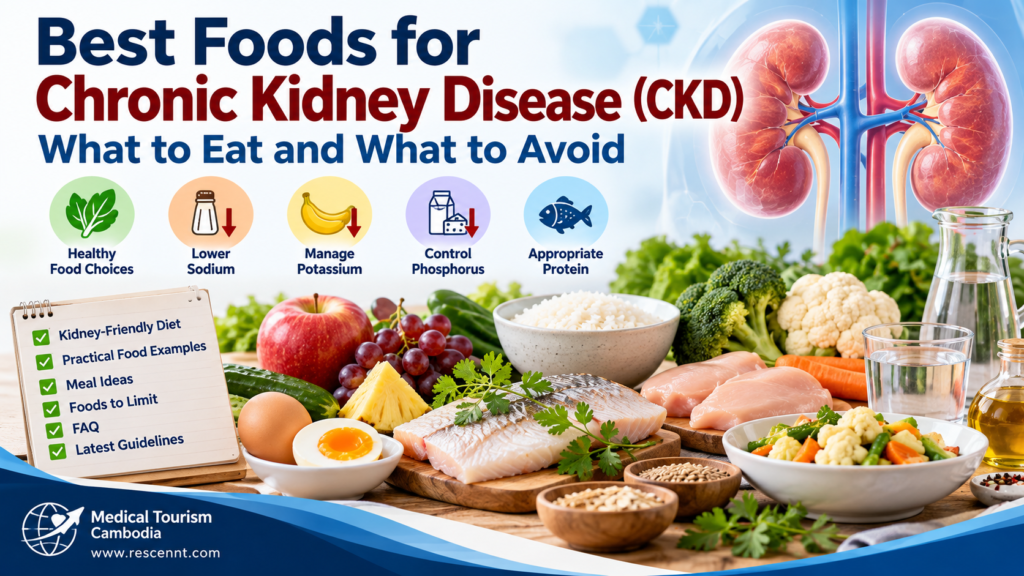
Chronic kidney disease (CKD) is a long-term condition in which the kidneys gradually lose their ability to filter waste products, regulate fluid balance, and maintain normal levels of minerals and electrolytes in the blood.
Diet plays an important role in managing CKD. Choosing the right foods can help control blood pressure, reduce fluid retention, maintain healthy blood sugar levels, and prevent complications such as hyperkalemia and CKD-related mineral and bone disorders.
However, there is no single kidney diet suitable for every patient. The appropriate diet depends on the stage of CKD, blood test results, medications, nutritional status, other medical conditions, and whether the patient is receiving dialysis.
The goal is not to avoid as many foods as possible. It is to maintain good nutrition while adjusting specific nutrients according to individual needs.
1. General Principles of a Kidney-Friendly Diet
According to the KDIGO 2024 CKD guideline, people with CKD should generally:
- Eat a healthy, balanced diet with more plant-based foods and fewer highly processed foods.
- Reduce sodium intake to help control blood pressure and fluid retention.
- Consume an appropriate amount of protein rather than following a high-protein diet.
- Adjust potassium and phosphorus intake according to blood tests and clinical circumstances.
- Maintain adequate calorie intake and a healthy body weight.
- Work with a healthcare professional or renal dietitian to develop an individualized nutrition plan.
A kidney-friendly diet should also take account of diabetes, cardiovascular disease, frailty, and the patient’s cultural food preferences.
2. Foods That Are Generally Good Choices for CKD
A. Vegetables
Vegetables provide vitamins, minerals, antioxidants, and dietary fiber.
Examples include:
- Cabbage
- Cauliflower
- Cucumber
- Lettuce
- Green beans
- Eggplant
- Bean sprouts
- Radish
Important: Patients with elevated blood potassium may need to adjust portions and choose vegetables with lower potassium content. Not everyone with CKD needs to restrict vegetables.
B. Fruits
Fruits provide fiber, vitamins, and antioxidants.
Examples that are often suitable in appropriate portions include:
- Apples
- Pears
- Grapes
- Pineapple
- Strawberries
- Watermelon
Bananas, oranges, mangoes, jackfruit, and dried fruits may also fit into some kidney diets. Their portions may need adjustment in patients with hyperkalemia.
Fresh fruit is generally preferable to fruit juice because it provides fiber and is easier to portion.
C. Rice and Other Grains
Rice is a staple food in Cambodia and can remain part of a kidney-friendly diet.
Suitable choices may include:
- White rice
- Rice porridge
- Rice noodles
- Bread with lower sodium content
- Other grains selected according to the patient’s potassium and phosphorus levels
Whole grains provide fiber and other beneficial nutrients, but some contain more potassium and phosphorus than refined grains. The best choice depends on laboratory results and the overall dietary plan.
D. Appropriate Protein Sources
Protein is essential for maintaining muscle mass, repairing tissue, and supporting immune function.
Possible sources include:
- Fish
- Skinless chicken
- Eggs
- Tofu
- Beans and lentils
- Lean meat in appropriate portions
Plant-based protein sources can be beneficial because they generally produce a lower dietary acid load than many animal-based diets. However, some plant foods contain substantial potassium or phosphorus, so portion size should be individualized.
Avoid consuming excessive amounts of meat, protein powders, bodybuilding supplements, or high-protein diets without medical advice.
E. Healthy Fats
Choose healthier fats in moderate amounts, such as:
- Olive oil
- Canola oil
- Other unsaturated vegetable oils
- Small portions of unsalted nuts, when appropriate
Limit foods high in saturated fat and avoid frequent consumption of deep-fried foods.
3. Foods High in Sodium to Limit
Sodium is one of the most important nutrients to control in many people with CKD.
Excessive sodium can increase blood pressure, worsen swelling, increase thirst, and contribute to fluid retention.
KDIGO 2024 suggests sodium intake below 2,000 mg per day, equivalent to less than approximately 5 g of salt per day, for most adults with CKD.
Foods to limit include:
- Instant noodles and seasoning packets
- Fish sauce and soy sauce in excessive amounts
- Salted fish and dried salted seafood
- Pickled vegetables
- Processed meats and sausages
- Canned soups
- Chips and salty snacks
- Fast food and heavily salted restaurant meals
- Packaged foods containing substantial amounts of sodium
Practical tips
- Use less salt, fish sauce, and soy sauce when cooking.
- Flavor meals with garlic, ginger, lime, lemongrass, pepper, and fresh herbs.
- Avoid adding extra salt at the table.
- Compare sodium levels on food labels.
- Do not replace ordinary salt with potassium-based salt substitutes unless your healthcare professional confirms they are safe.
Remember that 5 g of salt is the total daily amount from all sources, not an allowance for 5 g of added salt alone.
4. Potassium: Which Foods Should Patients Avoid?
Potassium is essential for normal nerve, muscle, and heart function. However, elevated blood potassium can cause dangerous cardiac arrhythmias.
The kidneys normally help maintain potassium balance. In advanced CKD, potassium levels may become elevated, especially in patients taking certain medications or experiencing acute illness.
Foods that may require restriction when potassium is high
- Bananas
- Oranges and orange juice
- Avocados
- Dried fruits
- Potatoes and sweet potatoes
- Tomatoes and tomato concentrates
- Coconut water
- Some leafy green vegetables
- Potassium-containing salt substitutes
Lower-potassium alternatives that may be suitable
- Apples
- Grapes
- Pineapple
- Cabbage
- Cucumber
- Cauliflower
- Lettuce
- Green beans
These are general examples rather than a list of universally safe or unsafe foods. Potassium content varies with portion size, preparation, and the specific food.
Cooking methods
For certain vegetables, cutting them into small pieces, boiling them in plenty of water, and discarding the cooking water can reduce potassium content. This method does not make every high-potassium food safe in unlimited quantities.
Key point: Do not automatically restrict all fruits and vegetables in CKD. Base potassium restriction on blood potassium levels, medications, kidney function, and professional dietary advice.
5. Phosphorus: Protecting Bones and Blood Vessels
Phosphorus is necessary for healthy bones and other normal body functions. When kidney function declines, phosphorus may accumulate, contributing to CKD-related mineral and bone disorders.
If blood phosphorus is elevated, patients may need to reduce certain foods, especially those containing highly absorbable phosphate additives.
Foods to limit when phosphorus is elevated
- Processed cheese
- Large quantities of milk and dairy products
- Organ meats
- Cola drinks containing phosphate additives
- Processed meats
- Packaged foods containing phosphate additives
- Certain processed convenience foods
Pay attention to food labels
Look for ingredients containing the word “phos,” such as:
- Sodium phosphate
- Calcium phosphate
- Phosphoric acid
- Pyrophosphate
Phosphate additives are often absorbed more readily than naturally occurring phosphorus in plant foods.
Beans, lentils, nuts, and whole grains contain phosphorus, but this does not mean all patients with CKD must avoid them. Much of the phosphorus in plant foods is bound to phytate and is less readily absorbed.
The dietary plan should be based on serum phosphorus, calcium, parathyroid hormone when appropriate, and the patient’s overall nutritional needs.
6. How Much Protein Should Patients with CKD Eat?
Protein requirements depend on kidney function, nutritional status, age, comorbidities, and dialysis treatment.
For metabolically stable adults with CKD stages G3–G5 who are not receiving dialysis, KDIGO 2024 suggests a protein intake of approximately:
0.8 g of protein per kilogram of body weight per day.
For example, a 60 kg adult would have a reference target of approximately 48 g of protein per day.
This is a total daily protein target from all foods, not 48 g of meat.
KDIGO advises avoiding high protein intake above 1.3 g/kg/day in adults with CKD who are at risk of progression. More restrictive protein diets may be appropriate for selected patients under close clinical and nutritional supervision.
Important exceptions
- Patients receiving dialysis: Usually need more protein because dialysis can increase protein losses.
- Older adults with frailty or muscle loss: May require higher protein and calorie intake to prevent malnutrition.
- Patients with poor appetite, acute illness, or protein-energy wasting: Should not start a restrictive diet without professional assessment.
- Children with CKD: Must receive sufficient protein and energy to support growth.
Patients should not follow a very-low-protein diet or take ketoanalogue supplements without specialist supervision.
7. Should Patients with CKD Restrict Fluids?
Not everyone with CKD needs a fluid restriction.
Patients with early-stage CKD who produce normal amounts of urine and have no fluid overload often do not need to restrict their fluid intake.
Fluid restriction may be necessary in selected patients with:
- Advanced CKD and reduced urine output
- Significant swelling
- Heart failure with fluid overload
- Low blood sodium in certain clinical situations
- Patients receiving dialysis with limited fluid removal capacity
The fluid target should be individualized according to urine output, weight changes, edema, serum sodium, cardiac status, and the treatment plan.
Do not force excessive amounts of water in an attempt to “flush the kidneys.”
8. Foods and Supplements to Avoid or Use With Caution
People with CKD should be cautious about:
- High-protein supplements and bodybuilding products
- Herbal remedies marketed as kidney cleansers
- Unverified traditional medicines
- Potassium supplements
- Potassium-based salt substitutes
- Vitamin and mineral supplements containing excessive potassium, phosphorus, or other minerals
- High-dose vitamins or minerals without a documented indication
Some supplements may contain ingredients that are harmful to the kidneys or interact with prescribed medications. Discuss supplements with your doctor or pharmacist before use.
9. A Practical One-Day Kidney-Friendly Menu
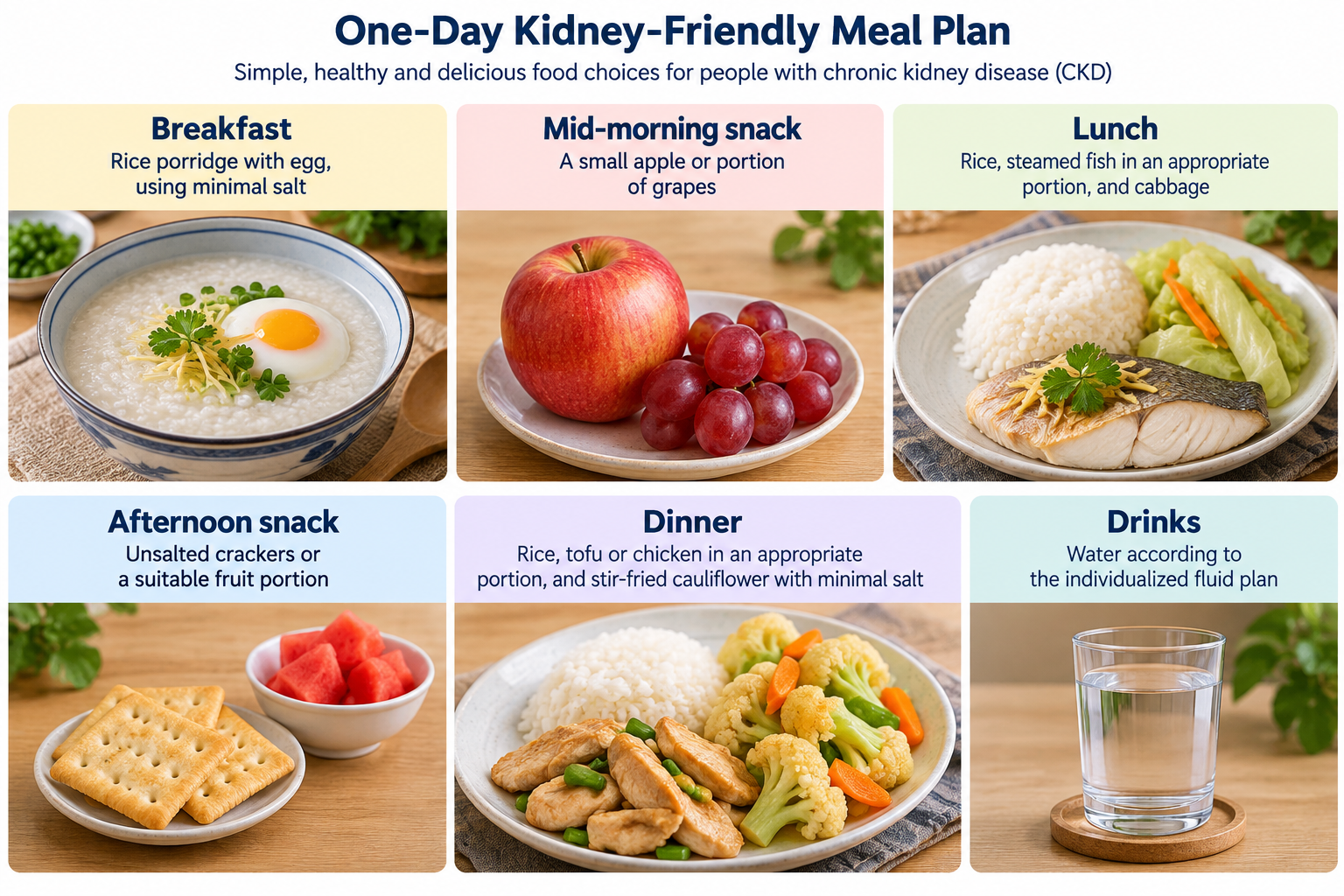
The following is an illustrative menu for an adult with stable CKD who does not require dialysis. It must be adapted to the patient’s laboratory results, energy needs, protein target, and medical conditions.
| Meal | Example |
|---|---|
| Breakfast | Rice porridge with egg, using minimal salt |
| Mid-morning snack | A small apple or portion of grapes |
| Lunch | Rice, steamed fish in an appropriate portion, and cabbage |
| Afternoon snack | Unsalted crackers or a suitable fruit portion |
| Dinner | Rice, tofu or chicken in an appropriate portion, and stir-fried cauliflower with minimal salt |
| Drinks | Water according to the individualized fluid plan |
Avoid adding large amounts of fish sauce, soy sauce, salt, or commercial seasoning powders.
This menu is not a prescribed diet for patients with hyperkalemia, hyperphosphatemia, severe malnutrition, fluid overload, or dialysis-dependent kidney failure.
10. Dietary Advice According to CKD Stage
CKD stages G1–G2
- Follow a balanced diet rich in vegetables and minimally processed foods.
- Control blood pressure and blood glucose.
- Reduce excessive sodium intake.
- Avoid unnecessary high-protein diets.
- Restrict potassium or phosphorus only when clinically indicated.
CKD stage G3
- Continue a balanced diet with appropriate protein intake.
- Monitor potassium, phosphorus, bicarbonate, and nutritional status as clinically indicated.
- Reduce sodium intake.
- Individualize dietary changes according to laboratory results and medications.
CKD stages G4–G5 without dialysis
- Obtain individualized dietary assessment, ideally from a renal dietitian.
- Assess the need for potassium, phosphorus, protein, sodium, and fluid adjustments.
- Monitor for malnutrition and unintentional weight loss.
- Avoid unsupervised restrictive diets.
CKD with dialysis
- Protein requirements are generally higher than in patients not receiving dialysis.
- Sodium and fluid management may become more important.
- Potassium and phosphorus targets should be individualized according to laboratory results, dialysis prescription, and residual kidney function.
A kidney transplant recipient may also need a different nutritional plan, especially during the early post-transplant period.
11. When Should Patients Seek Medical Advice?
Patients with CKD should contact their healthcare team if they develop:
- Rapidly increasing swelling or weight
- Shortness of breath
- Markedly reduced urine output
- Persistent vomiting or inability to eat
- Significant loss of appetite or unintentional weight loss
- New muscle weakness or palpitations, especially when potassium abnormalities are possible
Severe shortness of breath, chest pain, fainting, or significant palpitations require urgent medical assessment.
Conclusion
A kidney-friendly diet is an important part of chronic kidney disease management. Most patients benefit from reducing sodium, choosing minimally processed foods, eating a balanced diet with appropriate protein, and maintaining adequate energy intake.
However, potassium, phosphorus, protein, and fluid restrictions should be tailored to kidney function, laboratory results, medications, and dialysis status. Overly restrictive diets can lead to malnutrition and should be avoided.
The best approach is an individualized nutrition plan developed with a physician and, when available, a renal dietitian.
1. What are the best foods for people with chronic kidney disease?
Vegetables, fruits in appropriate portions, rice, and suitable protein sources such as fish, eggs, tofu, and chicken can be part of a healthy kidney-friendly diet. The best choices depend on kidney function, blood potassium and phosphorus levels, and nutritional needs.
2. Can patients with CKD eat bananas?
Yes, some patients can eat bananas in moderate portions. However, patients with elevated blood potassium may need to limit bananas or choose lower-potassium fruits. Dietary advice should be based on laboratory results rather than CKD stage alone.
3. Is white rice good for kidney disease?
White rice can be part of a kidney-friendly diet. It is relatively low in potassium and phosphorus compared with some other carbohydrate sources. Portion size should be adjusted for energy requirements, diabetes, and weight management.
4. Can patients with CKD eat eggs?
Yes. Eggs provide high-quality protein. The appropriate amount depends on the patient’s daily protein target and overall nutritional needs. Egg yolks also contain phosphorus, but eggs do not need to be universally excluded.
5. Should patients with CKD avoid all high-potassium foods?
No. Potassium restriction is not necessary for every patient with CKD. Patients with normal blood potassium may be able to eat a wide variety of fruits and vegetables. Those with hyperkalemia may need individualized restrictions.
6. Can patients with CKD eat fish?
Yes. Fish can provide high-quality protein and beneficial fatty acids. Patients who are not receiving dialysis may need to control their total protein intake, while dialysis patients often require more protein. Preparation methods should minimize added salt.
7. How much water should a patient with CKD drink daily?
There is no universal fluid target for all patients. People with early CKD and normal urine output often do not need fluid restriction. Patients with advanced CKD, reduced urine output, edema, heart failure, or dialysis dependence may require an individualized fluid allowance.
8. Is coconut water safe for kidney patients?
Coconut water can contain substantial potassium. Patients with hyperkalemia or advanced CKD may need to avoid or limit it. Patients with normal potassium should still consider portion size and their overall dietary plan.
9. Can patients with CKD eat beans and lentils?
Yes, many patients can eat beans and lentils. These foods provide plant-based protein and fiber, and their phosphorus is generally less bioavailable than phosphate additives in processed foods. Portions may need adjustment for patients with hyperkalemia or elevated phosphorus.
10. Should patients with CKD stop eating meat?
No. Meat does not need to be completely eliminated. Patients should consume appropriate portions according to their protein target, nutritional status, and dialysis treatment. Plant-based protein can be incorporated where appropriate.
11. Can dietary changes reverse chronic kidney disease?
Dietary changes generally cannot reverse established chronic kidney damage. However, an appropriate diet can help control blood pressure and diabetes, reduce complications, support cardiovascular health, and may help slow disease progression as part of comprehensive treatment.
12. Do all patients with CKD need a low-protein diet?
No. Protein intake should be individualized. Many metabolically stable adults with CKD stages G3–G5 who are not receiving dialysis are advised to aim for approximately 0.8 g/kg/day. Dialysis patients, frail older adults, and people with malnutrition may require higher intake.
13. Are herbal kidney supplements safe?
Not necessarily. Some herbal products contain potentially nephrotoxic substances, excessive minerals, or ingredients that interact with medicines. Patients should consult their healthcare professional before taking herbal remedies or dietary supplements.
14. When should a patient with CKD consult a renal dietitian?
Consultation is particularly useful for patients with CKD stages G3–G5, abnormal potassium or phosphorus, diabetes, poor appetite, unintentional weight loss, complex dietary restrictions, or dialysis dependence. A renal dietitian can create a plan that meets nutritional needs while respecting local foods, culture, and budget.
References
1. Kidney Disease: Improving Global Outcomes (KDIGO) CKD Work Group. KDIGO 2024 Clinical Practice Guideline for the Evaluation and Management of Chronic Kidney Disease. Kidney International. 2024. Official guideline and resources.
2. National Kidney Foundation. How to Plan Meals for Chronic Kidney Disease: Creating a Kidney-Friendly Plate. Updated June 5, 2026. Read the guidance.
3. National Kidney Foundation. Nutrition and Kidney Disease, Stages 1–5 (Not on Dialysis). Read the patient guidance.
4. Ikizler TA, Burrowes JD, Byham-Gray LD, et al. KDOQI Clinical Practice Guideline for Nutrition in CKD: 2020 Update. American Journal of Kidney Diseases. 2020;76(3 Suppl 1):S1–S107. doi:10.1053/j.ajkd.2020.05.006.
5. Navaneethan SD, et al. KDOQI US Commentary on the KDIGO 2024 Clinical Practice Guideline for the Evaluation and Management of CKD. KDIGO commentary resource.
Medical disclaimer: This article is for educational purposes and does not replace individualized medical advice. Patients should consult their treating physician or renal dietitian before making major dietary changes, particularly if they have advanced CKD, abnormal electrolytes, malnutrition, or receive dialysis.