
Diabetes mellitus is a chronic disease characterized by elevated blood glucose levels. Without appropriate treatment, diabetes can lead to serious complications, including heart disease, stroke, chronic kidney disease, nerve damage, vision loss, and diabetic foot ulcers.
The good news is that modern diabetes medications can do much more than lower blood glucose. Depending on the medication, treatment may also help with weight management, protect the heart and kidneys, and reduce the risk of diabetes-related complications.
According to the American Diabetes Association (ADA) Standards of Care in Diabetes—2026, diabetes treatment should be individualized according to the type of diabetes, blood glucose levels, cardiovascular and kidney health, body weight, risk of hypoglycemia, affordability, and patient preferences.
There is no single best diabetes medication for everyone. The most appropriate treatment is the one that safely achieves an individual’s treatment goals while addressing their overall health needs.
1. What Are the Main Types of Diabetes Medications?
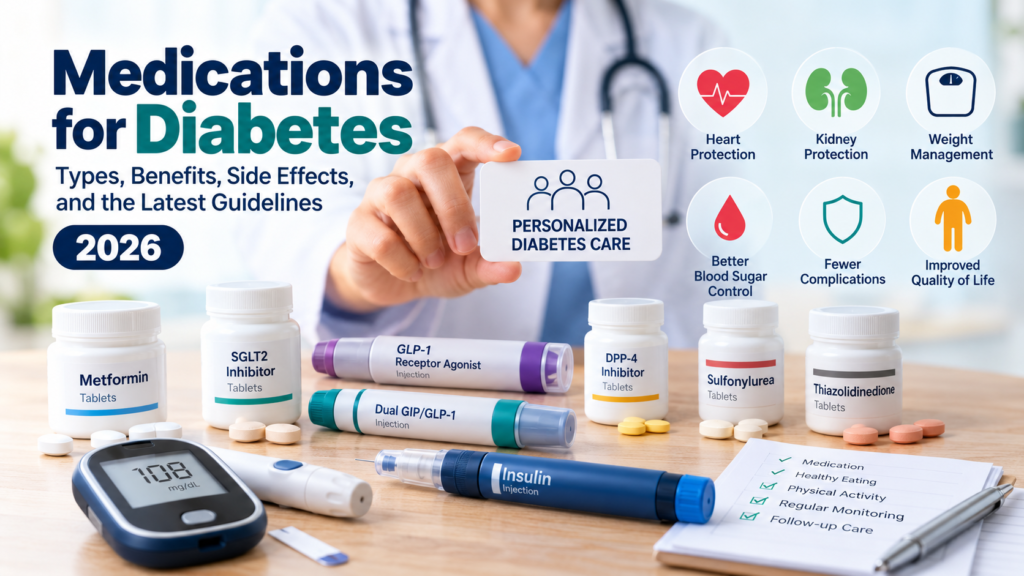
Diabetes medications are divided into several major groups:
- Insulin: Essential for type 1 diabetes and necessary for some people with type 2 diabetes.
- Metformin: An effective, widely used oral medication that reduces glucose production by the liver.
- SGLT2 inhibitors: Medications that help the kidneys remove glucose through urine and provide important heart and kidney benefits.
- GLP-1 receptor agonists: Medications that improve glucose control, reduce appetite, and often promote substantial weight loss.
- Dual GIP/GLP-1 receptor agonists: Medications that improve glucose control and weight management through two complementary hormonal pathways.
- DPP-4 inhibitors: Oral medications that enhance the body’s natural incretin system.
- Sulfonylureas: Medications that stimulate the pancreas to release insulin.
- Thiazolidinediones (TZDs): Medications that improve insulin sensitivity.
- Other medications: Including meglitinides, alpha-glucosidase inhibitors, and, in selected circumstances, oral combination therapies.
The choice depends on the person’s clinical condition, treatment goals, medication availability, and ability to use the treatment safely.
2. Metformin
Metformin is a well-established medication for type 2 diabetes. It reduces glucose production by the liver and improves insulin sensitivity.
Benefits
- Effective glucose lowering.
- Usually does not cause hypoglycemia when used alone.
- Generally weight-neutral, with possible modest weight loss.
- Inexpensive and widely available.
- Extensive clinical experience and evidence supporting its use.
Common side effects
- Diarrhea.
- Nausea.
- Abdominal discomfort.
- Bloating.
- Vitamin B12 deficiency with long-term use in some patients.
Taking metformin with food, gradually increasing the dose, or using an extended-release formulation may improve gastrointestinal tolerance.
Important precautions
Kidney function must be assessed before prescribing metformin. It is contraindicated when the estimated glomerular filtration rate (eGFR) is below 30 mL/min/1.73 m². Initiation is generally not recommended at an eGFR of 30–45 mL/min/1.73 m² under U.S. prescribing guidance, and continued treatment requires individualized reassessment.
Metformin may need to be temporarily withheld during certain acute illnesses, episodes of acute kidney injury, severe dehydration, or specific contrast-imaging procedures, depending on the clinical circumstances.
Clinical note: Metformin remains an excellent option for many patients, but it is not automatically the first or only medication for every person with type 2 diabetes. Medications with proven cardiovascular or kidney benefits may be prioritized even when HbA1c is already at target.
3. SGLT2 Inhibitors
Sodium-glucose cotransporter 2 (SGLT2) inhibitors increase urinary glucose excretion. Examples include:
- Empagliflozin.
- Dapagliflozin.
- Canagliflozin.
- Ertugliflozin.
Major benefits
SGLT2 inhibitors can:
- Lower blood glucose.
- Produce modest weight loss.
- Reduce heart failure hospitalization with appropriate agents.
- Slow the progression of chronic kidney disease in eligible patients.
- Provide cardiovascular and kidney protection in selected high-risk populations.
Their benefits in heart failure and chronic kidney disease can be clinically important even when their glucose-lowering effect is reduced by impaired kidney function.
For eligible patients with type 2 diabetes and chronic kidney disease, an SGLT2 inhibitor is generally recommended when eGFR is at least 20 mL/min/1.73 m², subject to the individual drug’s prescribing information and clinical circumstances.
Common side effects and precautions
- Genital fungal infections.
- Increased urination.
- Dehydration or low blood pressure.
- Rare but serious euglycemic diabetic ketoacidosis.
Patients should receive education about dehydration, acute illness, fasting, and surgery. SGLT2 inhibitors are usually withheld before scheduled surgery according to the specific agent’s recommended interval, commonly three days for empagliflozin, dapagliflozin, and canagliflozin, and four days for ertugliflozin.
These medications are not routine treatments for type 1 diabetes because of the risk of diabetic ketoacidosis.
4. GLP-1 Receptor Agonists
Glucagon-like peptide-1 (GLP-1) receptor agonists mimic a natural intestinal hormone involved in glucose regulation and appetite.
Examples include:
- Semaglutide.
- Liraglutide.
- Dulaglutide.
- Exenatide.
Some formulations are injected, while oral semaglutide is also available.
Benefits
GLP-1 receptor agonists can:
- Reduce HbA1c substantially.
- Promote weight loss, with the degree depending on the medication and dose.
- Reduce appetite and slow gastric emptying.
- Reduce major cardiovascular events with agents that have demonstrated cardiovascular benefit.
- Provide kidney-related benefits in selected patients and populations.
Some agents also have evidence supporting treatment of obesity and metabolic dysfunction-associated steatohepatitis (MASH) in specific clinical settings. Approved indications vary by product and jurisdiction.
Common side effects
- Nausea.
- Vomiting.
- Diarrhea or constipation.
- Reduced appetite.
- Abdominal discomfort.
Gradual dose escalation can improve tolerability. Clinicians should consider gallbladder disease, pancreatitis history, dehydration, and severe gastric emptying disorders when assessing suitability.
Some agents have important contraindications or warnings concerning medullary thyroid carcinoma or multiple endocrine neoplasia type 2, according to their product labeling.
Clinical note: For adults with type 2 diabetes who need additional glucose lowering and do not have severe hyperglycemia or a hyperglycemic crisis, GLP-1-based therapy is generally preferred to insulin as initial or add-on treatment when clinically appropriate.
5. Dual GIP/GLP-1 Receptor Agonists
Tirzepatide acts on both glucose-dependent insulinotropic polypeptide (GIP) and GLP-1 receptors.
It can produce substantial reductions in HbA1c and body weight in people with type 2 diabetes. It is particularly useful when both glucose control and weight management are major treatment goals.
Potential side effects include nausea, vomiting, diarrhea, constipation, and other gastrointestinal symptoms. Important precautions overlap with those of GLP-1-based medications.
In selected patients with type 2 diabetes, obesity, and symptomatic heart failure with preserved ejection fraction, incretin-based treatments with demonstrated heart failure benefits may be considered according to the current evidence and applicable indications.
Tirzepatide is not a substitute for insulin in type 1 diabetes.
6. DPP-4 Inhibitors
Dipeptidyl peptidase-4 (DPP-4) inhibitors enhance the activity of natural incretin hormones.
Examples include:
- Sitagliptin.
- Linagliptin.
- Saxagliptin.
- Alogliptin.
Benefits
- Oral administration.
- Generally well tolerated.
- Low risk of hypoglycemia when used alone.
- Usually weight-neutral.
- Modest glucose-lowering efficacy.
Precautions
Some agents require dose adjustment in kidney impairment. Saxagliptin and alogliptin have heart failure warnings or precautions in relevant patients.
DPP-4 inhibitors should not be combined with a GLP-1 receptor agonist or a dual GIP/GLP-1 receptor agonist because the combination generally does not provide meaningful additional glucose lowering.
7. Sulfonylureas
Sulfonylureas stimulate pancreatic beta cells to release insulin.
Examples include:
- Gliclazide.
- Glimepiride.
- Glipizide.
- Glibenclamide (glyburide).
Benefits
- Effective glucose lowering.
- Low cost in many countries.
- Widely available.
Disadvantages
- Hypoglycemia.
- Weight gain.
- Reduced effectiveness as pancreatic beta-cell function declines over time.
Long-acting agents and some drugs in this class can cause prolonged hypoglycemia, particularly in older adults and people with kidney impairment.
When used, treatment should be individualized, with careful attention to meal patterns, kidney function, and hypoglycemia risk.
8. Thiazolidinediones (TZDs)
Pioglitazone improves insulin sensitivity in muscle and adipose tissue.
Benefits
- Effective glucose lowering.
- Low risk of hypoglycemia when used alone.
- Relatively inexpensive in many settings.
- May have a role in selected patients with insulin resistance and metabolic liver disease.
Important risks
- Weight gain.
- Fluid retention and edema.
- Increased risk of heart failure exacerbation.
- Increased fracture risk in susceptible patients.
Pioglitazone should generally be avoided in patients with symptomatic heart failure and used cautiously in people at risk of fluid retention. It is not suitable for every patient with fatty liver disease, and its use should be based on the full clinical picture.
9. Other Oral Diabetes Medications
Meglitinides
Repaglinide and nateglinide stimulate insulin release around mealtimes. They may be considered in selected patients but can cause hypoglycemia and weight gain.
Alpha-glucosidase inhibitors
Acarbose delays carbohydrate digestion and absorption in the intestine. It may be useful when post-meal glucose elevation is a concern, but gastrointestinal adverse effects can limit adherence.
Oral combination medications
Fixed-dose combinations can simplify treatment for patients who require more than one drug. Their suitability depends on kidney function, cardiovascular and heart failure status, adverse effects, and the characteristics of each component.
10. Insulin Therapy
Insulin is essential for all people with type 1 diabetes because the pancreas produces little or no insulin. It is also necessary for many people with type 2 diabetes as the disease progresses or when other treatments are insufficient.
Types of insulin
Rapid-acting insulin
- Lispro.
- Aspart.
- Glulisine.
These are commonly used around meals and for correction of elevated glucose.
Short-acting insulin
- Regular human insulin.
This may be used in mealtime regimens and selected hospital settings.
Intermediate-acting insulin
- NPH insulin.
This provides intermediate-duration insulin coverage and is often less expensive than newer basal analogs.
Long-acting and ultra-long-acting insulin
- Glargine.
- Degludec.
- Detemir, where available.
These provide basal insulin coverage, with duration and dosing characteristics varying by product.
When should insulin be considered in type 2 diabetes?
Insulin should be considered promptly when there is:
- Symptomatic or severe hyperglycemia.
- HbA1c above 10%.
- Blood glucose at or above 300 mg/dL (16.7 mmol/L).
- Unintentional weight loss or other evidence of significant insulin deficiency.
- Diabetic ketoacidosis or another hyperglycemic emergency.
- Failure to achieve treatment goals with an appropriate non-insulin regimen.
These thresholds are clinical prompts, not absolute rules. The patient’s symptoms, metabolic status, and overall condition determine urgency.
Insulin safety
Insulin can cause hypoglycemia and weight gain. Patients need education about injection technique, dose timing, glucose monitoring, storage, and what to do when meals are delayed or illness occurs.
For adults with type 2 diabetes who require insulin, combining insulin with a GLP-1 receptor agonist or dual GIP/GLP-1 receptor agonist can improve glucose lowering and weight outcomes and may reduce insulin requirements. Insulin doses must be reassessed when these agents are initiated or increased.
Glucagon should be prescribed for people using insulin or otherwise at high risk of severe hypoglycemia, when appropriate and available.
11. How Do Doctors Choose the Best Diabetes Medication?
The ADA Standards of Care in Diabetes—2026 emphasize person-centered treatment rather than a single medication sequence for everyone.
If the patient has cardiovascular disease
Consider a GLP-1 receptor agonist and/or SGLT2 inhibitor with demonstrated cardiovascular benefit, regardless of baseline HbA1c or metformin use.
If the patient has heart failure
An SGLT2 inhibitor with demonstrated heart failure benefit is recommended for eligible adults with type 2 diabetes and heart failure, regardless of HbA1c.
If the patient has chronic kidney disease
An SGLT2 inhibitor is generally recommended for eligible patients with type 2 diabetes and CKD. A GLP-1 receptor agonist with demonstrated cardiovascular or kidney benefit may also be appropriate, depending on the patient’s risk profile and treatment goals.
If the patient has overweight or obesity
Prioritize therapies that support weight reduction, such as suitable GLP-1-based treatments or dual GIP/GLP-1 receptor agonists, when appropriate and accessible.
If the patient has a limited budget
Metformin, selected sulfonylureas, pioglitazone, and human insulin may be cost-effective options. However, affordability must be balanced against hypoglycemia, weight gain, heart failure risk, and other potential complications.
If HbA1c remains above target
The clinician should reassess medication adherence, dose, diet, physical activity, adverse effects, treatment access, and the diagnosis itself before intensifying therapy. Combination therapy may be appropriate from the beginning when HbA1c is substantially above the individualized target.
12. Do People With Diabetes Need More Than Glucose-Lowering Medication?
Yes. Comprehensive diabetes care includes:
- A personalized nutrition and physical activity plan.
- Weight management when indicated.
- Blood pressure control.
- Lipid management and cardiovascular risk reduction.
- Regular kidney function and urine albumin-to-creatinine ratio testing.
- Retinal examinations.
- Foot examinations and appropriate foot care.
- Smoking cessation.
- Diabetes self-management education and support.
Some people with diabetes need additional medications for blood pressure, cholesterol, kidney protection, or cardiovascular disease. These treatments are important even though they do not directly lower blood glucose.
13. Key Messages for Patients
- Take diabetes medication according to your clinician’s instructions.
- Do not stop insulin or other prescribed medication without appropriate medical advice.
- Monitor blood glucose as recommended, especially if you use insulin or a sulfonylurea.
- Recognize hypoglycemia symptoms, such as sweating, shaking, hunger, confusion, and dizziness.
- Seek urgent medical care for suspected diabetic ketoacidosis, severe dehydration, persistent vomiting, difficulty breathing, or altered consciousness.
- Tell your clinician about kidney disease, heart failure, pregnancy, other medicines, and any medication side effects.
- Attend regular follow-up appointments to review HbA1c, kidney function, cardiovascular risk, and treatment goals.
Frequently Asked Questions (FAQ)
1. What is the best medication for diabetes?
There is no single best medication for everyone. Metformin is an effective option for many people with type 2 diabetes. However, SGLT2 inhibitors or GLP-1-based treatments may be preferred when heart disease, heart failure, chronic kidney disease, or obesity is a major consideration. Insulin is essential for type 1 diabetes.
2. Is metformin still the first-line treatment for type 2 diabetes in 2026?
Metformin remains an important, effective, and affordable treatment. However, current guidelines recommend choosing therapy based on the patient’s overall health. For people with cardiovascular disease, heart failure, or chronic kidney disease, medications with proven organ-protective benefits may be prioritized regardless of HbA1c or metformin use.
3. Which diabetes medications help with weight loss?
GLP-1 receptor agonists and dual GIP/GLP-1 receptor agonists can promote significant weight loss. SGLT2 inhibitors generally produce modest weight loss. Metformin may produce modest weight reduction in some patients. Sulfonylureas, insulin, and pioglitazone may cause weight gain.
4. Which diabetes medications protect the kidneys?
SGLT2 inhibitors have strong evidence for slowing chronic kidney disease progression in eligible patients. Selected GLP-1 receptor agonists also provide cardiovascular and kidney benefits. Treatment depends on eGFR, urine albumin, cardiovascular risk, contraindications, and local product availability.
5. Can metformin damage the kidneys?
Metformin is not generally considered directly toxic to the kidneys. However, impaired kidney function can cause the medication to accumulate, increasing the risk of a rare but serious complication called lactic acidosis. It is contraindicated when eGFR is below 30 mL/min/1.73 m².
6. When should a person with type 2 diabetes start insulin?
Insulin should be considered when hyperglycemia is severe or symptomatic, when HbA1c is above 10%, when blood glucose is at least 300 mg/dL, or when there is significant insulin deficiency or a hyperglycemic emergency. Some people need insulin temporarily, while others require it long-term.
7. Can a person with type 2 diabetes stop taking medication after HbA1c improves?
Do not stop medication without consulting your clinician. Improved HbA1c may reflect the effectiveness of the treatment. Some patients may safely reduce medication under medical supervision, particularly if they have sustained weight loss or are experiencing hypoglycemia.
8. Can diabetes medications be combined?
Yes. Many patients need two or more medications with complementary mechanisms of action. The combination should be selected carefully to maximize benefit and minimize adverse effects. Combining a DPP-4 inhibitor with a GLP-1 receptor agonist or dual GIP/GLP-1 receptor agonist is generally not recommended.
9. What should I do if my blood glucose is low?
If you are conscious and able to swallow, take approximately 15 grams of fast-acting carbohydrate, such as glucose tablets or an appropriate sugary drink. Recheck glucose after 15 minutes and repeat if it remains below 70 mg/dL (3.9 mmol/L). Severe hypoglycemia, seizures, or unconsciousness require emergency assistance; do not give food or drink by mouth to an unconscious person.
10. Are newer diabetes medications better than older medications?
Not necessarily for every patient. Newer agents may offer weight loss or cardiovascular and kidney benefits, while older medications may be effective, affordable, and widely available. The best choice depends on clinical evidence, individual risks, treatment goals, affordability, and patient preference.
Conclusion
Diabetes treatment has advanced significantly. Modern medications can help control blood glucose while also addressing obesity, cardiovascular disease, heart failure, and chronic kidney disease.
The 2026 ADA recommendations emphasize individualized treatment, early appropriate pharmacotherapy, and selecting medications according to cardiovascular, kidney, weight, and hypoglycemia considerations—not HbA1c alone.
The most effective diabetes treatment combines appropriate medication, healthy lifestyle habits, regular monitoring, and ongoing follow-up with a qualified healthcare professional.
Medical disclaimer: This article is for educational purposes only and does not replace individualized medical assessment or treatment. Medication selection, dosing, and changes should be discussed with a qualified healthcare professional. Availability, approved indications, and prescribing recommendations may vary by country.
References
- American Diabetes Association Professional Practice Committee for Diabetes. 9. Pharmacologic Approaches to Glycemic Treatment: Standards of Care in Diabetes—2026. Diabetes Care. 2026;49(Suppl 1)–S215. https://doi.org/10.2337/dc26-S009
- American Diabetes Association Professional Practice Committee for Diabetes. Standards of Care in Diabetes—2026. Diabetes Care. 2026;49(Suppl 1). https://diabetesjournals.org/care/issue/49/Supplement_1
- Kidney Disease: Improving Global Outcomes (KDIGO). KDIGO 2022 Clinical Practice Guideline for Diabetes Management in Chronic Kidney Disease. Kidney International. 2022;102(5S)–S127. https://kdigo.org/guidelines/diabetes-ckd/
- Davies MJ, Aroda VR, Collins BS, et al. Management of Hyperglycemia in Type 2 Diabetes, 2022. A Consensus Report by the American Diabetes Association (ADA) and the European Association for the Study of Diabetes (EASD). Diabetes Care. 2022;45(11):2753–2786. https://doi.org/10.2337/dci22-0034
- American Diabetes Association. Diabetes Technology and related treatment guidance. Standards of Care in Diabetes—2026. https://professional.diabetes.org/standards-of-care