
Introduction
Gallstones are hardened deposits of digestive fluid that develop inside the gallbladder. They are a common gastrointestinal condition and can cause no symptoms or lead to significant complications, including biliary colic, acute cholecystitis, choledocholithiasis, cholangitis, and acute pancreatitis.
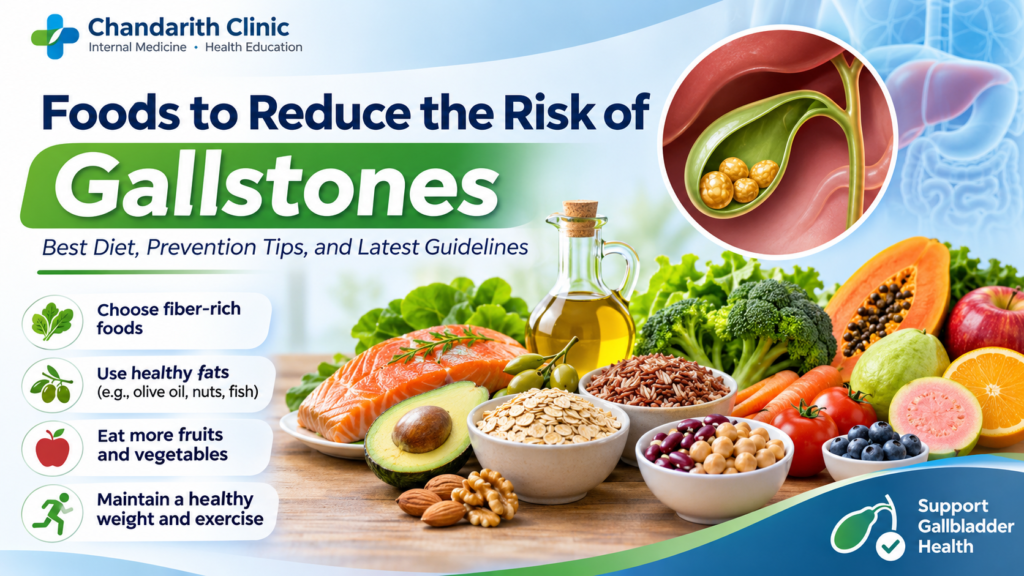
Diet and lifestyle play an important role in gallstone prevention. Although no specific food can completely prevent gallstones, a balanced diet rich in fiber, healthy fats, fruits, and vegetables, combined with regular physical activity and weight management, may help reduce the risk.
Understanding which foods to eat, which foods to limit, and how to lose weight safely can help protect gallbladder health.
1. How Does Diet Influence Gallstone Formation?
Gallstones develop when the components of bile become imbalanced. The two major types are:
-
Cholesterol gallstones: Develop when bile contains too much cholesterol relative to bile salts and phospholipids.
-
Pigment gallstones: Contain bilirubin compounds and are associated with conditions such as chronic hemolysis, cirrhosis, and biliary infection.
Several dietary and metabolic factors may contribute to cholesterol gallstone formation:
-
Excess body weight and obesity.
-
Insulin resistance and metabolic syndrome.
-
Diets high in refined carbohydrates and saturated fats.
-
Low dietary fiber intake.
-
Rapid weight loss and prolonged fasting.
-
Physical inactivity.
A healthy dietary pattern can improve metabolic health and may reduce the likelihood of cholesterol gallstone formation.
2. Best Foods to Reduce the Risk of Gallstones
2.1 High-Fiber Foods
Fiber-rich foods support healthy digestion, improve metabolic health, and may help reduce the risk of cholesterol gallstones.
Recommended foods:
-
Oatmeal and whole-grain cereals.
-
Brown rice and whole-wheat bread.
-
Barley and quinoa.
-
Lentils, chickpeas, and beans.
-
Vegetables and fresh fruits.
Why are they beneficial?
High-fiber diets are associated with improved insulin sensitivity, better weight management, and healthier lipid metabolism.
Practical recommendation: Include whole grains or legumes in your daily meals and gradually increase fiber intake while maintaining adequate hydration.
2.2 Fruits and Vegetables
Fruits and vegetables provide fiber, antioxidants, vitamins, and minerals.
Recommended fruits:
-
Apples and pears.
-
Oranges and grapefruit.
-
Berries.
-
Papaya.
-
Guava.
-
Avocado.
Recommended vegetables:
-
Broccoli.
-
Spinach.
-
Carrots.
-
Tomatoes.
-
Cabbage.
-
Green leafy vegetables.
Eating a variety of fruits and vegetables daily supports a healthy body weight and metabolic function.
2.3 Healthy Fats
Not all fats are harmful to the gallbladder. Moderate consumption of unsaturated fats may support normal gallbladder contraction and improve cardiovascular and metabolic health.
Recommended sources:
-
Olive oil.
-
Avocado.
-
Almonds and walnuts.
-
Fatty fish, such as salmon and sardines.
-
Seeds, including chia and flaxseed.
Why are healthy fats important?
Dietary fat stimulates cholecystokinin (CCK) release, which promotes gallbladder contraction and bile release into the intestine.
Very low-fat diets and prolonged fasting can reduce gallbladder emptying, potentially contributing to bile stasis.
However, patients who already have symptomatic gallstones may experience pain after fatty meals and should individualize their fat intake.
2.4 Lean Protein
Choose lean protein sources instead of processed or fatty meats.
Good choices include:
-
Skinless chicken.
-
Fish and seafood.
-
Tofu.
-
Beans and lentils.
-
Egg whites and moderate portions of eggs.
-
Lean cuts of meat.
Replacing fatty and processed meats with fish and plant-based protein can improve overall dietary quality.
2.5 Low-Fat Dairy Products
Choose:
-
Low-fat milk.
-
Plain low-fat yogurt.
-
Reduced-fat cheese.
-
Unsweetened dairy products.
These foods provide protein and calcium without excessive saturated fat.
3. Foods and Eating Habits to Limit
3.1 Fried and High-Fat Foods
Limit frequent consumption of:
-
Deep-fried chicken and fish.
-
French fries.
-
Fried pork and fatty beef.
-
Fast food.
-
Foods cooked with large amounts of oil.
These foods can contribute to excess calorie intake, weight gain, and unfavorable metabolic health.
3.2 Foods High in Saturated Fat
Reduce excessive intake of:
-
Butter and lard.
-
Fatty red meat.
-
Sausages and processed meats.
-
Cream and full-fat dairy products.
-
Foods containing palm oil.
-
Large amounts of coconut cream.
Important: Coconut milk and coconut cream are commonly used in Southeast Asian cooking. They do not need to be completely eliminated, but frequent consumption of large amounts of coconut cream may increase saturated fat intake.
3.3 Refined Carbohydrates and Added Sugar
Limit:
-
Sugary soft drinks.
-
Sweetened fruit juices.
-
Cakes and pastries.
-
White bread in excessive quantities.
-
Candy and sweet desserts.
-
Foods containing large amounts of added sugar.
High intake of refined carbohydrates and added sugars may contribute to insulin resistance, obesity, and metabolic abnormalities associated with gallstone disease.
3.4 Avoid Crash Diets and Prolonged Fasting
Rapid weight loss is an important modifiable risk factor for gallstones.
Very-low-calorie diets and prolonged fasting can:
-
Increase cholesterol secretion into bile.
-
Reduce gallbladder emptying.
-
Promote bile stasis.
-
Increase the likelihood of cholesterol gallstone formation.
Avoid extreme dieting, repeated weight cycling, and skipping meals to lose weight quickly.
4. Lifestyle Habits That Help Prevent Gallstones
Diet is only one part of prevention. Other lifestyle measures are equally important.
1. Exercise regularly
Aim for at least 150 minutes of moderate-intensity physical activity weekly, such as brisk walking, cycling, or swimming. Include muscle-strengthening exercise at least twice weekly.
2. Maintain a healthy body weight
Obesity increases cholesterol saturation in bile. If overweight, aim for gradual and sustainable weight reduction.
3. Eat regular meals
Maintain a regular eating pattern. Avoid prolonged fasting and routinely skipping meals.
4. Maintain adequate hydration
Drink sufficient water throughout the day. Water supports general health, although increased water intake alone has not been established as a specific gallstone-prevention treatment.
According to the NIDDK, people with overweight or obesity may benefit from an initial weight-loss target of 5–10% of starting body weight over approximately six months. Avoid rapid weight reduction and repeated weight cycling.
NIDDK+1
5. A Practical Daily Diet Plan for Gallstone Prevention
A healthy eating pattern does not need to be expensive or complicated. Traditional Cambodian foods can be incorporated into a gallbladder-friendly dietary pattern.
Breakfast
-
Oatmeal or whole-grain bread.
-
One serving of papaya or banana.
-
Low-fat milk or plain yogurt.
-
Water or unsweetened tea.
Lunch
-
Brown rice or moderate portions of white rice.
-
Steamed or grilled fish.
-
Vegetable soup.
-
Fresh vegetables.
-
Small amounts of vegetable oil.
Afternoon snack
-
Guava, apple, or orange.
-
A small handful of unsalted nuts.
Dinner
-
Tofu, fish, or skinless chicken.
-
Steamed vegetables.
-
A moderate portion of rice.
-
Clear vegetable soup.
Cambodian dietary recommendations:
-
Choose steamed fish instead of deep-fried fish.
-
Eat fresh vegetables with meals.
-
Choose clear soups rather than soups containing excessive coconut cream.
-
Reduce processed meat and fatty pork.
-
Replace sugary beverages with water.
-
Choose fresh fruit instead of sweet desserts.
6. How Much Weight Loss Is Safe?
For people with overweight or obesity, gradual weight loss is preferable to rapid weight reduction.
| Weight management | Recommendation |
|---|---|
| Initial weight-loss target | 5–10% over approximately 6 months |
| Preferred approach | Moderate calorie reduction |
| Physical activity | At least 150 min/week |
| Rapid weight loss | Avoid |
| Weight cycling | Avoid repeated loss and regain |
For individuals undergoing bariatric surgery or medically supervised very-low-calorie diets, clinicians should assess gallstone risk. Ursodeoxycholic acid (UDCA) may be considered for selected patients during rapid weight loss, particularly after bariatric surgery. It is not routinely indicated for everyone seeking dietary prevention.
NIDDK+1
7. Can Diet Prevent All Types of Gallstones?
No. Dietary interventions mainly target modifiable metabolic risk factors associated with cholesterol gallstones.
Other risk factors include:
-
Female sex and pregnancy.
-
Increasing age.
-
Family history and genetic predisposition.
-
Chronic hemolytic disorders.
-
Cirrhosis.
-
Certain medications and metabolic conditions.
Pigment gallstones have different mechanisms, so healthy eating cannot eliminate their risk.
The European Association for the Study of the Liver (EASL) emphasizes that a healthy lifestyle, regular physical activity, and maintenance of healthy body weight may help prevent cholesterol gallstones. However, the evidence supporting specific dietary interventions is limited.
EASL
8. Important Advice for People Who Already Have Gallstones
Dietary prevention and management of established gallstone disease are not the same.
For people with asymptomatic gallstones, routine preventive surgery is generally not required unless specific high-risk circumstances apply.
For symptomatic gallstones:
-
Identify foods that trigger biliary pain.
-
Consider smaller meals if large meals trigger symptoms.
-
Temporarily reduce high-fat foods if they provoke symptoms.
-
Avoid extreme fat restriction without professional advice.
-
Seek medical assessment for recurrent biliary pain.
Dietary modification may reduce symptoms in some patients, but it does not reliably dissolve established gallstones or replace definitive treatment.
Laparoscopic cholecystectomy is the standard definitive treatment for symptomatic gallbladder stones.
CUH+1
9. Frequently Asked Questions (FAQ)
1. What is the best food to prevent gallstones?
There is no single food that prevents gallstones. A diet rich in fruits, vegetables, whole grains, legumes, nuts, and moderate amounts of unsaturated fats is recommended.
2. Does drinking lemon water prevent gallstones?
No convincing clinical evidence demonstrates that lemon water dissolves gallstones or prevents their formation. It can be consumed as part of a healthy diet, but it should not be considered a medical treatment.
3. Are eggs safe for people at risk of gallstones?
Yes. Eggs can be included in a balanced diet. Individual tolerance may vary, particularly in people with symptomatic gallstones who experience pain after eating.
4. Is coffee good for preventing gallstones?
Observational studies have suggested an association between coffee consumption and a lower risk of gallstone disease. However, this does not establish that coffee prevents gallstones. Coffee should not be prescribed specifically for gallstone prevention.
5. Does eating fatty foods cause gallstones?
Excessive consumption of calorie-dense foods high in saturated fats may contribute to obesity and metabolic dysfunction, increasing gallstone risk. However, dietary fat itself is not entirely harmful. Moderate amounts of healthy unsaturated fats are appropriate.
6. Can olive oil prevent gallstones?
Olive oil contains monounsaturated fatty acids and is a healthier alternative to butter and animal fats. It can be included in a balanced diet, but there is insufficient evidence that olive oil alone prevents gallstones.
7. Does fasting increase the risk of gallstones?
Yes. Prolonged fasting and skipping meals can reduce gallbladder emptying and promote bile stasis. Very-low-calorie diets and rapid weight loss also increase gallstone risk.
8. Can exercise reduce the risk of gallstones?
Regular physical activity can help maintain a healthy weight, improve insulin sensitivity, and reduce metabolic risk factors associated with cholesterol gallstones.
9. Can gallstones disappear with diet?
Dietary changes cannot reliably dissolve existing gallstones. Some cholesterol gallstones may be treated with ursodeoxycholic acid in carefully selected patients, but treatment takes months or longer and recurrence is common.
10. When should someone with gallstones seek medical attention?
Seek urgent medical evaluation if you experience:
-
Severe or persistent right upper abdominal pain.
-
Fever or chills.
-
Yellow discoloration of the eyes or skin.
-
Dark urine or pale stools.
-
Persistent nausea and vomiting.
These symptoms may indicate acute cholecystitis, bile duct obstruction, cholangitis, or gallstone pancreatitis.
10. Conclusion
A healthy dietary pattern and lifestyle can help reduce the risk of cholesterol gallstones. The most important recommendations include eating more fiber-rich foods, fruits and vegetables, choosing healthy fats, reducing refined carbohydrates and excessive saturated fat, maintaining a healthy weight, exercising regularly, and avoiding rapid weight loss.
For people living in Cambodia, these recommendations can be implemented using affordable local foods such as fish, vegetables, papaya, guava, beans, brown rice, and other whole grains.
Remember that diet can reduce modifiable risk factors but cannot guarantee prevention or replace medical treatment for established gallstone disease.
References and Clinical Guidelines
1. European Association for the Study of the Liver (EASL). EASL Clinical Practice Guidelines on the prevention, diagnosis and treatment of gallstones. Journal of Hepatology. 2016;65(1):146–181.
Read EASL Guidelines.
2. National Institute of Diabetes and Digestive and Kidney Diseases (NIDDK). Eating, Diet, & Nutrition for Gallstones.
Read NIDDK recommendations.
3. National Institute of Diabetes and Digestive and Kidney Diseases (NIDDK). Dieting & Gallstones.
Read NIDDK guidance on weight loss.
4. National Institute for Health and Care Excellence (NICE). Gallstone Disease: Diagnosis and Management. Clinical Guideline CG188.
Read NICE guidance.
5. Cochrane Database of Systematic Reviews. Modified dietary fat intake for treatment of gallstone disease in people of any age. 2024;2:CD012608.
Read Cochrane Review.
6. NHS Inform. Gallstones: Prevention and dietary recommendations. Updated March 2026.
Read NHS recommendations.
7. Royal Devon University Healthcare NHS Foundation Trust. Dietary Advice for People with Cholecystitis or Gallstones. May 2026.
Read dietary guidance.
Disclaimer: This article is for educational purposes and does not replace individualized medical assessment, diagnosis, or treatment.