
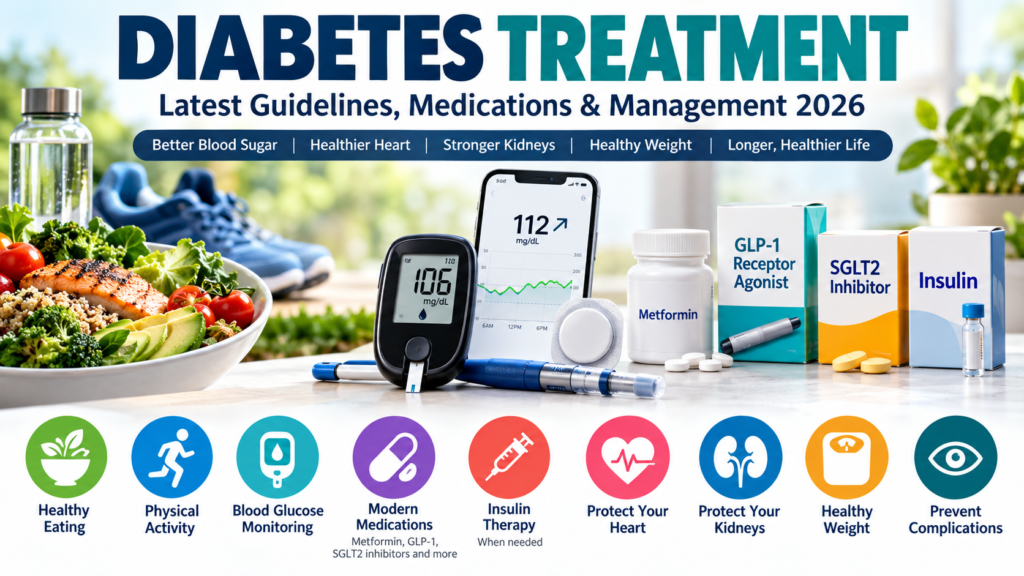
Diabetes mellitus is a chronic metabolic disease characterized by elevated blood glucose caused by inadequate insulin production, impaired insulin action, or both. Without appropriate treatment, diabetes can damage the heart, kidneys, eyes, nerves and blood vessels, leading to complications such as cardiovascular disease, chronic kidney disease, blindness, neuropathy and diabetic foot disease.
The treatment of diabetes has changed substantially in recent years. Modern diabetes management is no longer focused only on lowering blood glucose. Treatment should also reduce cardiovascular and kidney complications, manage body weight, prevent hypoglycemia, improve quality of life and address other metabolic conditions.
The American Diabetes Association (ADA) Standards of Care 2026 emphasizes individualized, person-centered treatment and selection of medications according to cardiovascular disease, heart failure, chronic kidney disease, obesity, hypoglycemia risk, cost, access, tolerability and patient preferences.
Important: Diabetes treatment should be individualized by a qualified healthcare professional. Medication selection and dosing depend on the type of diabetes, kidney and liver function, age, pregnancy status, comorbidities, glucose levels and risk of hypoglycemia.
1. Goals of Diabetes Treatment
The major goals of diabetes treatment are to:
- Achieve individualized blood glucose targets
- Prevent or delay diabetes complications
- Reduce cardiovascular risk
- Protect kidney function
- Achieve and maintain a healthy body weight
- Avoid hypoglycemia
- Treat hypertension and dyslipidemia
- Promote physical activity and healthy nutrition
- Improve quality of life
- Provide diabetes self-management education and support
Importantly, glycemic control is only one component of comprehensive diabetes care. Cardiovascular risk factors, kidney disease, obesity, eye disease, neuropathy and foot health should also be assessed regularly.
2. Individualized Blood Glucose Targets
For many nonpregnant adults with diabetes, the ADA 2026 recommends an HbA1c target below 7%, provided this can be achieved safely without significant hypoglycemia or excessive treatment burden.
Typical glucose targets for many adults are:
| Measurement | Common target |
|---|---|
| HbA1c | <7% |
| Pre-meal glucose | 80–130 mg/dL (4.4–7.2 mmol/L) |
| Peak post-meal glucose | <180 mg/dL (<10.0 mmol/L) |
| CGM time in range | >70% |
Targets should be individualized.
A lower HbA1c target, such as <6.5%, may be appropriate for selected healthy individuals when treatment carries a low risk of hypoglycemia. Conversely, less stringent targets may be appropriate for people with frailty, major comorbidities, cognitive impairment or substantial hypoglycemia risk.
3. Lifestyle Management
Lifestyle intervention remains a fundamental component of diabetes treatment.
Healthy eating
There is no single diet that is appropriate for every person with diabetes. Nutrition should be individualized according to:
- Body weight
- Cultural food preferences
- Economic circumstances
- Cardiovascular risk
- Kidney function
- Glycemic targets
- Medication regimen
Important principles include:
- Emphasize vegetables and high-fiber foods
- Choose minimally processed foods
- Prefer whole grains and high-quality carbohydrates
- Include appropriate sources of protein
- Reduce sugar-sweetened beverages
- Limit refined carbohydrates
- Reduce excessive saturated fat
- Avoid excessive calorie intake
- Choose water or unsweetened beverages instead of sugary drinks
For people who are overweight or obese, even modest weight loss can improve glycemic control and cardiometabolic risk.
4. Physical Activity
Regular physical activity improves:
- Insulin sensitivity
- Blood glucose control
- Cardiovascular fitness
- Blood pressure
- Body composition
- Quality of life
A practical approach is to combine:
- Aerobic activity
- Resistance training
- Reduction of prolonged sitting
- Increased daily movement
Exercise prescriptions should be individualized, particularly in people with cardiovascular disease, advanced kidney disease, neuropathy, retinopathy or other complications.
5. Diabetes Self-Management Education and Support
Patients should be taught how to manage diabetes in everyday life.
Education should include:
- Medication use
- Glucose monitoring
- Recognition and treatment of hypoglycemia
- Nutrition
- Exercise
- Sick-day management
- Foot care
- Medication adherence
- When to seek medical attention
The ADA 2026 considers diabetes self-management education and support and healthy behaviors essential components of diabetes treatment.
6. Treatment of Type 1 Diabetes
People with type 1 diabetes require insulin therapy because pancreatic insulin production is severely deficient or absent.
The 2026 ADA/EASD consensus emphasizes insulin replacement together with diabetes technology, glucose monitoring, education and management of cardiovascular and other risk factors.
Insulin therapy
Insulin can be delivered by:
- Multiple daily injections
- Insulin pumps
- Automated insulin delivery systems
Modern treatment increasingly incorporates continuous glucose monitoring (CGM) and automated insulin delivery.
The ADA 2026 identifies automated insulin delivery systems as the preferred insulin-delivery method over multiple daily injections or conventional pump approaches for many people with type 1 diabetes, depending on individual circumstances and preferences.
7. Treatment of Type 2 Diabetes
Type 2 diabetes treatment generally combines lifestyle management with glucose-lowering medication.
Pharmacologic treatment should generally begin when type 2 diabetes is diagnosed rather than delaying medication unnecessarily. The choice of medication should be individualized according to glycemic needs, cardiovascular disease, heart failure, kidney disease, obesity, hypoglycemia risk, adverse effects, cost and patient preferences.
8. Metformin
Metformin remains an important treatment option for type 2 diabetes.
Advantages include:
- Effective glucose lowering
- Low risk of hypoglycemia when used alone
- Low cost
- Long clinical experience
- Generally weight neutral or associated with modest weight loss
It is particularly useful when there are no specific cardiovascular, kidney or obesity-related considerations that favor another medication.
However, kidney function must be considered before and during treatment.
9. GLP-1 Receptor Agonists
GLP-1 receptor agonists include medications such as:
- Semaglutide
- Dulaglutide
- Liraglutide
They can provide substantial glucose lowering and are particularly useful in people with:
- Obesity or overweight
- High cardiovascular risk
- Established cardiovascular disease
- Certain kidney disease
- MASLD/MASH in appropriate patients
GLP-1–based therapies generally have a low intrinsic risk of hypoglycemia unless combined with insulin or insulin secretagogues.
Common adverse effects include gastrointestinal symptoms such as:
- Nausea
- Vomiting
- Diarrhea
- Constipation
- Reduced appetite
10. Dual GIP/GLP-1 Receptor Agonist
Tirzepatide is a dual glucose-dependent insulinotropic polypeptide (GIP) and GLP-1 receptor agonist.
It can produce substantial reductions in:
- HbA1c
- Body weight
The ADA 2026 recommends prioritizing glucose-lowering therapies with beneficial effects on body weight in people with diabetes and overweight or obesity. GLP-1 receptor agonists or dual GIP/GLP-1 receptor agonists with greater weight-loss efficacy, such as semaglutide or tirzepatide, are highlighted for appropriate patients.
11. SGLT2 Inhibitors
SGLT2 inhibitors include:
- Empagliflozin
- Dapagliflozin
- Canagliflozin
- Ertugliflozin
These medications lower blood glucose by increasing urinary glucose excretion.
Their importance extends beyond glucose lowering.
They can provide important benefits in selected people with:
- Heart failure
- Chronic kidney disease
- Cardiovascular disease
- Increased cardiovascular or renal risk
For people with type 2 diabetes and heart failure, an SGLT2 inhibitor is recommended for cardiovascular and heart-failure benefits irrespective of HbA1c.
For people with type 2 diabetes and CKD, ADA 2026 recommends an SGLT2 inhibitor with demonstrated benefit when eGFR is ≥20 mL/min/1.73 m², with continuation possible as kidney function declines, depending on the clinical situation.
Potential adverse effects include:
- Genital mycotic infections
- Volume depletion
- Increased urination
- Rare diabetic ketoacidosis, including euglycemic DKA
Patients should receive appropriate sick-day and perioperative instructions.
12. Sulfonylureas
Sulfonylureas can effectively reduce blood glucose and are relatively inexpensive.
However, they can cause:
- Hypoglycemia
- Weight gain
Because newer therapies may offer additional cardiovascular, kidney or weight benefits, sulfonylureas are often not the preferred option when those considerations are important.
13. DPP-4 Inhibitors
DPP-4 inhibitors include:
- Sitagliptin
- Linagliptin
- Saxagliptin
- Alogliptin
They generally have:
- Modest glucose-lowering efficacy
- Low hypoglycemia risk when used alone
- Weight-neutral effects
They may be useful when treatment simplicity and tolerability are priorities.
GLP-1 receptor agonists should generally not be combined with DPP-4 inhibitors because they act through overlapping incretin pathways without providing meaningful additional benefit.
14. Thiazolidinediones
Pioglitazone improves insulin sensitivity.
It may be useful in selected patients but can cause:
- Weight gain
- Edema
- Fluid retention
- Increased risk of heart failure in susceptible individuals
- Increased fracture risk
Therefore, careful patient selection is required.
15. When Should Combination Therapy Be Used?
Combination therapy may be appropriate when:
- HbA1c is substantially above target
- Monotherapy is unlikely to achieve the desired goal
- Rapid improvement is needed
- Cardiovascular or kidney protection is an important treatment objective
The ADA 2026 recommends considering combination therapy as initial treatment in appropriate adults with type 2 diabetes to shorten the time needed to reach individualized glycemic goals.
16. When Is Insulin Needed in Type 2 Diabetes?
Insulin should be considered when there is:
- Severe hyperglycemia
- Catabolic symptoms
- Significant weight loss
- Ketosis or ketoacidosis
- Very high HbA1c or glucose levels
- Symptomatic hyperglycemia
- Failure of appropriate non-insulin therapy
- Situations in which insulin is temporarily or permanently required
Insulin may be used alone or together with other glucose-lowering medications.
When insulin is started, clinicians should monitor for hypoglycemia and avoid excessive basal insulin dosing.
17. Diabetes and Chronic Kidney Disease
Kidney protection is now a major component of diabetes treatment.
Patients with diabetes should be assessed for:
- eGFR
- Urine albumin-to-creatinine ratio
- Blood pressure
- Cardiovascular risk
For type 2 diabetes with CKD, treatment may include:
- SGLT2 inhibitor when appropriate
- GLP-1 receptor agonist with demonstrated benefit
- Renin-angiotensin system blockade when indicated
- Statin therapy
- Blood pressure control
In advanced CKD with eGFR <30 mL/min/1.73 m², the ADA 2026 identifies GLP-1 receptor agonists as preferred for glucose management because of their lower hypoglycemia risk and cardiovascular benefits.
18. Diabetes and Cardiovascular Disease
Cardiovascular disease is a major cause of morbidity and mortality in diabetes.
Management should include:
- Blood pressure control
- Lipid management
- Smoking cessation
- Physical activity
- Weight management
- Appropriate antiplatelet therapy when indicated
- Use of glucose-lowering agents with proven cardiovascular benefit when appropriate
For people with type 2 diabetes and established or high-risk ASCVD, the ADA 2026 recommends incorporating a GLP-1 receptor agonist and/or SGLT2 inhibitor with demonstrated cardiovascular benefit, independent of HbA1c.
19. Blood Pressure Management
Blood pressure should be monitored regularly.
The ADA 2026 recommends pharmacologic treatment for confirmed office blood pressure ≥130/80 mmHg, with the individualized target determined according to the patient’s clinical circumstances.
In patients with diabetes and albuminuria or coronary artery disease, an ACE inhibitor or ARB is recommended as first-line antihypertensive therapy.
ACE inhibitors and ARBs should not be combined routinely.
20. Cholesterol and Statin Therapy
Lipid management is an essential part of diabetes care.
For adults aged 40–75 years with diabetes without ASCVD, the ADA 2026 recommends at least moderate-intensity statin therapy.
For patients at higher cardiovascular risk, high-intensity statin therapy is recommended to achieve a substantial LDL-C reduction and an LDL-C goal below 70 mg/dL (1.8 mmol/L) in the primary-prevention setting described by the guideline.
For people with diabetes and established ASCVD, the LDL-C goal is <55 mg/dL (1.4 mmol/L) with high-intensity lipid-lowering therapy and additional therapy when necessary.
21. Diabetes and Obesity
Weight management should be considered a distinct treatment goal, not simply a secondary consequence of glucose treatment.
For people with diabetes and overweight or obesity, treatment may include:
- Nutrition intervention
- Physical activity
- Behavioral support
- Anti-obesity pharmacotherapy
- GLP-1 receptor agonists
- Dual GIP/GLP-1 receptor agonists
- Metabolic/bariatric surgery for appropriate candidates
The ADA 2026 specifically recommends prioritizing glucose-lowering medications that have beneficial effects on weight in people with diabetes and overweight or obesity.
22. Continuous Glucose Monitoring
Continuous glucose monitoring (CGM) has become an important component of modern diabetes management.
The ADA 2026 recommends CGM for adults with diabetes who use insulin and also supports CGM for selected patients using non-insulin therapies associated with hypoglycemia or when CGM can improve diabetes management.
CGM can provide information about:
- Current glucose
- Glucose trends
- Time in range
- Hypoglycemia
- Hyperglycemia
- Glycemic variability
For many adults using CGM, a time in range >70% is an appropriate goal.
23. Screening and Prevention of Diabetes Complications
Good diabetes treatment includes regular screening for complications.
Eye examination
People with type 2 diabetes should receive a comprehensive dilated eye examination at the time of diagnosis.
For type 1 diabetes, the initial comprehensive eye examination is generally recommended approximately five years after onset.
The frequency of subsequent examinations depends on the presence and severity of retinopathy.
Kidney screening
Assess:
- eGFR
- Urine albumin-to-creatinine ratio
The frequency depends on diabetes type, duration and kidney disease status.
Neuropathy
Peripheral neuropathy should be assessed:
- At diagnosis of type 2 diabetes
- Five years after diagnosis of type 1 diabetes
- At least annually thereafter
The examination may include a 10-g monofilament test, vibration testing and assessment of pinprick or temperature sensation.
Foot examination
A comprehensive foot examination should be performed at least annually.
Patients should be taught to inspect their feet every day and seek medical attention promptly for:
- Ulcers
- Blisters
- Redness
- Swelling
- New wounds
- Skin breakdown
- Signs of infection
High-risk patients require more frequent professional foot assessment.
24. Treatment of Diabetic Neuropathic Pain
For painful diabetic peripheral neuropathy, medications may include:
- Gabapentinoids
- Serotonin-norepinephrine reuptake inhibitors
- Tricyclic antidepressants
- Sodium-channel blockers
The ADA 2026 recommends these medication groups as initial pharmacologic options for painful diabetic neuropathy.
Routine use of opioids, including tramadol and tapentadol, is not recommended because of their potential harms.
25. Prevention and Management of Hypoglycemia
Hypoglycemia is an important treatment-related complication.
Symptoms may include:
- Sweating
- Tremor
- Hunger
- Palpitations
- Dizziness
- Confusion
- Behavioral changes
- Seizures
- Loss of consciousness
Patients using insulin or medications that can cause hypoglycemia should be educated about prevention and treatment.
Medication regimens should be adjusted when recurrent hypoglycemia occurs.
CGM can be particularly useful for detecting and preventing hypoglycemia in appropriate patients.
26. Diabetes Treatment During Illness
Illness can significantly increase blood glucose and, particularly in insulin-deficient states, can precipitate diabetic ketoacidosis.
Patients should have a sick-day plan, including instructions regarding:
- Glucose monitoring
- Ketone testing when appropriate
- Insulin continuation
- Hydration
- Medication adjustments
- When to contact a healthcare professional
- When emergency care is required
Patients with persistent vomiting, severe dehydration, altered consciousness, significant ketones or suspected DKA require urgent medical evaluation.
27. A Practical Approach to Type 2 Diabetes Treatment
A simplified approach is:
Step 1: Confirm diagnosis and assess the patient
Evaluate:
- HbA1c
- Glucose pattern
- Weight/BMI
- Blood pressure
- Lipid profile
- eGFR
- Urine albumin
- Cardiovascular disease
- Heart failure
- CKD
- Obesity
- Hypoglycemia risk
- Diabetes complications
Step 2: Begin lifestyle intervention and diabetes education
Step 3: Start appropriate pharmacologic therapy
Do not automatically use the same drug for every patient.
Step 4: Identify cardiorenal priorities
- ASCVD → consider GLP-1 RA and/or SGLT2 inhibitor with proven benefit
- Heart failure → prioritize SGLT2 inhibitor with proven benefit
- CKD → SGLT2 inhibitor and/or GLP-1 RA with demonstrated benefit
- Obesity → prioritize therapies with meaningful weight-loss effects
Step 5: Reassess regularly
If treatment goals are not achieved, intensify therapy rather than allowing prolonged uncontrolled hyperglycemia.
Step 6: Monitor for complications
Regularly assess:
- Eyes
- Kidneys
- Feet
- Neuropathy
- Cardiovascular risk
- Lipids
- Blood pressure
Frequently Asked Questions (FAQ)
1. What is the best medicine for type 2 diabetes?
There is no single best medicine for every patient.
Metformin remains an important option, but GLP-1 receptor agonists, dual GIP/GLP-1 receptor agonists and SGLT2 inhibitors may be preferred or prioritized when obesity, cardiovascular disease, heart failure or chronic kidney disease is present. Treatment should be individualized.
2. Should everyone with type 2 diabetes take metformin?
Not necessarily.
Metformin remains effective, inexpensive and widely used, but current guidelines emphasize selecting therapy according to the patient’s cardiovascular, kidney, weight and other clinical characteristics rather than automatically using metformin as the only first-line treatment.
3. When should insulin be started in type 2 diabetes?
Insulin may be necessary when hyperglycemia is severe, when there are symptoms or catabolic features, when ketosis is present, or when adequate glycemic control cannot be achieved with appropriate non-insulin therapy.
4. Can diabetes be cured?
Type 1 diabetes currently requires lifelong insulin replacement.
Type 2 diabetes can sometimes enter remission, particularly following substantial weight loss or metabolic surgery in appropriate patients. However, remission does not mean that lifelong follow-up is unnecessary.
5. Can a person with diabetes eat rice?
Yes.
People with diabetes do not necessarily need to completely eliminate rice. Portion size, carbohydrate quantity, food quality, meal composition and overall calorie intake are important.
For Cambodian patients, nutrition advice should take local dietary patterns into account rather than simply recommending unfamiliar Western foods.
6. Can people with diabetes eat fruit?
Yes. Whole fruit can generally be incorporated into a healthy eating pattern.
However, portion size and total carbohydrate intake matter. Fruit juice should generally be limited because it can provide a large amount of rapidly available carbohydrate without the same fiber and satiety as whole fruit.
7. Is HbA1c below 7% always necessary?
No.
An HbA1c <7% is appropriate for many nonpregnant adults, but targets should be individualized. More stringent or less stringent targets may be appropriate depending on age, comorbidities, hypoglycemia risk, functional status and treatment burden.
8. Can diabetes medication be stopped if blood sugar becomes normal?
Not without medical advice.
Normal glucose may occur because treatment is working. Stopping medication abruptly can result in hyperglycemia and, in insulin-deficient patients, potentially serious metabolic complications.
9. Are SGLT2 inhibitors only used to lower blood sugar?
No.
SGLT2 inhibitors can provide important cardiovascular and kidney benefits in appropriately selected people with type 2 diabetes, including patients with heart failure and CKD.
10. Are GLP-1 medications only for diabetes?
No.
Some GLP-1–based therapies are also used for obesity management and may provide cardiovascular or other metabolic benefits in appropriately selected patients.
11. How often should someone with diabetes have an eye examination?
People with type 2 diabetes should generally have a comprehensive eye examination at diagnosis. People with type 1 diabetes generally begin screening about five years after onset. Follow-up frequency depends on findings.
12. How often should the feet be checked?
A comprehensive foot examination should be performed at least annually, with more frequent examinations for patients with neuropathy, peripheral arterial disease, previous ulceration, amputation or other high-risk features.
Key Takeaways
Modern diabetes treatment is personalized rather than one-size-fits-all.
The most important principles are:
- Set individualized glucose and HbA1c targets.
- Use healthy nutrition, physical activity and diabetes education as the foundation of care.
- Choose medications according to the patient’s cardiovascular, kidney and weight-related conditions—not glucose alone.
- Use GLP-1–based therapy and/or SGLT2 inhibitors when indicated for cardiovascular or kidney risk reduction.
- Consider weight management an important therapeutic goal.
- Use insulin when insulin deficiency or severe hyperglycemia requires it.
- Use CGM and diabetes technology when clinically appropriate.
- Treat blood pressure and cholesterol aggressively according to individual cardiovascular risk.
- Screen regularly for kidney disease, retinopathy, neuropathy and diabetic foot disease.
- Avoid therapeutic inertia—treatment should be intensified when targets are not being achieved.
Effective diabetes management is therefore not simply about achieving a normal blood glucose level. It is about reducing long-term complications, protecting the heart and kidneys, maintaining healthy body weight, avoiding hypoglycemia and helping each patient achieve the best possible quality of life.
References
- American Diabetes Association Professional Practice Committee. Standards of Care in Diabetes—2026. Diabetes Care. 2026.
- American Diabetes Association Professional Practice Committee. 6. Glycemic Goals, Hypoglycemia, and Hyperglycemic Crises: Standards of Care in Diabetes—2026. Diabetes Care. 2026.
- American Diabetes Association Professional Practice Committee. 9. Pharmacologic Approaches to Glycemic Treatment: Standards of Care in Diabetes—2026. Diabetes Care. 2026.
- American Diabetes Association Professional Practice Committee. 8. Obesity and Weight Management for the Prevention and Treatment of Diabetes: Standards of Care in Diabetes—2026. Diabetes Care. 2026.
- American Diabetes Association Professional Practice Committee. 10. Cardiovascular Disease and Risk Management: Standards of Care in Diabetes—2026. Diabetes Care. 2026.
- American Diabetes Association Professional Practice Committee. 11. Chronic Kidney Disease and Risk Management: Standards of Care in Diabetes—2026. Diabetes Care. 2026.
- American Diabetes Association Professional Practice Committee. 12. Retinopathy, Neuropathy, and Foot Care: Standards of Care in Diabetes—2026. Diabetes Care. 2026.
- Holt RI, et al. The Management of Type 1 Diabetes in Adults. The Updated 2026 Consensus Report by the American Diabetes Association and the European Association for the Study of Diabetes. Diabetes Care. 2026.
- World Health Organization. Diabetes: Questions and Answers. Updated September 2026.
- World Health Organization. The selection and use of essential medicines 2025. WHO Expert Committee on Selection and Use of Essential Medicines.
Medical disclaimer: This article is intended for general education and does not replace individualized medical assessment. Medication selection and dosing should be determined by a qualified healthcare professional based on the patient’s clinical condition, laboratory results, kidney and liver function, other medications and individual treatment goals.