
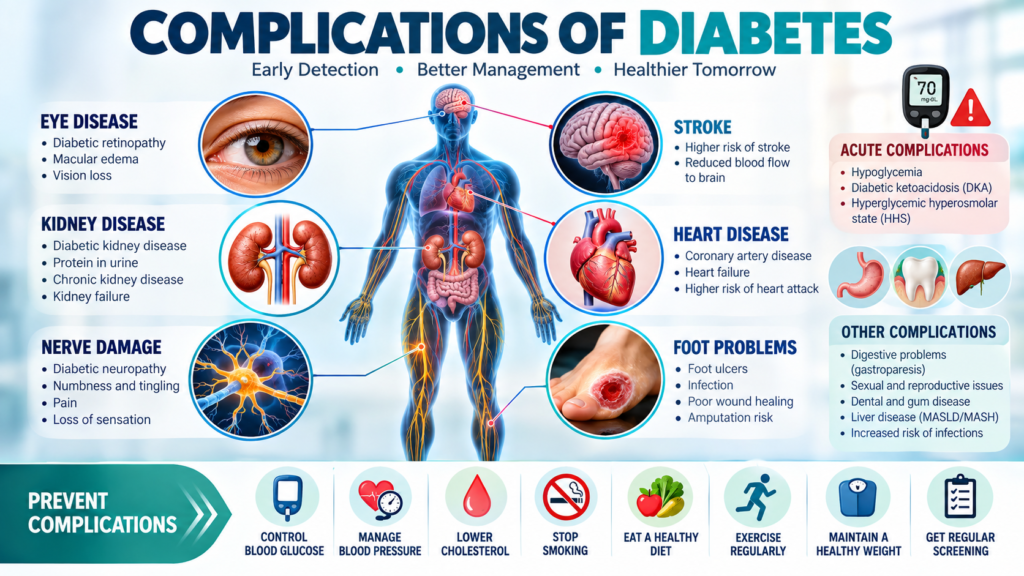
Diabetes mellitus is a chronic metabolic disease characterized by persistently elevated blood glucose levels. When diabetes is not adequately controlled, prolonged hyperglycemia can damage blood vessels, nerves, kidneys, eyes, heart, and other organs.
The good news is that many complications of diabetes can be prevented, delayed, detected early, or effectively managed through individualized glucose control, blood pressure and lipid management, healthy lifestyle, appropriate medications, and regular screening.
The 2026 American Diabetes Association (ADA) Standards of Care emphasize that diabetes management should extend beyond glucose control. Cardiovascular disease, kidney disease, eye disease, neuropathy, foot complications, and other comorbidities should be assessed as part of comprehensive diabetes care.
What Are the Complications of Diabetes?
Diabetes complications are generally divided into:
1. Acute complications
These can develop over hours or days and may become medical emergencies:
- Hypoglycemia
- Diabetic ketoacidosis (DKA)
- Hyperglycemic hyperosmolar state (HHS)
2. Chronic complications
These develop gradually, usually over years:
Microvascular complications
- Diabetic retinopathy
- Diabetic kidney disease
- Diabetic neuropathy
Macrovascular complications
- Coronary artery disease
- Heart failure
- Stroke
- Peripheral artery disease
Other important complications include:
- Diabetic foot ulcers and amputation
- Autonomic neuropathy
- Gastroparesis and other gastrointestinal problems
- Sexual and genitourinary dysfunction
- Periodontal disease
- Increased susceptibility to certain infections
- Metabolic dysfunction-associated steatotic liver disease (MASLD) and MASH
1. Hypoglycemia
Hypoglycemia means that blood glucose is too low. It is particularly important in people treated with insulin, sulfonylureas, or meglitinides.
The ADA classifies hypoglycemia as:
- Level 1: glucose <70 mg/dL (3.9 mmol/L) but ≥54 mg/dL (3.0 mmol/L)
- Level 2: glucose <54 mg/dL (3.0 mmol/L)
- Level 3: severe hypoglycemia requiring assistance from another person, regardless of the measured glucose level.
Symptoms
Symptoms may include:
- Sweating
- Trembling
- Hunger
- Palpitations
- Anxiety or irritability
- Dizziness
- Confusion
- Difficulty speaking
- Seizures
- Loss of consciousness
Severe hypoglycemia can cause injury, seizures, coma, and potentially death.
Prevention
People at risk should:
- Monitor glucose regularly
- Understand the symptoms of hypoglycemia
- Review insulin and other glucose-lowering medications
- Avoid skipping meals when using medications that can cause hypoglycemia
- Carry a rapid source of glucose
- Have glucagon available when appropriate
- Consider continuous glucose monitoring (CGM) when indicated
For a conscious person with glucose <70 mg/dL, approximately 15 g of rapidly absorbed carbohydrate is generally recommended, followed by reassessment after about 15 minutes.
2. Diabetic Ketoacidosis (DKA)
DKA is a serious and potentially life-threatening metabolic emergency caused by severe insulin deficiency, resulting in hyperglycemia, ketone production, and metabolic acidosis.
It is particularly common in type 1 diabetes but can also occur in people with type 2 diabetes.
Common triggers
- Infection
- Missed insulin doses
- New-onset diabetes
- Myocardial infarction or other acute illness
- Surgery or severe physiological stress
- Certain medications, including SGLT2 inhibitors in susceptible patients
Symptoms
- Excessive thirst
- Frequent urination
- Nausea and vomiting
- Abdominal pain
- Dehydration
- Weakness
- Rapid or deep breathing
- Fruity-smelling breath
- Confusion or altered consciousness
DKA requires urgent medical assessment and treatment.
The 2026 ADA Standards emphasize education about sick-day management and ketone testing in people at risk of DKA.
3. Hyperglycemic Hyperosmolar State (HHS)
HHS is another severe acute complication of diabetes. It is characterized by profound hyperglycemia, severe dehydration, and hyperosmolality, usually with less prominent ketoacidosis than DKA.
It occurs more commonly in people with type 2 diabetes, particularly older adults.
Symptoms
- Extreme thirst
- Polyuria
- Severe dehydration
- Weakness
- Confusion
- Altered consciousness
- Seizures or coma in severe cases
HHS is a medical emergency and generally requires hospital treatment.
4. Diabetic Retinopathy
Diabetic retinopathy is one of the most important microvascular complications of diabetes.
Persistent hyperglycemia damages retinal blood vessels and may cause:
- Microaneurysms
- Retinal hemorrhages
- Retinal ischemia
- Macular edema
- Abnormal new blood vessel formation
- Vitreous hemorrhage
- Tractional retinal detachment
Diabetic macular edema and proliferative diabetic retinopathy can result in significant visual impairment or blindness.
Risk increases with:
- Longer duration of diabetes
- Chronic hyperglycemia
- Hypertension
- Dyslipidemia
- Kidney disease
The ADA 2026 Standards recommend optimizing glucose, blood pressure, and lipid management to reduce the risk or progression of diabetic retinopathy.
Screening
People with diabetes should receive appropriate retinal assessment according to diabetes type, duration, pregnancy status, and previous retinal findings.
A dilated eye examination by an eye-care professional is an important component of diabetes care.
Important point
Do not wait for vision problems before having an eye examination.
Early diabetic retinopathy may have no symptoms.
5. Diabetic Kidney Disease
Diabetes is one of the major causes of chronic kidney disease (CKD).
Diabetic kidney disease can initially be silent. Over time, it may cause:
- Increased urinary albumin
- Progressive reduction in eGFR
- Hypertension
- Fluid retention
- Electrolyte abnormalities
- Kidney failure requiring dialysis or transplantation
The presence of CKD in a person with diabetes also substantially increases cardiovascular risk.
Screening
The ADA 2026 Standards recommend:
- Urine albumin-to-creatinine ratio (UACR)
- Estimated glomerular filtration rate (eGFR)
at least annually in:
- People with type 2 diabetes
- People with type 1 diabetes of ≥5 years’ duration
Patients who already have CKD generally require more frequent monitoring depending on the severity of kidney disease.
Prevention and treatment
Management may include:
- Individualized glucose control
- Blood pressure control
- Renin-angiotensin system blockade when indicated
- SGLT2 inhibitors when appropriate
- GLP-1 receptor agonists in appropriate patients
- Nonsteroidal mineralocorticoid receptor antagonists such as finerenone in selected patients
- Lipid management
- Smoking cessation
- Dietary and lifestyle interventions
The current KDIGO diabetes guideline remains the 2022 guideline, while a 2026 update is under development; therefore, clinicians should distinguish the published guideline from the draft update.
6. Diabetic Neuropathy
Diabetic neuropathy refers to nerve damage associated with diabetes.
The most common form is distal symmetric polyneuropathy.
Symptoms
Patients may experience:
- Burning pain
- Tingling
- Numbness
- Electric-shock sensations
- Reduced sensation
- Increased sensitivity to touch
- Loss of protective sensation
Neuropathy can increase the risk of unnoticed injuries and diabetic foot ulcers.
Importantly, neuropathy can be asymptomatic. The ADA notes that up to approximately half of people with diabetic peripheral neuropathy may have no symptoms.
Screening
The ADA recommends assessment for diabetic peripheral neuropathy:
- At diagnosis of type 2 diabetes
- Five years after diagnosis of type 1 diabetes
- At least annually thereafter
Assessment may include:
- Temperature or pinprick sensation
- Vibration sensation
- Reflexes
- 10-g monofilament testing
7. Autonomic Neuropathy
Diabetes can damage the autonomic nervous system, affecting multiple organs.
Possible manifestations include:
Cardiovascular
- Resting tachycardia
- Exercise intolerance
- Orthostatic hypotension
- Reduced heart-rate variability
Gastrointestinal
- Gastroparesis
- Nausea
- Early satiety
- Bloating
- Constipation
- Diarrhea
Genitourinary
- Bladder dysfunction
- Urinary retention
- Erectile dysfunction
- Sexual dysfunction
Autonomic neuropathy can significantly affect quality of life and may be associated with increased cardiovascular risk.
8. Diabetic Foot Complications
Diabetes can increase the risk of:
- Loss of protective sensation
- Foot deformities
- Calluses
- Foot ulcers
- Infection
- Charcot neuroarthropathy
- Peripheral arterial disease
- Amputation
The combination of neuropathy, peripheral arterial disease, and infection can be particularly dangerous.
Foot-care recommendations
People with diabetes should:
- Inspect their feet regularly
- Avoid walking barefoot
- Wear appropriate footwear
- Treat minor injuries promptly
- Avoid cutting corns or calluses themselves
- Have regular professional foot assessment when at risk
People with neuropathy or previous ulcers require particularly careful foot surveillance.
9. Cardiovascular Disease
Cardiovascular disease is a major cause of illness and death among people with diabetes.
Diabetes increases the risk of:
- Coronary artery disease
- Myocardial infarction
- Heart failure
- Stroke
- Peripheral arterial disease
Risk is increased further by:
- Hypertension
- Dyslipidemia
- Smoking
- Obesity
- Chronic kidney disease
- Older age
- Long diabetes duration
The ADA 2026 Standards emphasize comprehensive cardiovascular risk management rather than focusing on glucose alone.
Prevention
Important measures include:
- Blood pressure control
- LDL cholesterol reduction
- Smoking cessation
- Physical activity
- Healthy nutrition
- Weight management
- Appropriate glucose-lowering therapy
- Use of medications with proven cardiovascular benefit when indicated
For people with type 2 diabetes and established ASCVD or CKD, the ADA recommends consideration of an SGLT2 inhibitor and/or GLP-1 receptor agonist with demonstrated cardiovascular benefit as part of an individualized treatment strategy.
10. Stroke
Diabetes is an important risk factor for ischemic stroke.
Prevention involves controlling the major modifiable risk factors:
- Blood pressure
- LDL cholesterol
- Blood glucose
- Smoking
- Obesity
- Physical inactivity
- Atrial fibrillation when present
Sudden facial weakness, arm weakness, speech difficulty, loss of vision, severe imbalance, or other acute neurological symptoms require immediate emergency evaluation.
11. Peripheral Artery Disease
Peripheral artery disease (PAD) occurs when arterial blood flow to the limbs is reduced, usually because of atherosclerosis.
Symptoms may include:
- Leg pain during walking
- Reduced walking distance
- Cold feet
- Poor wound healing
- Rest pain in advanced disease
- Foot ulcers
- Gangrene
Diabetes, smoking, dyslipidemia, hypertension, and CKD increase PAD risk.
PAD is particularly important in patients with diabetic foot ulcers because impaired circulation can delay healing and increase the risk of amputation.
12. Oral and Dental Complications
Diabetes is associated with increased risk of:
- Gingivitis
- Periodontitis
- Dental infections
- Dry mouth
- Oral candidiasis
Good glycemic control, regular dental care, oral hygiene, and treatment of periodontal disease are important components of comprehensive diabetes care.
The ADA recommends comprehensive dental and periodontal assessment as part of diabetes care when appropriate.
13. Liver Disease and Diabetes
Type 2 diabetes and obesity are strongly associated with metabolic dysfunction-associated steatotic liver disease (MASLD).
Some patients develop progressive liver disease, including:
- Steatohepatitis (MASH)
- Liver fibrosis
- Cirrhosis
- Hepatocellular carcinoma
The ADA 2026 Standards specifically include assessment for MASLD/MASH within comprehensive diabetes care.
Patients with obesity, type 2 diabetes, abnormal liver enzymes, or other metabolic risk factors may require further assessment for liver fibrosis.
How Can Diabetes Complications Be Prevented?
Prevention requires a comprehensive approach.
1. Control blood glucose
For many nonpregnant adults, an A1C target of <7% is appropriate, although targets should be individualized.
For people using CGM, the ADA 2026 Standards generally recommend a time in range >70% for many adults.
A lower or higher target may be appropriate depending on age, comorbidities, treatment burden, hypoglycemia risk, life expectancy, and patient preferences.
2. Control blood pressure
Hypertension accelerates vascular damage and increases the risk of:
- Kidney disease
- Retinopathy
- Stroke
- Heart disease
Blood pressure targets should be individualized according to cardiovascular risk, kidney disease, age, treatment tolerance, and other clinical factors.
3. Control cholesterol
LDL cholesterol reduction is an important part of cardiovascular risk reduction in diabetes.
Statins remain a cornerstone of lipid management for appropriate patients, with treatment intensity determined by age, cardiovascular risk, established ASCVD, CKD, and other factors.
4. Stop smoking
Smoking significantly increases cardiovascular and vascular complications.
Smoking cessation should be actively encouraged and supported.
5. Maintain a healthy weight
For people with overweight or obesity, weight reduction can improve:
- Glycemic control
- Blood pressure
- Lipid profile
- Cardiovascular risk
- MASLD/MASH risk
Modern diabetes therapies may provide both glucose-lowering and weight-management benefits in appropriate patients.
6. Exercise regularly
Regular physical activity can improve:
- Insulin sensitivity
- Cardiovascular fitness
- Weight control
- Blood pressure
- Lipid profile
- Quality of life
Exercise programs should be individualized, particularly for people with neuropathy, retinopathy, cardiovascular disease, or advanced kidney disease.
Recommended Diabetes Complication Screening
| Complication | Important assessment |
|---|---|
| Retinopathy | Dilated retinal examination/appropriate retinal screening |
| Kidney disease | UACR + eGFR |
| Neuropathy | Neurological examination + monofilament |
| Foot disease | Foot inspection, pulses, sensation, ulcer assessment |
| Cardiovascular disease | BP, lipids, cardiovascular risk assessment |
| PAD | Vascular assessment when clinically indicated |
| Dental disease | Dental/periodontal examination |
| MASLD/MASH | Risk assessment and liver evaluation when indicated |
Screening intervals should be individualized according to diabetes type, duration, previous abnormalities, age, pregnancy status, and overall risk.
Warning Signs That Require Urgent Medical Attention
Seek urgent medical care for:
- Severe hypoglycemia or loss of consciousness
- Persistent vomiting with high glucose
- Moderate or high ketones
- Severe dehydration
- Rapid or deep breathing
- Confusion or reduced consciousness
- Sudden weakness or difficulty speaking
- Sudden loss of vision
- Chest pain
- Severe shortness of breath
- A rapidly worsening foot wound or infection
- Black or necrotic tissue of the foot
These symptoms can indicate serious complications such as hypoglycemia, DKA, HHS, stroke, myocardial infarction, severe infection, or limb-threatening ischemia.
Frequently Asked Questions (FAQ)
1. Can diabetes complications be prevented?
Yes. Many complications can be prevented or delayed through good glucose control, blood pressure and lipid management, smoking cessation, healthy lifestyle, appropriate medications, and regular screening.
Early detection is particularly important because several complications can be present before symptoms develop.
2. Can someone have diabetic complications even if they feel well?
Yes. Diabetic kidney disease, retinopathy, neuropathy, and cardiovascular disease may be asymptomatic in their early stages.
This is why regular screening is essential.
3. Does having a normal blood glucose level mean that complications cannot occur?
Not necessarily. Diabetes complications are influenced by long-term glycemic exposure as well as blood pressure, lipid levels, smoking, kidney disease, diabetes duration, and other factors.
A single normal glucose measurement does not exclude long-term risk.
4. What is the most important test for diabetic kidney disease?
Two important tests are:
- Urine albumin-to-creatinine ratio (UACR)
- Estimated glomerular filtration rate (eGFR)
Both provide complementary information about kidney health.
5. How often should people with diabetes have their eyes checked?
The appropriate interval depends on the type and duration of diabetes and whether retinopathy is present. Many patients require regular retinal assessment, while those with established retinopathy may need more frequent follow-up.
6. Can diabetic neuropathy be reversed?
Some symptoms can improve with better metabolic control and appropriate treatment, particularly when identified early. However, established nerve damage may not completely reverse.
Treatment focuses on glucose management, addressing other causes of neuropathy, preventing foot injury, and treating painful neuropathic symptoms when present.
7. Why is foot care so important in diabetes?
Neuropathy can reduce protective sensation, while PAD can impair circulation. A small injury may therefore go unnoticed and heal poorly, potentially progressing to infection and ulceration.
8. Is heart disease more common in people with diabetes?
Yes. Diabetes is an important cardiovascular risk factor. Risk can be reduced through management of blood pressure, LDL cholesterol, smoking, weight, physical activity, glucose, and other modifiable risk factors.
9. Can people with diabetes develop heart failure?
Yes. Diabetes is associated with increased risk of heart failure, even in people without known coronary artery disease. The ADA 2026 Standards recognize heart failure as an important component of cardiovascular risk assessment in diabetes.
10. What is the difference between DKA and HHS?
DKA is characterized by insulin deficiency, ketone production, and metabolic acidosis and is particularly common in type 1 diabetes.
HHS is characterized by profound hyperglycemia, dehydration, and hyperosmolality and is more common in type 2 diabetes.
Both are potentially life-threatening emergencies.
11. Can diabetes cause sexual problems?
Yes. Diabetes can contribute to erectile dysfunction and other sexual dysfunction through vascular disease, neuropathy, hormonal factors, psychological factors, and medication-related effects.
12. Does good diabetes control completely eliminate complications?
No. Good diabetes management can substantially reduce risk, but it does not eliminate it completely.
Regular screening remains important even when glucose levels are well controlled.
Key Takeaways
Diabetes is much more than a disease of high blood sugar. It can affect almost every major organ system.
The major complications include:
Acute
- Hypoglycemia
- DKA
- HHS
Microvascular
- Retinopathy
- Kidney disease
- Neuropathy
Macrovascular
- Coronary artery disease
- Heart failure
- Stroke
- Peripheral artery disease
Other complications
- Diabetic foot disease
- Autonomic neuropathy
- Gastrointestinal dysfunction
- Sexual dysfunction
- Dental disease
- MASLD/MASH
The most effective strategy is early diagnosis + individualized glucose control + cardiovascular risk reduction + regular screening + healthy lifestyle + appropriate evidence-based medications.
Importantly, people with diabetes should not wait for symptoms before checking for complications. Regular assessment of the eyes, kidneys, nerves, feet, cardiovascular risk factors, and other relevant organs allows problems to be detected earlier and treated appropriately.
This article is for general educational purposes and does not replace an individualized medical consultation. Diabetes treatment and screening schedules should be determined by a qualified healthcare professional based on the patient’s clinical condition.
References
- American Diabetes Association Professional Practice Committee for Diabetes. Standards of Care in Diabetes—2026. Diabetes Care. 2026;49(Suppl 1).
- American Diabetes Association Professional Practice Committee for Diabetes. 4. Comprehensive Medical Evaluation and Assessment of Comorbidities: Standards of Care in Diabetes—2026. Diabetes Care. 2026;49(Suppl 1):S61-S?
- American Diabetes Association Professional Practice Committee for Diabetes. 6. Glycemic Goals, Hypoglycemia, and Hyperglycemic Crises: Standards of Care in Diabetes—2026. Diabetes Care. 2026;49(Suppl 1):S132-S149.
- American Diabetes Association Professional Practice Committee for Diabetes. 10. Cardiovascular Disease and Risk Management: Standards of Care in Diabetes—2026. Diabetes Care. 2026;49(Suppl 1):S216-S245.
- American Diabetes Association Professional Practice Committee for Diabetes. 11. Chronic Kidney Disease and Risk Management: Standards of Care in Diabetes—2026. Diabetes Care. 2026;49(Suppl 1):S246-S260.
- American Diabetes Association Professional Practice Committee for Diabetes. 12. Retinopathy, Neuropathy, and Foot Care: Standards of Care in Diabetes—2026. Diabetes Care. 2026;49(Suppl 1):S261-S276.
- Kidney Disease: Improving Global Outcomes (KDIGO). KDIGO 2022 Clinical Practice Guideline for Diabetes Management in Chronic Kidney Disease. KDIGO. The 2026 guideline update is currently in development.
- Kidney Disease: Improving Global Outcomes (KDIGO). KDIGO 2024 Clinical Practice Guideline for the Evaluation and Management of Chronic Kidney Disease. Kidney International. 2024.