
Introduction
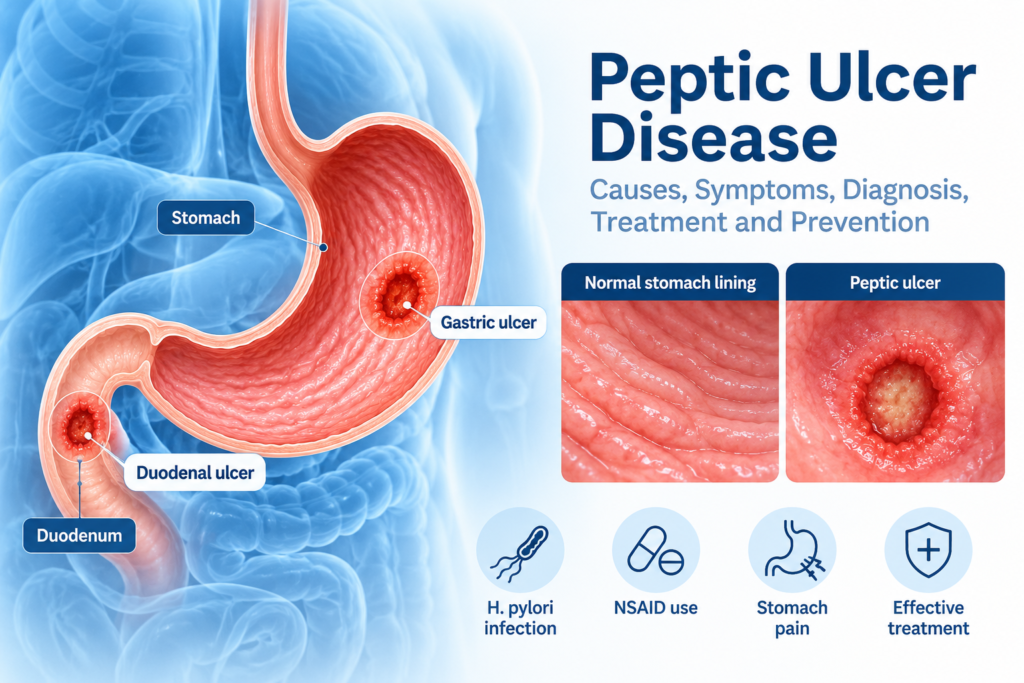
Peptic ulcer disease (PUD) is a common digestive condition in which open sores develop in the lining of the stomach or the first part of the small intestine, called the duodenum. These ulcers occur when the protective lining of the digestive tract is damaged by stomach acid and digestive enzymes.
The two most common causes are infection with Helicobacter pylori (H. pylori) bacteria and the use of nonsteroidal anti-inflammatory drugs (NSAIDs), such as ibuprofen, diclofenac, and naproxen.
Peptic ulcer disease can cause upper abdominal pain, indigestion, nausea, and bloating. Some people, however, have no symptoms until a serious complication develops.
The good news is that most peptic ulcers can be treated successfully. Identifying the underlying cause, using appropriate medication, and confirming that H. pylori infection has been eradicated when present can help prevent recurrence and serious complications.
What Is Peptic Ulcer Disease?
Peptic ulcers are classified according to their location:
- Gastric ulcer: An ulcer that develops in the stomach.
- Duodenal ulcer: An ulcer that develops in the duodenum, the first part of the small intestine.
Both types can cause similar symptoms, but the underlying cause and appropriate follow-up may differ.
A gastric ulcer sometimes resembles stomach cancer. Therefore, clinicians may recommend a biopsy during endoscopy and repeat endoscopy to confirm healing, depending on the ulcer’s appearance and clinical risk factors.
What Causes Peptic Ulcers?
1. Helicobacter pylori infection
H. pylori is a bacterium that can survive in the stomach and cause chronic inflammation of the gastric lining. Over time, the infection can impair the stomach’s protective mechanisms and lead to ulcer formation.
The infection is often acquired during childhood and may persist for many years without causing noticeable symptoms.
People with confirmed H. pylori-associated peptic ulcer disease should receive appropriate eradication treatment, even if their symptoms are mild.
2. Nonsteroidal anti-inflammatory drugs (NSAIDs)
NSAIDs can reduce the production of prostaglandins that help protect the stomach lining. Regular use can increase the risk of ulcers and gastrointestinal bleeding.
Examples include:
- Ibuprofen
- Diclofenac
- Naproxen
- Aspirin, particularly when used regularly
The risk is higher in older adults and people with a previous peptic ulcer, a history of gastrointestinal bleeding, or concurrent use of anticoagulants, antiplatelet drugs, or corticosteroids.
Patients should not stop prescribed low-dose aspirin used for cardiovascular protection without consulting their healthcare professional.
3. Other contributing factors
Smoking can impair ulcer healing and increase recurrence risk. Severe physiological stress associated with critical illness, such as major burns, trauma, or intensive care treatment, can cause stress-related mucosal injury.
Rare causes include excessive gastric acid production, such as in Zollinger–Ellison syndrome, and certain inflammatory diseases.
Important clarification: Spicy foods, coffee, and psychological stress are not the main causes of ordinary peptic ulcers. However, some foods and beverages may aggravate symptoms in individual patients.
Symptoms of Peptic Ulcer Disease
Common symptoms include:
- Burning, gnawing, or aching pain in the upper abdomen.
- Pain that occurs between meals or at night.
- Pain or discomfort after eating.
- Bloating, belching, or early fullness.
- Nausea and occasionally vomiting.
- Reduced appetite.
The relationship between pain and meals varies. Duodenal ulcer pain may improve temporarily after eating and recur later, while gastric ulcer discomfort may worsen after meals. However, these patterns cannot reliably distinguish the two conditions.
Some patients, particularly older adults or people taking NSAIDs, may develop an ulcer without typical pain.
Warning signs requiring emergency medical care
Seek emergency care immediately if you experience:
- Vomiting blood or material resembling coffee grounds.
- Black, sticky, tar-like stools.
- Sudden, severe abdominal pain, especially with a rigid or very tender abdomen.
- Fainting, marked dizziness, cold sweating, or signs of circulatory shock.
These symptoms may indicate gastrointestinal bleeding or ulcer perforation, both of which can be life-threatening.
Progressive difficulty swallowing, persistent vomiting, unexplained weight loss, iron-deficiency anemia, or a palpable abdominal mass also require prompt medical assessment.
How Is Peptic Ulcer Disease Diagnosed?
Diagnosis depends on the patient’s symptoms, medication history, risk factors, and appropriate investigations.
1. Testing for H. pylori
Common tests include:
- Urea breath test: Detects active H. pylori infection.
- Stool antigen test: Detects active infection and is also useful for confirming eradication.
- Upper gastrointestinal endoscopy with biopsy: Allows direct examination and testing of stomach tissue.
Blood antibody tests may remain positive after an infection has cleared. Therefore, they are generally less useful for confirming active infection or successful treatment.
To reduce false-negative results, proton pump inhibitors (PPIs) are usually withheld for two weeks before a breath or stool antigen test, when clinically safe. Antibiotics and bismuth should generally be avoided for at least four weeks before testing.
Patients with suspected bleeding ulcers or other urgent conditions should not delay necessary treatment merely to complete an H. pylori test.
2. Upper gastrointestinal endoscopy
Endoscopy allows clinicians to examine the esophagus, stomach, and duodenum. It can identify ulcers, obtain biopsies, assess suspicious gastric lesions, and provide treatment for bleeding ulcers.
Endoscopy is particularly important when there are alarm features, suspected complications, concern for malignancy, or symptoms that persist despite appropriate treatment.
3. Blood tests
Depending on the clinical situation, investigations may include:
- Complete blood count (CBC) to detect anemia.
- Iron studies when iron deficiency is suspected.
- Renal function and other tests when bleeding, dehydration, or comorbid illness is present.
A normal blood count does not exclude an uncomplicated peptic ulcer.
Treatment of Peptic Ulcer Disease
Treatment aims to heal the ulcer, eliminate H. pylori when present, reduce the risk of bleeding or perforation, and prevent recurrence.
1. Proton pump inhibitors (PPIs)
PPIs reduce stomach acid and promote ulcer healing. Examples include:
- Omeprazole
- Esomeprazole
- Pantoprazole
- Lansoprazole
For many uncomplicated ulcers, a PPI is prescribed for approximately four to eight weeks. Treatment duration depends on ulcer location, size, cause, complications, and clinical response.
NSAID-associated ulcers may require an approximately eight-week course, especially when the offending medication is discontinued.
Patients should follow the prescribed regimen and should not assume that pain relief means the ulcer has completely healed.
2. Eradication of H. pylori
When H. pylori is detected, treatment requires a combination of acid suppression and antibiotics, often with bismuth.
The 2024 American College of Gastroenterology (ACG) guideline recommends 14-day optimized bismuth quadruple therapy as the preferred empiric option for many treatment-naive patients when antibiotic susceptibility is unknown.
A typical adult regimen includes:
- A PPI twice daily.
- Bismuth four times daily.
- Tetracycline 500 mg four times daily.
- Metronidazole 500 mg three or four times daily, according to the prescribed regimen.
The exact bismuth formulation and dose depend on the product. Antibiotic choice and dosing must account for allergies, pregnancy, drug interactions, previous treatment, local resistance patterns, and medicine availability.
Alternative regimens may be appropriate in selected patients. Rifabutin-based triple therapy or vonoprazan-amoxicillin dual therapy may be options where available and clinically suitable.
Clarithromycin- or levofloxacin-containing regimens should generally not be used empirically unless susceptibility has been demonstrated, because antibiotic resistance can lead to treatment failure.
Patients should complete the full course, even if symptoms improve before treatment ends.
3. Confirming successful H. pylori treatment
Every patient treated for H. pylori should have a test of cure.
A urea breath test, stool antigen test, or appropriate biopsy-based test can be used. Testing should occur at least four weeks after completing antibiotics. PPIs should generally be withheld for two weeks beforehand, and antibiotics and bismuth for at least four weeks, when clinically safe.
If the infection persists, a clinician should select a subsequent regimen based on the antibiotics previously used, treatment adherence, allergies, and available susceptibility testing.
4. Management of NSAID-associated ulcers
If an ulcer is related to NSAID use, the clinician should review the need for the medication and discontinue it if possible.
If an NSAID remains necessary, the clinician may consider:
- Using the lowest effective dose for the shortest possible duration.
- Choosing an alternative analgesic when appropriate.
- Prescribing a PPI for gastroprotection.
- Considering a COX-2 selective NSAID with a PPI in selected high-risk patients.
The decision should account for cardiovascular, renal, and gastrointestinal risks.
5. Treatment of complicated ulcers
Bleeding ulcers may require emergency resuscitation, blood transfusion when indicated, urgent or early endoscopy, and endoscopic hemostasis. High-dose PPI treatment is often used after endoscopic control of high-risk ulcer bleeding.
Perforation may require urgent surgical assessment and operative treatment.
These complications must be managed in a hospital rather than with home treatment alone.
Diet and Lifestyle Recommendations
There is no single diet that cures peptic ulcer disease. However, practical lifestyle measures can support recovery and reduce symptom aggravation.
Foods and habits that may help
- Eat balanced meals with vegetables, fruits, whole grains, and adequate protein.
- Drink sufficient water.
- Choose smaller meals if large meals worsen discomfort.
- Avoid foods or drinks that consistently trigger symptoms.
- Stop smoking.
- Avoid excessive alcohol, particularly if it worsens symptoms or interacts with prescribed medication.
- Avoid unnecessary NSAID use.
Spicy foods, citrus fruits, coffee, and other commonly suspected foods do not need to be universally prohibited. Individual tolerance should guide dietary adjustments.
Dietary changes cannot replace H. pylori eradication or appropriate acid-suppressing treatment.
Can Peptic Ulcer Disease Be Prevented?
Risk reduction includes:
- Testing for and treating H. pylori when indicated.
- Avoiding unnecessary NSAIDs and reviewing long-term analgesic use.
- Using PPI gastroprotection when indicated for patients who must continue ulcerogenic medication.
- Avoiding smoking.
- Completing prescribed treatment and confirming eradication of H. pylori.
- Following medical advice about repeat endoscopy, particularly for gastric ulcers.
Patients with recurrent or nonhealing ulcers need further evaluation for persistent H. pylori, ongoing NSAID exposure, adherence problems, malignancy, or less common causes.
Conclusion
Peptic ulcer disease is a treatable condition, but it should not be ignored. H. pylori infection and NSAID use are its leading causes, and both require specific management.
The most effective approach combines accurate diagnosis, appropriate acid suppression, eradication of H. pylori when present, careful review of medications, and follow-up when indicated.
Recognizing warning signs early is essential because gastrointestinal bleeding and perforation can be life-threatening.
If you experience persistent upper abdominal pain, recurrent indigestion, unexplained anemia, or other concerning symptoms, consult a qualified healthcare professional for assessment and individualized treatment.
Frequently Asked Questions (FAQ)
1. Can peptic ulcer disease be cured?
Yes. Most peptic ulcers heal with appropriate treatment. When H. pylori is the cause, successful eradication significantly reduces recurrence. NSAID-associated ulcers often heal after the offending medication is stopped and acid suppression is given.
2. What is the most common cause of peptic ulcers?
The two leading causes are H. pylori infection and NSAID medications. Their relative contribution varies by population and individual risk factors.
3. Is peptic ulcer disease dangerous?
It can be. Some ulcers remain uncomplicated, but others cause bleeding, perforation, or gastric outlet obstruction. Vomiting blood, black tarry stools, or sudden severe abdominal pain require emergency assessment.
4. Can I have a peptic ulcer without stomach pain?
Yes. Some ulcers cause few or no symptoms. An ulcer may first become apparent through gastrointestinal bleeding or anemia, especially in older adults and people taking NSAIDs.
5. What is the best medicine for peptic ulcer disease?
PPIs are commonly used to heal ulcers. If H. pylori is present, a combination of acid suppression and appropriate antibiotics is needed. The best regimen depends on the ulcer’s cause, previous antibiotic exposure, allergies, and other clinical factors.
6. How long does a peptic ulcer take to heal?
Many uncomplicated ulcers heal within four to eight weeks of appropriate treatment. Healing time varies according to ulcer size, location, cause, adherence, and complications.
7. Can I drink coffee if I have a peptic ulcer?
Coffee does not usually cause peptic ulcers, but it may aggravate symptoms in some people. Reduce or avoid it if you notice a consistent relationship between coffee consumption and discomfort.
8. Should I avoid spicy food?
Not necessarily. Spicy foods do not generally cause peptic ulcers, although they may worsen symptoms in some individuals. Avoid foods that trigger discomfort rather than following an unnecessarily restrictive diet.
9. Can stress cause stomach ulcers?
Ordinary psychological stress is not considered a primary cause of most peptic ulcers. Severe physiological stress associated with critical illness can cause stress-related mucosal injury. H. pylori infection and NSAIDs remain the major causes of ordinary peptic ulcer disease.
10. How do I know if H. pylori treatment has worked?
A urea breath test or stool antigen test is commonly used. Testing should be performed at least four weeks after antibiotic treatment, with PPIs generally withheld for two weeks beforehand when clinically safe.
11. Can peptic ulcers come back after treatment?
Yes. Recurrence is more likely if H. pylori persists, NSAIDs are continued without appropriate protection, or the underlying cause is not addressed. Confirming eradication and reviewing ulcerogenic medications help reduce recurrence.
12. Does every stomach ulcer need a repeat endoscopy?
Not every ulcer requires the same follow-up. Repeat endoscopy is commonly recommended for gastric ulcers to document healing and exclude malignancy, depending on the clinical circumstances and local guidelines. Follow-up for duodenal ulcers can often be less intensive when symptoms resolve and the cause is successfully treated.
13. Can I take ibuprofen if I have a peptic ulcer?
Ibuprofen and other NSAIDs can worsen ulcers and increase bleeding risk. Avoid self-medicating with these drugs if you have an active or previous ulcer without discussing the risks and alternatives with your clinician.
14. Is surgery necessary for peptic ulcer disease?
Most uncomplicated ulcers do not require surgery. Surgery or other urgent interventions may be necessary for perforation, uncontrolled bleeding, or selected cases of obstruction or refractory disease.
15. When should I see a doctor?
Arrange medical assessment for persistent or recurrent upper abdominal pain, unexplained weight loss, persistent vomiting, difficulty swallowing, or symptoms suggesting anemia. Seek emergency care immediately for vomiting blood, black tarry stools, fainting, or sudden severe abdominal pain.
References
- Chey WD, Howden CW, Moss SF, et al. ACG Clinical Guideline: Treatment of Helicobacter pylori Infection. The American Journal of Gastroenterology. 2024;119(9):1730–1753. doi:10.14309/ajg.0000000000002968. https://pubmed.ncbi.nlm.nih.gov/39626064/
- National Institute of Diabetes and Digestive and Kidney Diseases (NIDDK). Treatment for Peptic Ulcers (Stomach or Duodenal Ulcers). https://www.niddk.nih.gov/health-information/digestive-diseases/peptic-ulcers-stomach-ulcers/treatment
- National Institute for Health and Care Excellence (NICE). Gastro-oesophageal reflux disease and dyspepsia in adults: investigation and management. Recommendations on peptic ulcer disease and H. pylori. https://www.nice.org.uk/guidance/cg184/chapter/Recommendations
- American Gastroenterological Association (AGA). Clinical Practice Update on the Integration of Potassium-Competitive Acid Blockers into Clinical Practice. 2024. https://gastro.org/clinical-guidance/integrating-potassium-competitive-acid-blockers-into-clinical-practice/
- Vakil NB. Peptic ulcer disease: treatment and secondary prevention. UpToDate. Literature review current through July 2026; topic updated July 30, 2026.
Medical disclaimer: This article is for general educational purposes and does not replace professional medical advice, diagnosis, or treatment. Medication selection and dosing should be determined by a qualified healthcare professional based on individual circumstances and locally available treatments.