
Introduction
Gastritis is inflammation of the stomach lining. It may cause upper abdominal discomfort, burning pain, nausea, bloating, or a feeling of fullness after eating. Some people with gastritis have no symptoms.
Diet can influence how comfortable you feel after meals, but there is no single diet that cures all types of gastritis. The most appropriate treatment depends on the underlying cause, such as Helicobacter pylori (H. pylori) infection, frequent use of nonsteroidal anti-inflammatory drugs (NSAIDs), alcohol-related irritation, or autoimmune disease.
Choosing foods that are well tolerated, eating regular balanced meals, and limiting personal food triggers may help relieve symptoms. However, dietary changes should complement—not replace—appropriate medical evaluation and treatment.
1. What Is the Best Diet for Gastritis?
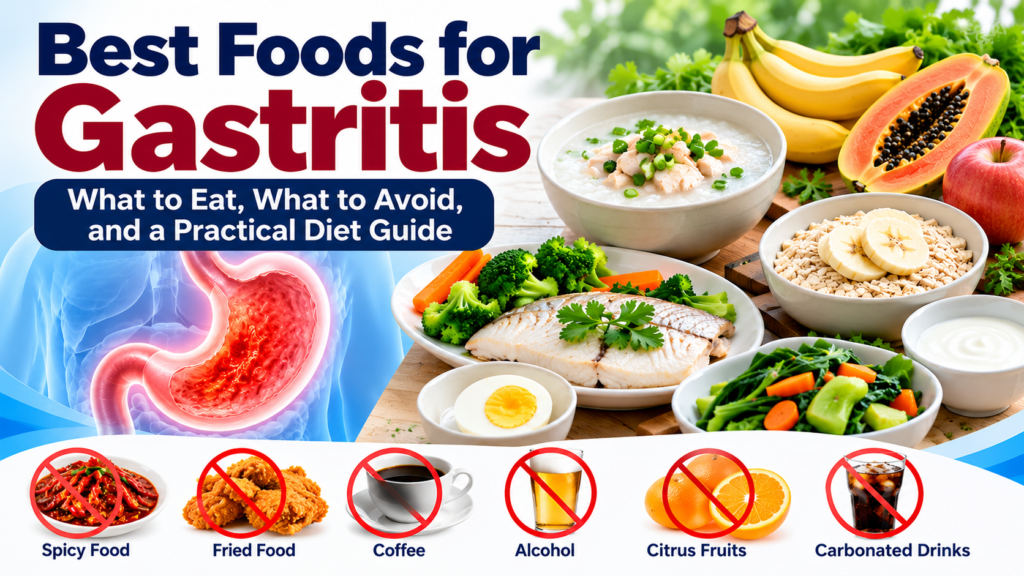
A gastritis-friendly diet emphasizes nutritious foods that are easy to tolerate while reducing foods or drinks that consistently worsen symptoms.
Consider the following principles:
- Eat a balanced diet with vegetables, fruits, whole grains, and adequate protein.
- Choose cooked, steamed, boiled, or baked foods when these are better tolerated than fried foods.
- Eat moderate portions and avoid meals that leave you uncomfortably full.
- Reduce spicy, acidic, fatty, or caffeinated items if they trigger your symptoms.
- Limit or avoid alcohol, which can irritate the stomach lining.
- Drink enough water throughout the day.
- Keep a food diary to identify your individual triggers rather than eliminating many foods unnecessarily.
There is no strong evidence that every person with gastritis must follow a bland diet or avoid all acidic foods. Individual tolerance varies.
2. Best Foods to Eat for Gastritis
A. Rice, oatmeal, and other grains
Rice, oatmeal, bread, and other grains can provide energy and may be well tolerated during periods of stomach discomfort.
Good choices include:
- Plain steamed rice or rice porridge.
- Oatmeal prepared with water or milk, depending on tolerance.
- Whole-grain bread if it does not worsen bloating.
- Plain noodles or other simply prepared grains.
Practical tip: Rice porridge with steamed fish or lean chicken is a reasonable, familiar option for many people in Cambodia. It is not a cure for gastritis, but it can be a comfortable meal during a symptomatic period.
B. Vegetables
Vegetables provide vitamins, minerals, and fiber. Cooked vegetables may be easier to tolerate than raw vegetables when you have nausea or abdominal discomfort.
Options include:
- Carrots.
- Pumpkin.
- Spinach and other leafy greens.
- Bok choy.
- Green beans.
- Zucchini.
Try steaming, boiling, or lightly cooking vegetables with modest amounts of oil. If a particular vegetable causes bloating or discomfort, adjust the portion or preparation method.
C. Non-acidic fruits
Fruits provide fiber and essential nutrients. Some people with gastritis find non-acidic fruits more comfortable to eat.
Options to try include:
- Bananas.
- Ripe papaya.
- Melons.
- Pears.
- Apples, peeled or cooked if preferred.
Citrus fruits, pineapple, and other acidic fruits do not necessarily worsen gastritis in everyone. Avoid them only if they reliably trigger your symptoms.
D. Lean protein
Protein supports tissue maintenance and overall nutritional health.
Good options include:
- Steamed or baked fish.
- Skinless chicken.
- Eggs, boiled or lightly cooked.
- Tofu.
- Lean meat prepared with minimal oil.
Avoid relying on heavily fried meat, fatty processed meats, or very spicy preparations if these make your symptoms worse.
E. Milk, yogurt, and other dairy products
Milk and yogurt may be tolerated by some people but can cause bloating or diarrhea in those with lactose intolerance. High-fat dairy products may aggravate discomfort in some individuals.
You can try:
- Low-fat, lactose-free milk.
- Plain yogurt if tolerated.
- Unsweetened, calcium-fortified alternatives.
Milk does not cure gastritis, and drinking large amounts to relieve burning pain is not a reliable treatment.
F. Healthy fats in moderate amounts
Small amounts of unsaturated fats can be part of a balanced diet.
Examples include olive oil, vegetable oils, nuts, and seeds. However, large, high-fat meals may delay stomach emptying and worsen fullness, nausea, or upper abdominal discomfort in some people.
3. Foods and Drinks to Limit or Avoid
No universal list of forbidden foods applies to all patients. The aim is to identify foods that aggravate your symptoms while maintaining a nutritious diet.
| Food or drink | Practical recommendation |
|---|---|
| Alcohol | Avoid, especially during active symptoms; alcohol can irritate the stomach lining. |
| Chili and very spicy dishes | Reduce or avoid if they cause burning or pain. |
| Fried and high-fat foods | Choose smaller portions and less oily cooking methods. |
| Coffee and energy drinks | Reduce if caffeine or coffee worsens your symptoms. |
| Carbonated drinks | Limit if they cause bloating or belching. |
| Citrus fruits and acidic juices | Reduce only if they trigger discomfort. |
| Very large meals | Try smaller, comfortable portions. |
| Very salty, heavily processed foods | Limit as part of a healthy overall diet. |
Important: Spicy foods and acidic foods may aggravate symptoms, but they are not established causes of most cases of gastritis. H. pylori infection and certain medications are much more important causes.
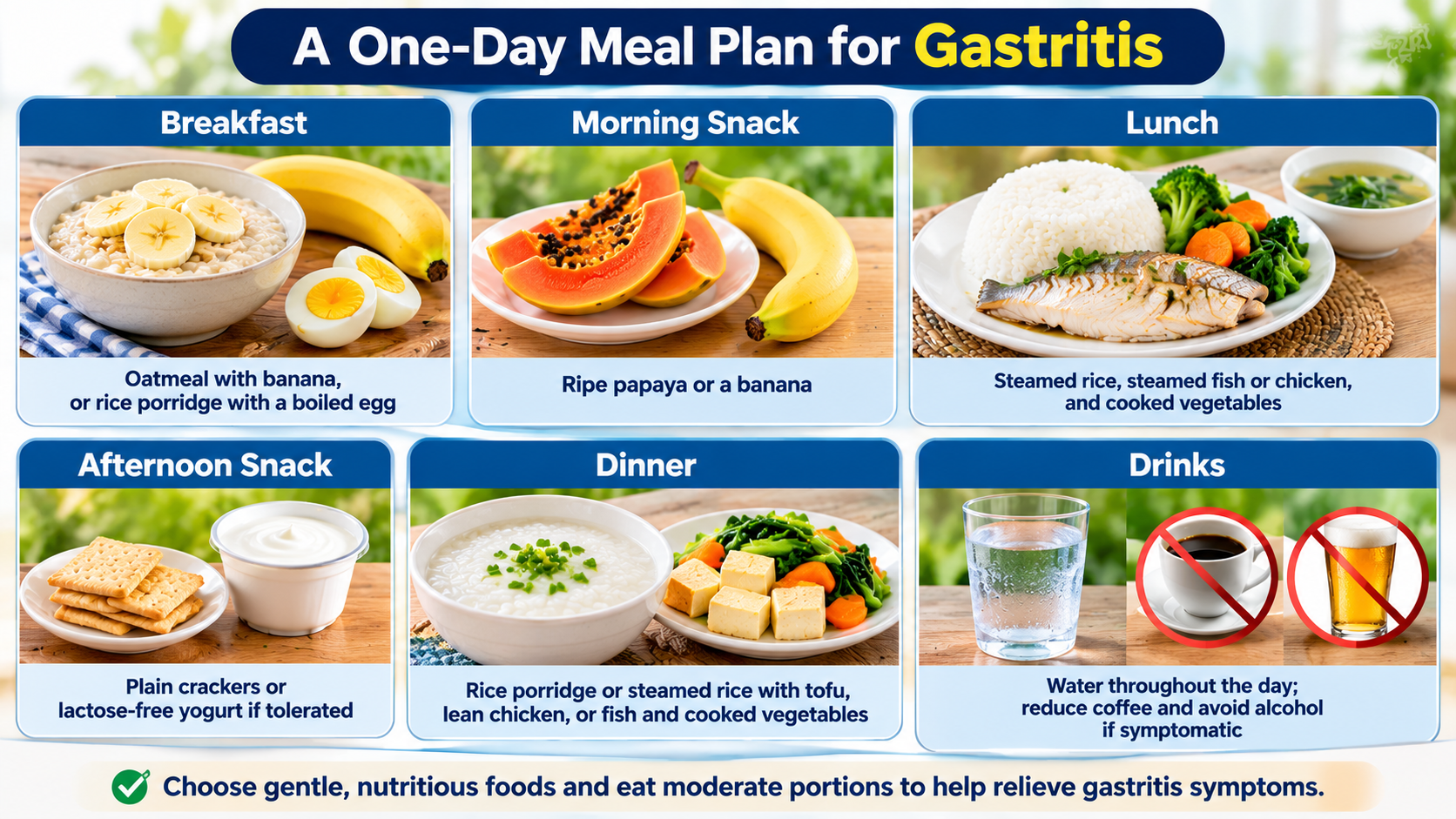
4. A One-Day Meal Plan for Gastritis
This example uses foods commonly available in Cambodia and can be adjusted to individual preferences and nutritional needs.
| Meal | Suggested foods |
|---|---|
| Breakfast | Oatmeal with banana, or rice porridge with a boiled egg |
| Morning snack | Ripe papaya or a banana |
| Lunch | Steamed rice, steamed fish or chicken, and cooked vegetables |
| Afternoon snack | Plain crackers or lactose-free yogurt if tolerated |
| Dinner | Rice porridge or steamed rice with tofu, lean chicken, or fish and cooked vegetables |
| Drinks | Water throughout the day; reduce coffee and avoid alcohol if symptomatic |
Portion sizes should match your appetite and nutritional needs. People with diabetes, chronic kidney disease, food allergies, or other medical conditions may require individual dietary adjustments.
5. Eating Habits That May Help Gastritis Symptoms
In addition to food selection, several habits may improve comfort:
Eat moderate portions. If large meals worsen nausea or fullness, try smaller meals.
Eat slowly. Chew thoroughly and avoid rushing through meals.
Avoid lying down immediately after eating. If you also have acid reflux, remaining upright for approximately 2–3 hours after meals may help reduce reflux symptoms.
Stay hydrated. Drink water regularly, particularly if nausea reduces your food intake.
Avoid smoking. Smoking can impair gastrointestinal health and is best avoided.
Identify individual triggers. Record what you eat, when symptoms occur, and how severe they are. This can help you avoid unnecessary dietary restrictions.
You do not need to eat every two hours, avoid all raw vegetables, or stop eating all fruit unless there is a specific reason to do so.
6. Can Food Cure Gastritis?
Food alone cannot reliably cure gastritis. Treatment depends on its cause.
H. pylori gastritis
If H. pylori infection is confirmed, treatment generally involves an appropriate combination of antibiotics and acid suppression, selected according to current guidelines, local antibiotic resistance, allergies, and previous treatment history.
Patients should complete the prescribed regimen and undergo a test of cure at the recommended interval. Diet alone cannot eradicate H. pylori.
NSAID-related gastritis or gastropathy
Medicines such as ibuprofen, naproxen, and aspirin can damage the stomach lining. A clinician may recommend stopping or changing the causative medicine when appropriate and prescribing acid-suppressing treatment. Do not stop prescribed aspirin used for cardiovascular protection without medical advice.
Alcohol-related irritation
Avoiding alcohol is important because alcohol can irritate the stomach lining and contribute to mucosal injury.
Autoimmune gastritis
Autoimmune gastritis may impair vitamin B12 and iron absorption. Patients may require laboratory monitoring, supplementation, and follow-up based on their clinical findings.
7. When Should You See a Doctor?
Seek urgent medical assessment if you experience:
- Vomiting blood or material resembling coffee grounds.
- Black, tarry stools or significant gastrointestinal bleeding.
- Sudden, severe, or worsening abdominal pain.
- Persistent vomiting or inability to keep fluids down.
- Fainting, marked dizziness, or signs of dehydration.
Arrange a medical consultation for persistent or recurrent symptoms, unexplained weight loss, difficulty swallowing, anemia, or loss of appetite that does not improve. Depending on your age, symptoms, risk factors, and local guidance, a clinician may recommend H. pylori testing, blood tests, or upper gastrointestinal endoscopy.
Frequently Asked Questions (FAQ)
1. What is the best food for gastritis?
There is no single best food. Rice porridge, oatmeal, bananas, cooked vegetables, eggs, tofu, and steamed fish are examples of foods that many people tolerate well. Choose a balanced diet based on your individual symptoms and nutritional needs.
2. Can I eat rice if I have gastritis?
Yes. Plain rice and rice porridge are generally suitable if tolerated. Combine them with protein and vegetables to provide a more balanced meal.
3. Are bananas good for gastritis?
Bananas are generally well tolerated and provide carbohydrates and fiber. They may be a convenient snack, but they do not treat the underlying cause of gastritis.
4. Can I drink milk with gastritis?
Many people can drink milk, but it does not cure gastritis. Milk may worsen symptoms in people with lactose intolerance, and high-fat milk may increase discomfort in some individuals. Choose lactose-free or lower-fat options if better tolerated.
5. Can I drink coffee if I have gastritis?
Coffee may worsen symptoms in some people, including those who experience reflux or stomach discomfort after drinking it. If you notice a consistent association, reduce the amount or try decaffeinated coffee. Complete avoidance is not necessary for everyone.
6. Is spicy food bad for gastritis?
Spicy food can aggravate burning or discomfort in some patients, but it is not a major established cause of most gastritis. Reduce chili and spicy seasonings if they trigger symptoms.
7. Can I eat eggs if I have gastritis?
Yes. Boiled or lightly cooked eggs are usually reasonable options. Preparation matters: eggs cooked with large amounts of oil, butter, or spicy sauces may be less well tolerated.
8. Is yogurt good for gastritis?
Plain yogurt can be included if tolerated. Some yogurts contain live cultures, but evidence is insufficient to recommend yogurt as a replacement for standard treatment of gastritis or H. pylori infection.
9. Should I avoid all acidic fruits?
No. Citrus fruits, tomatoes, and pineapple do not cause all cases of gastritis. If these foods reliably worsen your symptoms, reduce them temporarily and reassess your tolerance.
10. How long does gastritis take to heal?
Recovery depends on the cause and severity. Symptoms may improve within days or weeks after appropriate treatment, but some conditions require longer management. Persistent symptoms should be reassessed rather than managed through diet alone.
11. Can I drink coconut water if I have gastritis?
Coconut water is generally acceptable in moderate amounts if tolerated. It does not cure gastritis. People with advanced kidney disease or prescribed potassium restrictions should check with their clinician before consuming large quantities.
12. What is the fastest way to relieve gastritis symptoms?
Avoid alcohol and personal food triggers, choose moderate portions of well-tolerated foods, and maintain hydration. Medical treatment may be necessary, especially for H. pylori infection or medication-related injury. Severe or persistent symptoms require medical assessment.
Conclusion
The best diet for gastritis is a balanced, individualized eating plan that minimizes symptoms without unnecessary food restrictions. Rice, oatmeal, cooked vegetables, bananas, lean protein, and other well-tolerated foods can be useful choices.
Remember that diet helps manage symptoms, but treating the underlying cause is essential. If gastritis symptoms persist, consult a healthcare professional to determine whether testing or specific treatment is needed.
Medical disclaimer: This article is for educational purposes and does not replace individualized medical advice, diagnosis, or treatment.
References
- Shah SC, Piazuelo MB, Kuipers EJ, Li D. AGA Clinical Practice Update on the Diagnosis and Management of Atrophic Gastritis: Expert Review. Gastroenterology. 2021;161(4):1325–1332.e7. doi:10.1053/j.gastro.2021.06.078.
- Chey WD, Howden CW, Moss SF, et al. ACG Clinical Guideline: Treatment of Helicobacter pylori Infection. American Journal of Gastroenterology. 2024;119(9):1730–1753. doi:10.14309/ajg.0000000000002968.
- Malfertheiner P, Megraud F, Rokkas T, et al. Management of Helicobacter pylori infection: the Maastricht VI/Florence consensus report. Gut. 2022;71:1724–1762. doi:10.1136/gutjnl-2022-327745.
- National Institute of Diabetes and Digestive and Kidney Diseases (NIDDK). Gastritis and Gastropathy. https://www.niddk.nih.gov/health-information/digestive-diseases/gastritis-gastropathy
- National Institute of Diabetes and Digestive and Kidney Diseases (NIDDK). Eating, Diet, and Nutrition for Gastritis and Gastropathy. https://www.niddk.nih.gov/health-information/digestive-diseases/gastritis-gastropathy/eating-diet-nutrition
- National Institute for Health and Care Excellence (NICE). Gastro-oesophageal reflux disease and dyspepsia in adults: investigation and management. NICE guideline CG184. https://www.nice.org.uk/guidance/cg184
References should be checked periodically for updates before publication.