
Introduction
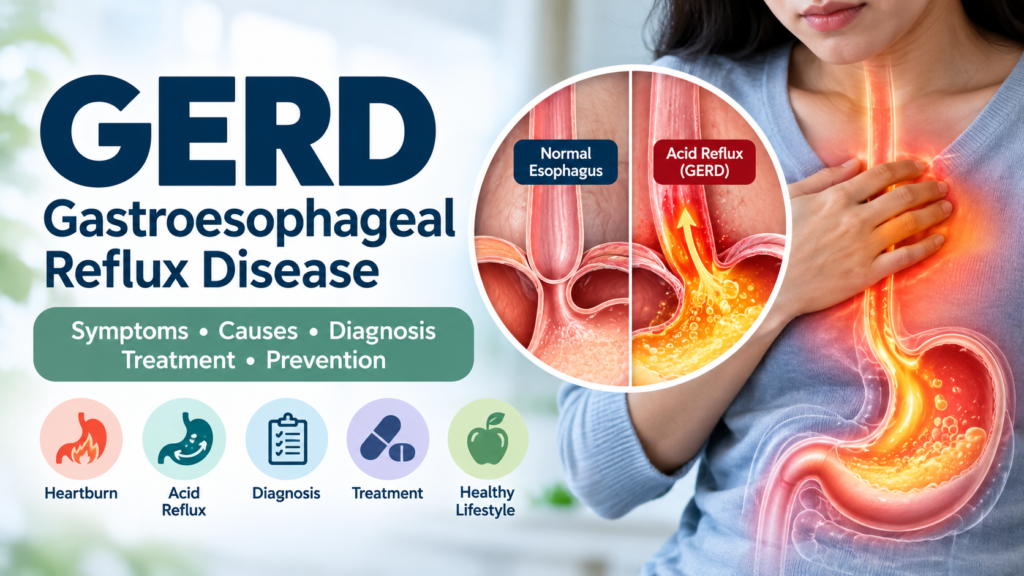
Gastroesophageal Reflux Disease (GERD) is a common digestive disorder that occurs when stomach contents repeatedly flow backward into the esophagus (the tube connecting the mouth to the stomach). This backflow, known as acid reflux, can irritate the esophageal lining and cause uncomfortable symptoms such as heartburn, regurgitation, and chest discomfort.
Occasional acid reflux is common and does not necessarily indicate disease. However, when reflux occurs frequently, causes troublesome symptoms, or leads to complications, it may be diagnosed as GERD.
GERD affects people of all ages and can significantly interfere with sleep, eating habits, daily activities, and quality of life. Fortunately, most patients can achieve good symptom control through lifestyle modifications, appropriate medications, and, in selected cases, surgical or endoscopic treatment.
This article explains the causes, symptoms, diagnosis, treatment options, complications, and prevention of GERD based on established clinical guidelines and contemporary evidence.
1. What Is GERD?
GERD is a chronic condition in which reflux of stomach contents causes troublesome symptoms or complications.
Normally, the lower esophageal sphincter (LES), a muscular valve between the esophagus and stomach, prevents stomach contents from flowing backward.
When the LES becomes weak, relaxes inappropriately, or is overwhelmed by increased abdominal pressure, stomach acid and other gastric contents can move into the esophagus.
GERD may present in different forms:
-
Non-erosive reflux disease (NERD): Typical reflux symptoms without visible esophageal erosions on endoscopy.
-
Erosive esophagitis: Acid reflux causes inflammation and damage to the esophageal lining.
-
Complicated GERD: Long-term reflux may cause esophageal ulceration, bleeding, stricture, or Barrett’s esophagus.
2. Causes and Risk Factors of GERD
GERD is usually multifactorial. It can result from impaired LES function, anatomical abnormalities, increased abdominal pressure, and delayed gastric emptying.
Common causes and risk factors
-
Weak lower esophageal sphincter: Allows stomach contents to reflux into the esophagus.
-
Hiatal hernia: Part of the stomach moves upward through the diaphragm, affecting the normal antireflux barrier.
-
Obesity: Increased abdominal pressure promotes reflux.
-
Pregnancy: Hormonal changes and increased abdominal pressure can worsen reflux.
-
Delayed gastric emptying: May increase gastric distension and reflux in some patients.
-
Smoking: Can impair LES function and contribute to reflux.
-
Large meals: Increase gastric distension and may trigger reflux.
-
Eating before bedtime: Lying down shortly after eating can increase nighttime reflux.
Foods and drinks that may trigger GERD
Certain foods and beverages can worsen symptoms in susceptible individuals.
Common triggers include:
-
Coffee and caffeinated beverages.
-
Chocolate.
-
Fatty and fried foods.
-
Spicy foods.
-
Citrus fruits and juices.
-
Tomatoes and tomato-based products.
-
Carbonated beverages.
-
Alcohol.
Important: Food triggers vary between individuals. Patients do not need to eliminate every food on this list. It is better to identify and avoid foods that consistently worsen their symptoms.
3. Signs and Symptoms of GERD
GERD can cause typical esophageal symptoms and, in some patients, extraesophageal symptoms.
Typical symptoms
1. Heartburn
-
Burning sensation behind the breastbone.
-
Often occurs after meals.
-
May become worse when bending forward or lying down.
-
Can spread toward the throat.
2. Acid regurgitation
-
Sour or bitter fluid coming back into the mouth.
-
Feeling of stomach contents moving upward into the throat.
-
Sometimes associated with an unpleasant taste.
3. Other digestive symptoms
-
Upper abdominal discomfort.
-
Belching.
-
Nausea.
-
Bloating in some patients.
-
Difficulty swallowing in complicated disease.
Extraesophageal symptoms
Some patients report symptoms outside the esophagus, including:
-
Chronic cough.
-
Hoarseness or voice changes.
-
Frequent throat clearing.
-
Sensation of a lump in the throat.
-
Asthma symptoms in selected patients.
-
Dental enamel erosion.
However, these symptoms are not specific to GERD. Other respiratory, ENT, allergic, and gastrointestinal conditions should be considered before attributing them to reflux.
4. When Should You Seek Medical Attention?
Most GERD symptoms are not dangerous, but certain warning signs require medical assessment.
Warning signs (alarm symptoms)
-
Difficulty swallowing (dysphagia).
-
Painful swallowing (odynophagia).
-
Unexplained weight loss.
-
Vomiting blood or coffee-ground material.
-
Black, tarry stools.
-
Persistent vomiting.
-
Iron-deficiency anemia without an established cause.
-
Progressive swallowing difficulty.
These symptoms warrant prompt clinical evaluation and often upper gastrointestinal endoscopy.
Important: New, severe, or unexplained chest pain should not automatically be considered acid reflux. Cardiac ischemia and other serious causes must be excluded when clinically appropriate.
5. How Is GERD Diagnosed?
GERD is often diagnosed based on a patient’s typical symptoms and response to treatment. However, additional investigations may be necessary when the diagnosis is uncertain, symptoms persist, or complications are suspected.
A. Clinical assessment
The doctor will assess:
-
Frequency and severity of heartburn.
-
Presence of acid regurgitation.
-
Relationship between symptoms and meals.
-
Nighttime symptoms.
-
Medication history.
-
Lifestyle and dietary habits.
-
Alarm symptoms and relevant medical history.
B. Upper gastrointestinal endoscopy (EGD)
EGD allows direct visualization of the esophagus, stomach, and duodenum.
It helps identify:
-
Erosive esophagitis.
-
Esophageal ulcers.
-
Peptic strictures.
-
Barrett’s esophagus.
-
Hiatal hernia.
-
Alternative diagnoses such as peptic ulcer disease or malignancy.
When is endoscopy recommended?
-
Presence of alarm symptoms.
-
Persistent symptoms despite appropriate medical treatment.
-
Suspected complications.
-
Multiple Barrett’s esophagus risk factors.
-
Before selected invasive antireflux procedures.
For patients with typical heartburn or regurgitation and no alarm symptoms, routine endoscopy is not necessary before an initial treatment trial.
C. Ambulatory esophageal pH monitoring
This test measures acid exposure in the esophagus over an extended period.
It is particularly useful when:
-
GERD is suspected but endoscopy is normal.
-
The diagnosis remains uncertain.
-
Symptoms persist despite treatment.
-
Objective evidence is required before invasive treatment.
Testing is generally performed off proton pump inhibitors (PPIs) when GERD has not yet been objectively established.
D. pH-impedance monitoring
This investigation detects both acid and non-acid reflux and assesses the relationship between reflux events and symptoms.
It is particularly useful in selected patients with persistent symptoms despite PPI treatment, especially when GERD has already been objectively established.
E. Esophageal manometry
Esophageal high-resolution manometry evaluates esophageal muscle function and LES pressure.
It is useful for:
-
Excluding achalasia and major motility disorders.
-
Evaluating unexplained dysphagia.
-
Locating the LES before catheter-based reflux testing.
-
Assessing patients before antireflux surgery.
Clinical point: Esophageal manometry does not independently diagnose GERD.
6. Treatment of GERD
The goals of GERD treatment are to relieve symptoms, heal esophageal inflammation, prevent complications, and improve quality of life.
Treatment depends on symptom severity, endoscopic findings, response to medication, and the presence of complications.
A. Lifestyle modifications
Lifestyle changes are recommended for all patients with GERD.
Recommended lifestyle interventions:
-
Weight reduction: Overweight and obese patients should aim for gradual weight loss.
-
Avoid late-night meals: Avoid eating within 2–3 hours before bedtime.
-
Eat smaller meals: Avoid large meals, especially in the evening.
-
Elevate the head of the bed: Raise the head end by approximately 15–20 cm for patients with nighttime reflux.
-
Sleep on the left side: Left lateral sleeping may reduce nighttime acid exposure.
-
Stop smoking: Smoking cessation may improve reflux symptoms.
-
Avoid individual food triggers: Identify and reduce foods that consistently worsen symptoms.
-
Avoid tight clothing: Tight abdominal garments may increase abdominal pressure.
Weight loss in patients with excess body weight and head-of-bed elevation for nocturnal symptoms are among the lifestyle interventions with the strongest supporting evidence.
B. Medications for GERD
Several medications are available to treat GERD.
1. Proton Pump Inhibitors (PPIs)
PPIs are the first-line medical treatment for frequent typical GERD symptoms.
They reduce gastric acid production and promote healing of esophageal inflammation.
Common PPIs include:
| Medication | Common adult dose |
|---|---|
| Omeprazole | 20 mg once daily |
| Esomeprazole | 20–40 mg once daily |
| Pantoprazole | 40 mg once daily |
| Lansoprazole | 30 mg once daily |
| Rabeprazole | 20 mg once daily |
How should PPIs be taken?
-
Take 30–60 minutes before breakfast.
-
If prescribed twice daily, take before breakfast and before the evening meal.
-
Assess symptom response after approximately 4–8 weeks.
For patients with typical heartburn and regurgitation without alarm symptoms, an initial 8-week trial of once-daily PPI therapy is recommended by the ACG guideline.
If symptoms improve, clinicians should consider attempting PPI discontinuation or stepping down to the lowest effective dose, depending on the patient’s disease severity and recurrence.
2. Potassium-Competitive Acid Blockers (P-CABs)
Example: Vonoprazan
P-CABs inhibit gastric acid secretion through potassium-competitive inhibition of the gastric proton pump.
Potential advantages include:
-
Rapid and potent acid suppression.
-
Less dependence on meal timing.
-
Effective treatment of erosive esophagitis.
-
Potential advantages in healing more severe erosive disease.
The 2025 focused update of the Seoul Consensus recognizes PPIs and P-CABs as treatment options, with therapy individualized according to GERD phenotype and severity.
P-CABs are not necessary for every patient and availability, cost, local approval, and individual clinical circumstances should be considered.
3. H2-Receptor Antagonists
Examples include:
-
Famotidine 20 mg once or twice daily.
-
Famotidine may be useful for mild or intermittent symptoms.
-
It can also be considered for selected patients with nighttime symptoms.
However, continuous use may lead to reduced effectiveness due to tachyphylaxis.
4. Antacids and Alginate Preparations
These medications provide short-term relief of heartburn and regurgitation.
Alginate formulations create a physical barrier or raft over stomach contents, helping reduce reflux.
They may be useful for occasional symptoms or as an additional treatment for breakthrough symptoms.
They do not replace PPIs when significant erosive esophagitis requires healing.
5. Prokinetic medications
Examples include metoclopramide and other gastric motility agents.
These medications are not recommended routinely for GERD. They may be considered only when there is an objectively established coexisting motility disorder, such as gastroparesis, and after assessing potential adverse effects.
C. How long should GERD treatment continue?
The duration of treatment depends on the clinical presentation.
| Clinical condition | Suggested approach |
|---|---|
| Typical GERD without complications | Initial PPI trial for 8 weeks |
| Non-erosive reflux disease | Consider on-demand or intermittent therapy after control |
| Mild erosive esophagitis | Usually 4–8 weeks; reassess |
| Severe erosive esophagitis (LA C/D) | Long-term maintenance PPI or appropriate alternative |
| Barrett’s esophagus | Long-term PPI therapy is generally recommended |
Patients with severe erosive esophagitis, esophageal ulceration, or peptic stricture often require ongoing maintenance treatment.
The general principle is to use the lowest effective dose that maintains symptom control and mucosal healing.
Guideline Central+1
7. What If GERD Does Not Improve With Treatment?
Some patients continue to experience symptoms despite taking PPIs.
This condition is often described as refractory GERD, although persistent symptoms do not necessarily mean ongoing acid reflux.
Before increasing medication, clinicians should reassess the diagnosis and treatment.
Practical approach to persistent symptoms
-
Confirm that the patient is taking the medication correctly.
-
Check adherence and ensure PPIs are taken 30–60 minutes before meals.
-
Consider optimizing treatment to twice-daily PPI therapy when appropriate.
-
Reassess for alternative diagnoses, including functional heartburn, reflux hypersensitivity, achalasia, eosinophilic esophagitis, and peptic ulcer disease.
-
Consider upper GI endoscopy.
-
Consider ambulatory pH or pH-impedance monitoring according to whether GERD has already been objectively established.
Important clinical point: Persistent throat symptoms, chronic cough, or hoarseness alone should not automatically lead to a diagnosis of GERD or indefinite PPI treatment. Alternative causes should be investigated.
American Gastroenterological Association+1
8. Surgical and Endoscopic Treatment of GERD
Surgery or endoscopic treatment may be considered in carefully selected patients, particularly those with objectively confirmed GERD who have persistent troublesome symptoms, severe esophagitis, or a large hiatal hernia.
A. Laparoscopic fundoplication
Fundoplication is an antireflux operation in which the upper part of the stomach (fundus) is wrapped around the lower esophagus to strengthen the antireflux barrier.
Common procedures include:
-
Nissen fundoplication (360-degree wrap).
-
Toupet fundoplication (partial posterior wrap).
Hiatal hernia repair may be performed at the same time.
B. Magnetic sphincter augmentation (LINX)
This procedure involves placing a ring of magnetic beads around the lower esophageal sphincter to help prevent reflux while allowing swallowing.
C. Transoral incisionless fundoplication (TIF)
TIF is an endoscopic procedure that reconstructs the gastroesophageal valve without conventional abdominal surgery.
It may be appropriate for selected patients with documented GERD and suitable anatomical findings.
D. Combined hiatal hernia repair and TIF
For selected patients with hiatal hernias, combined laparoscopic hernia repair and endoscopic fundoplication may be considered.
The ASGE 2025 guideline discusses the role of endoscopy, PPIs, and endoscopic antireflux therapies, including TIF and combined procedures.
Gastrointestinal Endoscopy+1
Important: Before invasive treatment, objective confirmation of GERD and appropriate esophageal motility assessment are essential. Patients should understand potential complications, including dysphagia, gas-bloat symptoms, and recurrence.
9. Complications of Untreated GERD
Chronic uncontrolled reflux can lead to several complications.
1. Erosive esophagitis
Repeated exposure to gastric contents damages the esophageal mucosa, causing inflammation and erosions.
2. Esophageal stricture
Chronic inflammation and healing can cause scar tissue formation and narrowing of the esophagus, leading to dysphagia.
3. Barrett’s esophagus
Long-term reflux can cause intestinal metaplasia of the esophageal lining. Barrett’s esophagus increases the risk of esophageal adenocarcinoma.
4. Esophageal ulceration
Severe mucosal damage may lead to ulceration, bleeding, and pain.
Not everyone with GERD develops complications. Appropriate treatment and follow-up can reduce the risk of ongoing esophageal injury.
10. Can GERD Increase the Risk of Esophageal Cancer?
GERD is associated with an increased risk of Barrett’s esophagus, which is a recognized precursor to esophageal adenocarcinoma.
However, most patients with GERD do not develop esophageal cancer.
Screening endoscopy for Barrett’s esophagus may be considered in patients with chronic GERD and multiple additional risk factors, such as:
-
Male sex.
-
Age over 50 years.
-
Obesity, particularly central obesity.
-
Smoking history.
-
First-degree family history of Barrett’s esophagus or esophageal adenocarcinoma.
Screening decisions should be individualized according to clinical risk and local guidelines.
11. GERD Prevention: Practical Dietary Recommendations
A healthy eating pattern can help reduce reflux symptoms and improve digestive comfort.
Foods that may be better tolerated
| Food group | Examples |
|---|---|
| Grains | Oatmeal, rice, whole-grain bread |
| Protein | Steamed fish, chicken, lean meat, eggs |
| Vegetables | Carrots, broccoli, cucumber, leafy vegetables |
| Fruits | Banana, papaya, melon |
| Dairy | Low-fat milk or yogurt if tolerated |
| Drinks | Water and non-caffeinated beverages |
Foods to reduce if they trigger symptoms
| Food group | Examples |
|---|---|
| High-fat foods | Fried chicken, fatty meat, fast food |
| Spicy foods | Chili, spicy sauces |
| Acidic foods | Orange, lemon, tomato |
| Beverages | Coffee, alcohol, carbonated drinks |
| Other triggers | Chocolate, peppermint |
Practical advice: Keep a food diary to identify individual triggers rather than following unnecessarily restrictive diets.
12. Special Considerations
GERD during pregnancy
GERD is common during pregnancy because hormonal changes relax the LES and the growing uterus increases abdominal pressure.
Management generally includes:
-
Eating smaller, more frequent meals.
-
Avoiding lying down after meals.
-
Elevating the head during sleep.
-
Avoiding individual food triggers.
-
Using pregnancy-appropriate antacids or alginate preparations when needed.
If symptoms persist, a clinician may consider additional medications after evaluating maternal and fetal safety.
GERD in older adults
Older adults may have atypical symptoms or complications, including swallowing difficulties and esophageal injury.
Medication review is important because certain drugs may worsen reflux or cause esophageal irritation.
Persistent symptoms, unexplained anemia, weight loss, or dysphagia should prompt further investigation.
GERD and obesity
Obesity is an important modifiable risk factor. Increased abdominal pressure can contribute to reflux and hiatal hernia.
Weight management, regular physical activity, and appropriate dietary changes can improve GERD symptoms.
13. Frequently Asked Questions (FAQ)
1. What is the main cause of GERD?
GERD commonly occurs because the lower esophageal sphincter does not function properly, allowing stomach contents to flow backward into the esophagus. Obesity, hiatal hernia, pregnancy, and certain lifestyle factors can contribute.
2. What are the most common symptoms of GERD?
The two most characteristic symptoms are heartburn and acid regurgitation. Some patients also experience chest discomfort, sour taste, belching, and nighttime reflux.
3. Is GERD a serious disease?
Most patients can manage GERD successfully. However, untreated or severe disease can cause esophagitis, esophageal ulcers, strictures, and Barrett’s esophagus.
4. Can GERD cause chest pain?
Yes. Acid reflux can cause burning or pressure-like chest discomfort. However, heart disease must be excluded when appropriate, particularly in patients with cardiovascular risk factors or new chest pain.
5. Can GERD cause coughing and sore throat?
GERD may contribute to chronic cough, hoarseness, and throat irritation in some patients. However, these symptoms have many possible causes, and reflux should not be assumed without appropriate assessment.
6. Is endoscopy necessary for every GERD patient?
No. Patients with typical heartburn or regurgitation without alarm symptoms can usually begin with an empirical PPI treatment trial. Endoscopy is recommended when alarm symptoms, complications, or specific risk factors are present.
7. What is the best medicine for GERD?
PPIs, such as omeprazole, esomeprazole, and pantoprazole, are first-line treatments for frequent typical GERD symptoms. P-CABs such as vonoprazan are additional options in appropriate patients.
The best choice depends on disease severity, clinical response, availability, and individual patient factors.
8. How long should I take omeprazole for GERD?
An initial course is generally 8 weeks for typical GERD without alarm symptoms. Patients with severe erosive esophagitis or other complications may require long-term maintenance therapy.
Do not continue medication indefinitely without reviewing whether it is still necessary.
9. Can I drink coffee if I have GERD?
Some patients experience worsening symptoms after drinking coffee, while others tolerate it without problems. Reduce or avoid coffee if it consistently triggers your symptoms.
10. Can GERD be cured permanently?
Many patients achieve long-term symptom control through lifestyle changes and appropriate medication. Some patients may benefit from antireflux surgery. However, GERD can recur, and long-term management may be necessary.
11. Is GERD associated with stomach cancer?
GERD primarily affects the esophagus rather than the stomach. Chronic reflux can increase the risk of Barrett’s esophagus, which is associated with esophageal adenocarcinoma. GERD itself is not established as a direct cause of stomach cancer.
12. Can I stop taking PPIs when my symptoms improve?
For uncomplicated GERD that responds to initial treatment, clinicians may recommend stopping PPIs, using them on demand, or reducing the dose. However, patients with severe erosive esophagitis, Barrett’s esophagus, or other indications may need ongoing treatment.
13. Does drinking milk help GERD?
Milk may provide temporary relief for some people, but high-fat milk can worsen reflux in others. Low-fat milk may be better tolerated. Milk is not a definitive treatment for GERD.
14. Is GERD worse at night?
Yes. Lying down after eating can increase reflux, and nighttime symptoms may interfere with sleep. Avoid eating within 2–3 hours of bedtime and elevate the head of the bed.
15. When should I see a doctor?
Seek medical assessment if symptoms occur frequently, interfere with daily activities, or do not improve with appropriate treatment. Seek prompt evaluation for difficulty swallowing, unexplained weight loss, gastrointestinal bleeding, persistent vomiting, or unexplained anemia.
Conclusion
Gastroesophageal Reflux Disease is a common condition that can affect daily activities and quality of life. The most common symptoms are heartburn and acid regurgitation, but some patients experience atypical symptoms such as chronic cough and hoarseness.
Effective management includes identifying individual triggers, maintaining a healthy weight, avoiding late-night meals, and using appropriate acid-suppressive medications.
Proton pump inhibitors remain the mainstay of medical treatment for frequent typical GERD symptoms. Newer potassium-competitive acid blockers provide additional treatment options for selected patients.
Patients with persistent symptoms, alarm features, or suspected complications may require endoscopy and objective reflux testing. Surgery and endoscopic therapies are options for carefully selected patients with confirmed GERD.
Early recognition, appropriate treatment, and individualized follow-up can help prevent complications and improve quality of life.
Medical Disclaimer
This article is intended for general educational purposes and does not replace professional medical advice, diagnosis, or treatment. Patients experiencing persistent symptoms or warning signs should consult a qualified healthcare professional.
References and Clinical Guidelines
The following references support the clinical recommendations discussed in this article.
1. Katz PO, Dunbar KB, Schnoll-Sussman FH, Greer KB, Yadlapati R, Spechler SJ. ACG Clinical Guideline for the Diagnosis and Management of Gastroesophageal Reflux Disease. American Journal of Gastroenterology. 2022;117(1):27–56. doi:10.14309/ajg.0000000000001538.
2. ASGE Standards of Practice Committee. American Society for Gastrointestinal Endoscopy guideline on the diagnosis and management of GERD: summary and recommendations. Gastrointestinal Endoscopy. 2025;101(2):267–284. doi:10.1016/j.gie.2024.10.008.
Gastrointestinal Endoscopy+1
3. Huh CW, Chang JW, Son NH, et al. 2025 Focused Update of the Seoul Consensus on Gastroesophageal Reflux Disease: Evidence-based Recommendations on Acid Suppressive Therapy. Journal of Neurogastroenterology and Motility. 2026;32(1):7–18. doi:10.5056/jnm25128.
PubMed+1
4. Gyawali CP, Yadlapati R, Fass R, et al. Updates to the modern diagnosis of GERD: Lyon Consensus 2.0. Gut. 2024;73:361–371. doi:10.1136/gutjnl-2023-330616.
5. Yadlapati R, Gyawali CP, Pandolfino JE, et al. AGA Clinical Practice Update on the Diagnosis and Management of Extraesophageal Gastroesophageal Reflux Disease: Expert Review. Clinical Gastroenterology and Hepatology. 2023. doi:10.1016/j.cgh.2023.01.040.
American Gastroenterological Association
6. Spechler SJ, et al. AGA Clinical Practice Update on the Personalized Approach to the Evaluation and Management of GERD. Clinical Gastroenterology and Hepatology. 2022. AGA Clinical Guidance.