
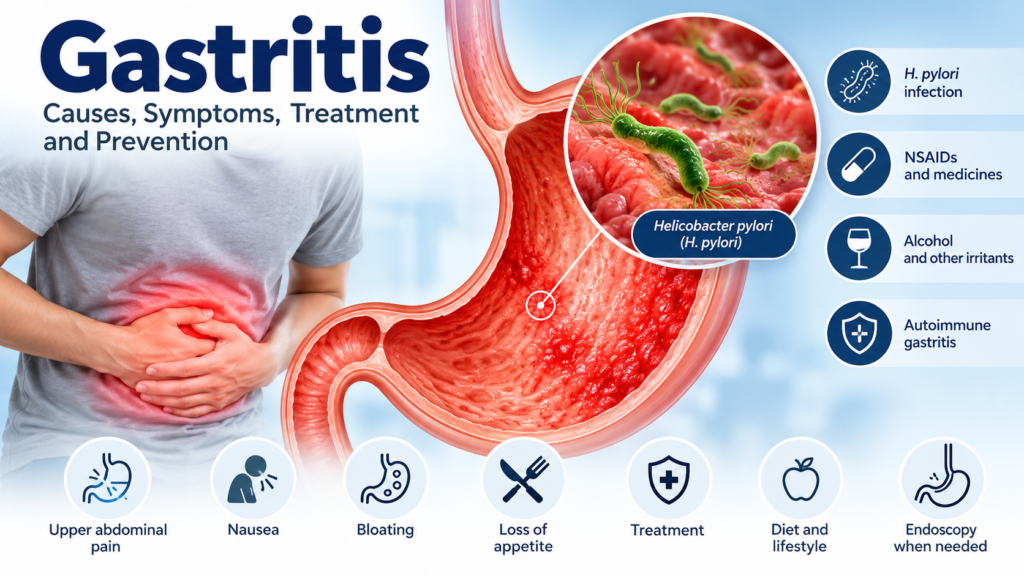
What Is Gastritis?
Gastritis is inflammation of the stomach lining (gastric mucosa). It can develop suddenly, known as acute gastritis, or persist over months to years, known as chronic gastritis.
Gastritis may cause upper abdominal discomfort, nausea, bloating, or loss of appetite. However, many people with gastritis have no symptoms. Importantly, not all upper abdominal pain or indigestion is caused by gastritis.
The most common causes of chronic gastritis include infection with Helicobacter pylori (H. pylori) and autoimmune gastritis. Certain medications, particularly nonsteroidal anti-inflammatory drugs (NSAIDs), can also damage the stomach lining.
Correct diagnosis is important because treatment depends on the underlying cause. In particular, treating H. pylori infection can heal inflammation, reduce peptic ulcer recurrence, and lower the risk of gastric cancer.
1. What Causes Gastritis?
1.1 Helicobacter pylori infection
H. pylori is a bacterium that can colonize the stomach and cause chronic inflammation. Infection is commonly acquired during childhood and may persist for many years without treatment.
Possible complications include:
- Chronic active gastritis.
- Gastric and duodenal peptic ulcers.
- Atrophic gastritis and intestinal metaplasia.
- Increased risk of gastric adenocarcinoma.
- Gastric mucosa-associated lymphoid tissue (MALT) lymphoma.
People with confirmed H. pylori infection should generally receive eradication therapy unless there is a specific contraindication.
1.2 Nonsteroidal anti-inflammatory drugs (NSAIDs)
Medications such as ibuprofen, diclofenac, naproxen, and aspirin can impair the stomach’s protective mechanisms and cause erosions, ulcers, or gastrointestinal bleeding.
The risk increases with older age, previous peptic ulcer disease, higher NSAID doses, concurrent anticoagulant or antiplatelet therapy, and combined use of corticosteroids.
Patients should discuss safer alternatives or gastroprotection with their healthcare professional when these medicines are necessary.
1.3 Alcohol and other irritants
Heavy alcohol consumption can irritate and damage the gastric mucosa, sometimes producing acute erosive gastritis. Smoking may also contribute to peptic ulcer risk and impair ulcer healing.
Spicy foods, coffee, and acidic foods do not usually cause histologically confirmed gastritis by themselves, although they may aggravate symptoms in some individuals.
1.4 Autoimmune gastritis
Autoimmune gastritis occurs when the immune system attacks the acid-producing cells of the stomach, particularly in the gastric body and fundus.
It can lead to:
- Reduced gastric acid production.
- Vitamin B12 deficiency and pernicious anemia.
- Iron deficiency, sometimes before vitamin B12 deficiency develops.
- An increased risk of certain gastric neoplasms, including type 1 gastric neuroendocrine tumors.
Autoimmune gastritis may coexist with autoimmune thyroid disease and other autoimmune disorders.
1.5 Other causes
Less common causes include bile reflux, severe physiological stress associated with critical illness, radiation injury, and certain infections in immunocompromised patients.
It is important to distinguish stress-related mucosal disease in critically ill patients from ordinary emotional stress, which does not necessarily cause gastritis.
2. Symptoms of Gastritis
Some patients have no symptoms, while others experience:
- Pain, burning, or discomfort in the upper central abdomen (epigastrium).
- Nausea, sometimes with vomiting.
- Bloating or a feeling of fullness after meals.
- Early satiety.
- Reduced appetite.
- Indigestion or belching.
These symptoms are not specific to gastritis. Similar complaints can occur with gastroesophageal reflux disease (GERD), functional dyspepsia, peptic ulcer disease, gallbladder disease, pancreatitis, and occasionally cardiac disease.
Seek urgent medical attention for vomiting blood, black tarry stools, fainting, severe or rapidly worsening abdominal pain, persistent vomiting, or signs of circulatory instability.
Unintentional weight loss, progressive difficulty swallowing, unexplained iron-deficiency anemia, or persistent symptoms also warrant prompt medical assessment.
3. Types of Gastritis
| Type | Main features |
|---|---|
| Acute gastritis | Sudden inflammation, sometimes associated with NSAIDs, alcohol, or acute illness. |
| Chronic H. pylori gastritis | Persistent infection-related inflammation that may progress to atrophy or intestinal metaplasia. |
| Autoimmune gastritis | Immune-mediated injury to acid-producing cells; associated with iron and vitamin B12 deficiency. |
| Erosive gastritis | Superficial mucosal injury that may cause bleeding. |
| Atrophic gastritis | Loss of normal gastric glands; associated with an increased risk of gastric neoplasia. |
The term “gastritis” is most accurately confirmed by histological examination of gastric biopsy samples. Symptoms alone cannot reliably establish the diagnosis.
4. How Is Gastritis Diagnosed?
Diagnosis depends on the patient’s symptoms, medical history, risk factors, physical examination, and the need for further investigations.
4.1 Medical history and physical examination
The clinician should assess:
- Symptom duration, location, severity, and relationship to meals.
- NSAID, aspirin, alcohol, and other medication exposure.
- Previous H. pylori infection or eradication treatment.
- Previous peptic ulcers or gastrointestinal bleeding.
- Family history of gastric cancer.
- Weight loss, vomiting, anemia, or other alarm features.
4.2 Testing for H. pylori
Common noninvasive tests include:
Urea breath test: A reliable method for detecting active infection and confirming eradication after treatment.
Stool antigen test: Another useful test for active infection and post-treatment confirmation.
Upper endoscopy with biopsy: May be indicated when endoscopy is clinically appropriate, allowing assessment of the mucosa and testing for H. pylori.
Serology detects antibodies and may remain positive after an infection has cleared. Therefore, it is generally unsuitable for confirming eradication.
To reduce false-negative results, PPIs are usually withheld for approximately two weeks before a urea breath or stool antigen test, if clinically safe. Antibiotics and bismuth should generally be avoided for at least four weeks before testing. A clinician should advise how to manage acid suppression and other medications.
4.3 Upper gastrointestinal endoscopy
An esophagogastroduodenoscopy (EGD) allows direct examination of the esophagus, stomach, and duodenum. Biopsies can help identify H. pylori, atrophy, intestinal metaplasia, and other abnormalities.
Endoscopy is particularly important for patients with gastrointestinal bleeding, progressive dysphagia, persistent vomiting, unexplained anemia, significant weight loss, or other concerning features. Age thresholds and the need for early endoscopy depend on local guidelines, gastric cancer risk, family history, and clinical presentation.
4.4 Blood tests
Depending on the presentation, investigations may include:
- Complete blood count (CBC) for anemia.
- Iron studies if iron deficiency is suspected.
- Vitamin B12 levels if autoimmune or atrophic gastritis is suspected.
- Renal and liver function tests when clinically indicated.
Blood tests alone cannot confirm or exclude gastritis.
5. Evidence-Based Treatment of Gastritis
Treatment should target the underlying cause rather than simply suppressing symptoms.
5.1 Treatment of H. pylori infection
The 2024 American College of Gastroenterology (ACG) guideline recommends 14-day optimized bismuth quadruple therapy as a preferred empiric first-line regimen when antibiotic susceptibility is unknown.
A typical adult regimen consists of:
- A proton pump inhibitor (PPI) twice daily.
- Bismuth subcitrate or bismuth subsalicylate four times daily.
- Tetracycline 500 mg four times daily.
- Metronidazole 500 mg three or four times daily.
The exact regimen must be selected by a qualified clinician, taking into account allergies, pregnancy, contraindications, drug interactions, previous antibiotic exposure, and locally available formulations.
Other options may include rifabutin-based triple therapy or potassium-competitive acid blocker (PCAB) plus amoxicillin dual therapy, where appropriate and available.
Important antibiotic stewardship points:
- Avoid empiric clarithromycin-containing triple therapy unless susceptibility testing confirms that the organism is susceptible.
- Levofloxacin-containing regimens should likewise generally be reserved for susceptible infections.
- Treatment choice should account for previous eradication attempts and local antibiotic resistance.
- Patients should complete the full prescribed course.
5.2 Confirm eradication after treatment
Every treated patient should undergo a test of cure using a urea breath test, stool antigen test, or appropriate biopsy-based test.
Testing should be performed at least four weeks after completion of antibiotics. PPIs should generally be stopped for two weeks before testing, if medically safe, to reduce false-negative results.
Symptom improvement alone does not prove that the infection has been eradicated.
5.3 Proton pump inhibitors
PPIs reduce gastric acid production and may help heal erosive injury and relieve acid-related upper gastrointestinal symptoms.
Common examples include omeprazole, esomeprazole, pantoprazole, and lansoprazole.
A short course may be appropriate for selected patients with dyspepsia or acid-related symptoms. The dose and duration should depend on the clinical indication, and prolonged treatment should be reviewed periodically.
PPIs do not eradicate H. pylori when used alone.
5.4 Histamine-2 receptor antagonists
Medicines such as famotidine reduce gastric acid secretion and may be considered when a PPI is unsuitable or when less intensive acid suppression is sufficient.
5.5 Antacids and alginates
These may provide short-term relief of occasional heartburn or acid-related discomfort. They do not treat H. pylori infection or reliably heal all forms of gastritis.
5.6 Manage NSAID-associated gastritis
When possible, stop the offending NSAID or use an alternative after clinical review. If anti-inflammatory therapy remains necessary, assess gastrointestinal and cardiovascular risks and consider appropriate gastroprotection.
Patients taking prescribed low-dose aspirin for cardiovascular prevention should not discontinue it independently; the benefits and bleeding risks need individualized assessment.
5.7 Treat autoimmune and atrophic gastritis
Management may include vitamin B12 replacement, iron supplementation when deficiencies are documented, and evaluation for associated autoimmune disease.
Patients with advanced atrophic gastritis, intestinal metaplasia, dysplasia, or autoimmune gastritis may require individualized endoscopic surveillance. Surveillance decisions depend on histological extent, severity, family history, and other gastric cancer risk factors.
6. Diet and Lifestyle for Gastritis
No single diet cures gastritis. However, practical changes may reduce symptoms and support recovery.
Recommended approaches:
- Eat regular meals and adjust portion sizes if large meals trigger discomfort.
- Avoid or reduce alcohol, particularly during active symptoms.
- Stop smoking.
- Identify individual food triggers rather than unnecessarily restricting many foods.
- Reduce coffee, spicy foods, acidic foods, or high-fat meals if they consistently worsen symptoms.
- Avoid unnecessary NSAID use and discuss medication-related risks with a clinician.
- Maintain adequate hydration, especially when nausea or vomiting is present.
A bland diet is not required for everyone. The priority is adequate nutrition and identifying foods that worsen an individual’s symptoms.
7. Complications of Chronic Gastritis
Persistent inflammation may cause complications, particularly when associated with H. pylori or autoimmune disease.
Potential complications include:
- Peptic ulcer disease.
- Gastrointestinal bleeding.
- Atrophic gastritis.
- Intestinal metaplasia.
- Iron deficiency or vitamin B12 deficiency.
- Increased risk of gastric adenocarcinoma in selected high-risk conditions.
- Gastric MALT lymphoma associated with H. pylori.
Eradicating H. pylori reduces important infection-related risks, but it does not eliminate the need for surveillance in patients who already have certain premalignant gastric changes.
8. When Should You See a Doctor?
Arrange a medical assessment if you experience persistent or recurrent upper abdominal discomfort, ongoing nausea, reduced appetite, or symptoms that do not improve with appropriate initial care.
Seek urgent assessment for:
- Vomiting blood or material resembling coffee grounds.
- Black, tarry stools or significant rectal bleeding.
- Severe or sudden abdominal pain.
- Fainting, marked weakness, or symptoms suggesting blood loss.
- Persistent vomiting with inability to keep fluids down.
- Chest pain, particularly with shortness of breath, sweating, or exertion.
Do not assume that every episode of upper abdominal pain is gastritis. Serious gastrointestinal and non-gastrointestinal conditions can produce similar symptoms.
Conclusion
Gastritis is a common condition with several possible causes, including H. pylori infection, NSAID exposure, and autoimmune disease. Accurate diagnosis helps guide treatment and prevents unnecessary medication use.
The most important steps are to identify and eradicate H. pylori when present, use acid-suppressing medication appropriately, address contributing medications and lifestyle factors, and investigate alarm symptoms promptly. Patients with atrophic gastritis or other premalignant gastric changes may need long-term follow-up based on their individual risk.
Frequently Asked Questions (FAQ)
1. What is the main cause of gastritis?
Common causes include H. pylori infection and NSAID-related mucosal injury. Autoimmune disease and heavy alcohol exposure are other recognized causes.
2. Can gastritis heal completely?
Yes. Many cases improve or resolve when the cause is removed or treated. H. pylori-associated gastritis may improve after successful eradication, although established atrophy or intestinal metaplasia may not fully reverse.
3. What is the best medicine for gastritis?
There is no single best medicine for every patient. PPIs can relieve acid-related symptoms, but confirmed H. pylori infection requires an appropriate antibiotic eradication regimen. NSAID-associated injury requires review of the causative medication and possible gastroprotection.
4. Can gastritis cause nausea and loss of appetite?
Yes. Gastritis may cause nausea, upper abdominal discomfort, and reduced appetite. Persistent symptoms or significant appetite loss should be assessed to exclude other conditions.
5. Can gastritis cause back pain?
Gastritis typically causes upper abdominal symptoms rather than isolated back pain. Pain radiating to the back may indicate another condition, including pancreatitis, biliary disease, or peptic ulcer complications, and requires assessment based on severity and associated symptoms.
6. Is gastritis dangerous?
Many cases are mild, but some forms can lead to ulcers, bleeding, anemia, or premalignant gastric changes. The level of risk depends on the cause, severity, and duration of inflammation.
7. Does gastritis increase the risk of stomach cancer?
Certain types of chronic gastritis, particularly H. pylori-associated atrophic gastritis and intestinal metaplasia, increase gastric cancer risk. Most people with gastritis will not develop stomach cancer. Appropriate treatment and risk-based follow-up can reduce complications.
8. Can stress cause gastritis?
Ordinary psychological stress is not generally considered a direct cause of histologically confirmed gastritis. Severe physiological stress in critically ill patients can cause stress-related mucosal injury. Emotional stress may also worsen the perception of indigestion.
9. Which foods should I avoid with gastritis?
Avoid foods and drinks that reliably trigger your symptoms. Alcohol should be limited or avoided during active symptoms. Coffee, spicy foods, and acidic foods do not cause gastritis in everyone and need not be eliminated unless they aggravate symptoms.
10. How can I know if I have H. pylori?
A urea breath test or stool antigen test can detect active infection. Endoscopy with biopsy may be appropriate for selected patients. Symptoms alone cannot determine whether H. pylori is present.
11. How long does gastritis take to heal?
Recovery varies according to the cause and severity. Symptoms may improve within days to weeks after appropriate treatment, but chronic inflammation and established mucosal changes may take longer or persist. Follow-up testing is important when H. pylori has been treated.
12. Should I repeat the H. pylori test after treatment?
Yes. A test of cure is recommended after treatment, generally at least four weeks after antibiotics are completed and after withholding PPIs for approximately two weeks when safe.
References
- Chey WD, Howden CW, Moss SF, et al. ACG Clinical Guideline: Treatment of Helicobacter pylori Infection. The American Journal of Gastroenterology. 2024;119(9):1730–1753. doi: 10.14309/ajg.0000000000002968.
- Shah SC, Piazuelo MB, Kuipers EJ, Li D. AGA Clinical Practice Update on the Diagnosis and Management of Atrophic Gastritis: Expert Review. Gastroenterology. 2021;161(4):1325–1332.e7. doi: 10.1053/j.gastro.2021.06.078.
- Morgan DR, Corral JE, Li D, et al. ACG Clinical Guideline: Diagnosis and Management of Gastric Premalignant Conditions. The American Journal of Gastroenterology. 2025;120(4):709–737. doi: 10.14309/ajg.0000000000003350.
- Shah SC, Wang A, Wallace M, Hwang JH. AGA Clinical Practice Update on Screening and Surveillance in Patients at High Risk for Gastric Cancer in the United States: Expert Review. Gastroenterology. 2025. AGA clinical guidance.
- Malfertheiner P, Megraud F, Rokkas T, et al. Management of Helicobacter pylori infection: the Maastricht VI/Florence consensus report. Gut. 2022;71:1724–1762. doi: 10.1136/gutjnl-2022-327745.
Medical disclaimer: This article is for general educational purposes and does not replace individual medical assessment, diagnosis, or treatment. Medication choices should be guided by a qualified healthcare professional and applicable local guidelines.