
Introduction
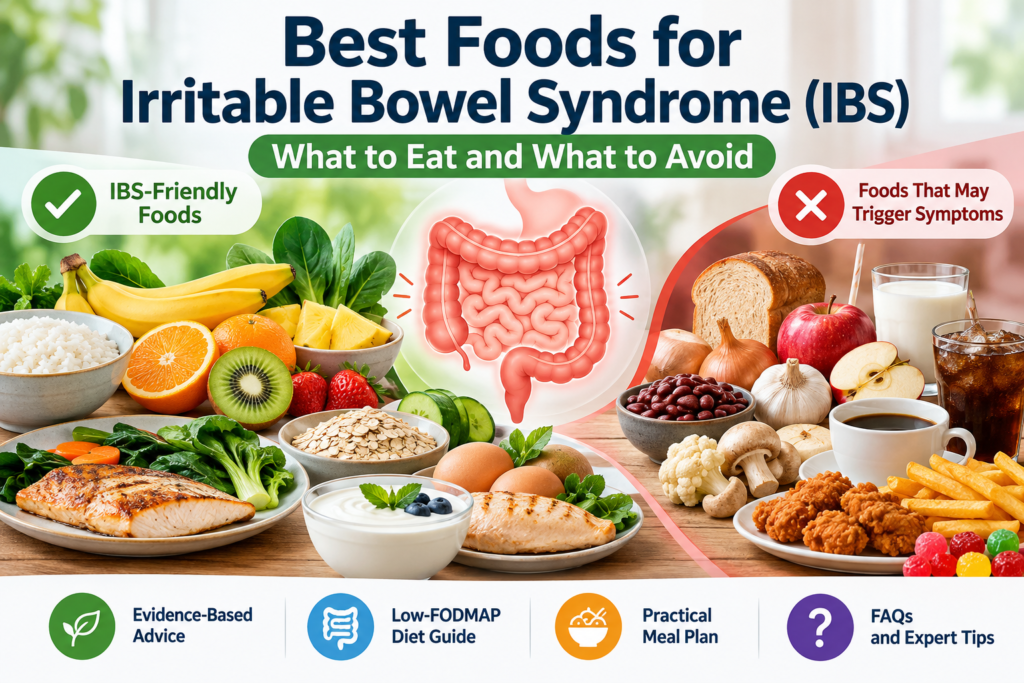
Irritable bowel syndrome (IBS) is a common digestive disorder that can cause abdominal pain, bloating, excessive gas, diarrhea, constipation, or alternating diarrhea and constipation. Although IBS does not usually cause permanent damage to the intestines, its symptoms can significantly affect daily activities and quality of life.
Food plays an important role in managing IBS. Certain foods may trigger symptoms in some people, while others can help improve bowel movements and reduce discomfort.
The good news is that there is no single diet that everyone with IBS must follow. The most effective approach is to identify individual food triggers, maintain a balanced diet, and consider evidence-based dietary strategies such as the low-FODMAP diet when appropriate.
Current recommendations from the American College of Gastroenterology (ACG), British Society of Gastroenterology (BSG), and the 2025 Seoul Consensus emphasize individualized dietary management, soluble fiber, and selective use of the low-FODMAP diet. [1–3]
1. What Is the Best Diet for IBS?
The best diet for IBS depends on the person’s symptoms, food tolerance, and nutritional needs.
Most people should begin with simple dietary changes before trying a restrictive diet.
Recommended first steps include:
- Eat regular meals and avoid skipping meals.
- Eat slowly and chew food thoroughly.
- Drink enough water throughout the day.
- Limit excessive caffeine, alcohol, and carbonated drinks if they worsen symptoms.
- Reduce large, high-fat meals.
- Keep a food and symptom diary.
- Gradually increase soluble fiber when constipation is present.
These measures may improve symptoms without requiring extensive food restrictions.
If symptoms continue despite these changes, a supervised low-FODMAP diet may be helpful. [1,2]
2. Foods That May Help Relieve IBS Symptoms
A. Low-FODMAP fruits
Some fruits contain carbohydrates that are poorly absorbed in the small intestine. These carbohydrates can draw water into the intestine and be fermented by gut bacteria, producing gas and bloating.
Fruits that are often suitable in moderate, individualized portions during a low-FODMAP diet include:
- Oranges and mandarins
- Kiwi fruit
- Pineapple
- Papaya
- Strawberries
- Grapes
- Firm, unripe bananas
Portion size matters. Even a food that is low in FODMAPs in a small serving may become high in FODMAPs in a larger serving.
Practical tip: Choose whole fruit instead of large quantities of fruit juice. Whole fruit generally provides more fiber and may be better tolerated.
B. Vegetables
Vegetables provide vitamins, minerals, and fiber. Many can be included in an IBS-friendly diet.
Examples of commonly suitable options include:
- Carrots
- Cucumbers
- Tomatoes
- Spinach
- Bok choy
- Eggplant
- Green beans
- Lettuce
- Zucchini
Onions, garlic, cauliflower, and mushrooms may trigger symptoms in some people because of their FODMAP content.
However, these foods are not universally harmful. Individual tolerance and serving size should guide long-term choices.
For Cambodian meals, rice served with simply prepared fish or chicken and suitable vegetables can be a practical starting point.
C. Rice, oats, and other grains
Rice is a useful staple for many people with IBS because plain rice is naturally low in FODMAPs.
Other options may include:
- White or brown rice, according to tolerance
- Oatmeal
- Quinoa
- Rice noodles
- Corn-based products
- Suitable low-FODMAP breads
Brown rice and oats provide fiber, but increasing fiber too quickly may cause bloating. Start with small portions and increase gradually.
Wheat bread, wheat noodles, and other wheat products can contain fructans, a type of FODMAP. Symptoms after eating wheat do not automatically mean that a person has gluten intolerance or celiac disease.
D. Protein-rich foods
Plain protein foods are generally low in FODMAPs and can help maintain a balanced diet.
Suitable options include:
- Fish
- Chicken
- Eggs
- Lean pork or beef
- Firm tofu
- Seafood
Choose grilled, steamed, boiled, or lightly cooked preparations when possible.
Large amounts of oil, fatty meat, creamy sauces, and spicy condiments may worsen symptoms in some people, particularly those with diarrhea-predominant IBS.
E. Lactose-free dairy products
Some people with IBS also have lactose intolerance. Lactose is a natural sugar found in milk and certain dairy products.
If milk causes diarrhea, gas, or bloating, consider trying:
- Lactose-free milk
- Lactose-free yogurt
- Hard cheeses that are naturally low in lactose
- Calcium-fortified, suitable plant-based milk alternatives
There is no need for everyone with IBS to avoid all dairy products. If dairy is tolerated, it can remain part of a healthy diet.
F. Soluble fiber
Soluble fiber is particularly useful for some people with IBS, especially those with constipation or mixed bowel habits.
Good sources include:
- Oats
- Psyllium husk (ispaghula)
- Kiwi fruit
- Suitable vegetables
- Certain seeds, in tolerated portions
Psyllium is an evidence-supported option for improving overall IBS symptoms. It can help normalize stool consistency in both constipation and diarrhea.
Start with a small dose, such as 3–4 g daily, and increase gradually according to tolerance and product instructions. Take it with adequate water unless a clinician has advised otherwise.
Avoid increasing fiber abruptly, as this may worsen gas and bloating. Insoluble fiber supplements, such as wheat bran, can aggravate symptoms in some patients. [2]
3. Foods That May Trigger IBS Symptoms
The following foods commonly cause problems for some people with IBS. They do not all need to be eliminated by every patient.
| Food or ingredient | Possible effect |
|---|---|
| Onions and garlic | Gas, bloating, abdominal discomfort |
| Apples, pears, and watermelon | Gas or diarrhea in sensitive individuals |
| Regular milk and some yogurts | Symptoms related to lactose intolerance |
| Beans, lentils, and chickpeas | Gas and bloating |
| Wheat-based foods | Symptoms in some people sensitive to fructans |
| Fried and high-fat foods | May worsen urgency, pain, or diarrhea |
| Coffee and energy drinks | May stimulate bowel movements |
| Carbonated drinks | May increase gas and abdominal distension |
| Sugar-free gum and sweets containing sorbitol or mannitol | Gas and diarrhea |
| Alcohol | May aggravate digestive symptoms |
Important: Food tolerance is individual. Avoid eliminating multiple food groups indefinitely without a clear reason, as this can lead to nutritional deficiencies and unnecessary dietary restriction.
4. What Is the Low-FODMAP Diet?
The low-FODMAP diet is one of the best-studied dietary approaches for IBS.
FODMAP stands for:
- Fermentable
- Oligosaccharides
- Disaccharides
- Monosaccharides
- And
- Polyols
These are short-chain carbohydrates and sugar alcohols that may be incompletely absorbed in the small intestine.
In susceptible individuals, they can increase intestinal water content and gas production. This may trigger bloating, abdominal pain, diarrhea, and other IBS symptoms. [1,3]
Examples of high-FODMAP foods
- Onions and garlic
- Certain wheat- and rye-based foods
- Apples, pears, and watermelon
- Regular milk when high in lactose
- Some beans and legumes
- Products containing sorbitol, mannitol, or other relevant sugar alcohols
Examples of lower-FODMAP alternatives
- Rice and oats
- Oranges and kiwi fruit
- Carrots and cucumbers
- Eggs, fish, and chicken
- Lactose-free milk
- Firm tofu
Food classifications depend on serving size, preparation, and product ingredients. Use a reliable, up-to-date food list when following this diet.
The three phases of the low-FODMAP diet
Phase 1: Short-term restriction
Temporarily replace high-FODMAP foods with suitable lower-FODMAP alternatives, generally for about 2–6 weeks. The goal is to determine whether symptoms improve.
Phase 2: Reintroduction
If symptoms improve, reintroduce FODMAP-containing foods systematically, testing one group at a time to identify which carbohydrates trigger symptoms and in what amounts.
Phase 3: Personalization
Develop a long-term diet that includes as many tolerated foods as possible while limiting only the foods and portions that cause significant symptoms.
The strict elimination phase should not become a lifelong diet. Dietitian support is recommended because the diet can otherwise become unnecessarily restrictive and may affect nutritional adequacy and dietary variety. [1,3,4]
5. Dietary Recommendations for Different Types of IBS
IBS with constipation (IBS-C)
The main goals are to improve stool consistency and support regular bowel movements.
Recommendations include:
- Increase soluble fiber gradually.
- Consider psyllium if appropriate.
- Drink sufficient water.
- Include tolerated fruits, vegetables, and whole grains.
- Maintain regular physical activity.
- Consider a low-FODMAP approach if bloating and abdominal pain persist.
Do not suddenly increase large amounts of bran or other coarse fiber if it worsens bloating.
IBS with diarrhea (IBS-D)
The main goals are to reduce urgency, loose stools, and abdominal discomfort.
Recommendations include:
- Identify and reduce personally relevant triggers.
- Limit caffeine if it worsens diarrhea.
- Avoid sugar alcohols such as sorbitol when they trigger symptoms.
- Try lactose-free dairy products if lactose intolerance is suspected.
- Reduce very fatty meals if they aggravate symptoms.
- Consider a supervised low-FODMAP diet if basic measures are insufficient.
Persistent or nocturnal diarrhea, blood in the stool, fever, or unexplained weight loss should not automatically be attributed to IBS.
IBS with mixed bowel habits (IBS-M)
Patients with alternating constipation and diarrhea should avoid overly aggressive dietary changes.
Recommendations include:
- Maintain regular meals and hydration.
- Adjust soluble fiber gradually.
- Record symptoms and stool patterns.
- Identify triggers during periods of diarrhea and constipation.
- Avoid unnecessary food exclusions.
The objective is to improve stool consistency and overall symptoms without worsening the opposite bowel pattern.
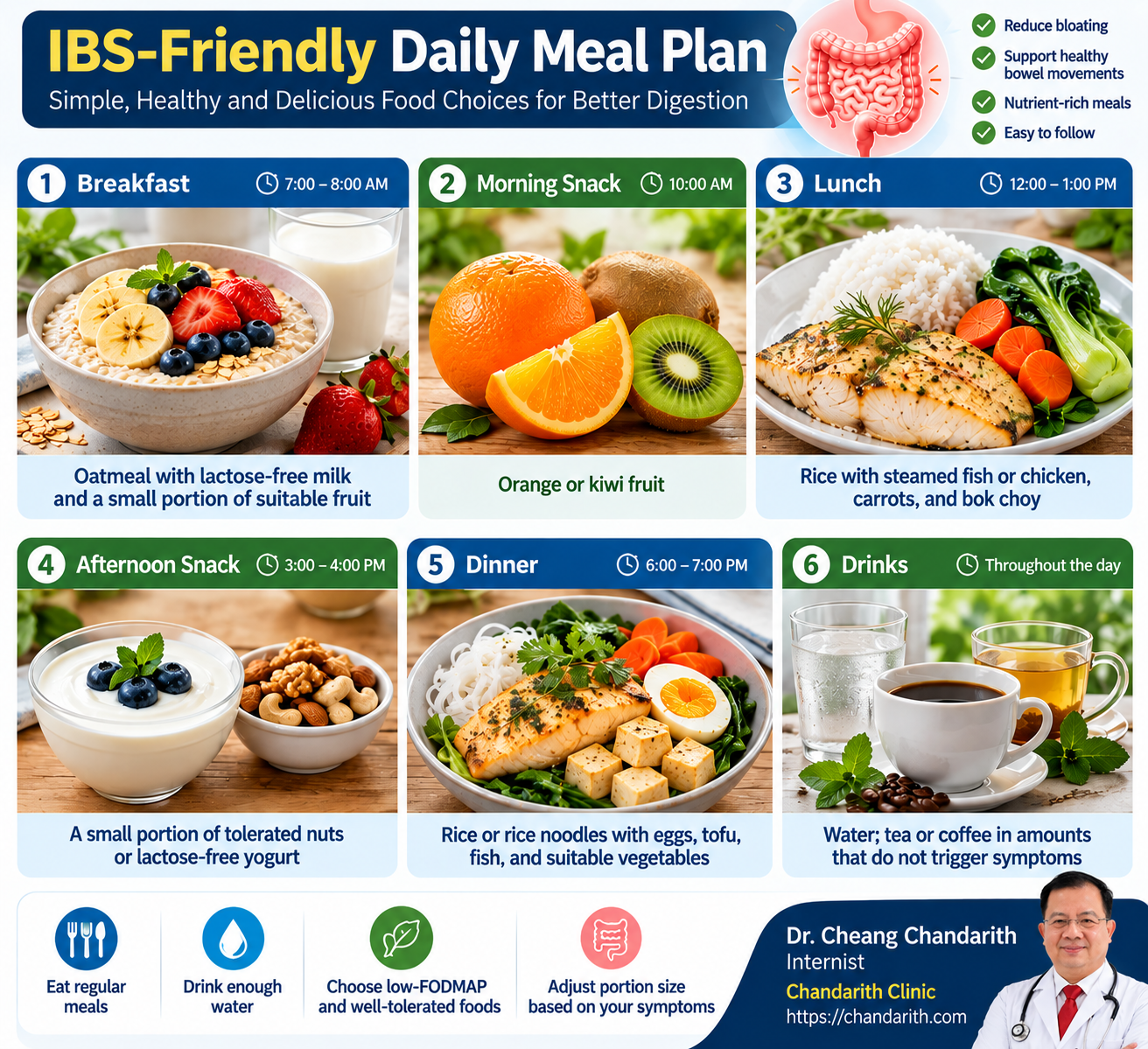
6. A Simple IBS-Friendly Daily Meal Plan
The following is an example for general guidance, not a mandatory low-FODMAP prescription. Portions and ingredients should be adjusted to individual tolerance.
| Meal | Example |
|---|---|
| Breakfast | Oatmeal with lactose-free milk and a small portion of suitable fruit |
| Morning snack | Orange or kiwi fruit |
| Lunch | Rice with steamed fish or chicken, carrots, and bok choy |
| Afternoon snack | A small portion of tolerated nuts or lactose-free yogurt |
| Dinner | Rice or rice noodles with eggs, tofu, fish, and suitable vegetables |
| Drinks | Water; tea or coffee in amounts that do not trigger symptoms |
For Cambodian patients, traditional foods can often be adapted rather than replaced entirely. Plain rice, fish, eggs, chicken, and suitable vegetables can form the basis of meals. Onion, garlic, wheat-based sauces, and sweetened beverages may need individual assessment.
Spicy food does not necessarily trigger IBS in everyone, but chili may worsen symptoms in some people. Try reducing it temporarily if there is a consistent relationship with symptoms.
7. Other Lifestyle Measures That Can Improve IBS
Diet is important, but it is only one component of treatment.
Other helpful strategies include:
- Eating at consistent times.
- Getting adequate sleep.
- Engaging in regular physical activity.
- Managing stress through relaxation, mindfulness, or other suitable techniques.
- Recognizing the relationship between gut symptoms and emotional stress.
- Seeking medical advice when symptoms persist despite dietary changes.
IBS is a disorder of gut-brain interaction. Stress does not mean that symptoms are imaginary; rather, communication between the brain and digestive system can influence pain, bowel movements, and symptom sensitivity.
8. When Should You Seek Medical Advice?
Although IBS is common, not every patient with abdominal pain or altered bowel habits has IBS.
Seek medical evaluation for warning signs such as:
- Blood in the stool or black stools
- Unintentional weight loss
- Iron-deficiency anemia
- Persistent fever
- A palpable abdominal mass
- Progressive or severe abdominal pain
- Persistent nocturnal diarrhea
- A new, persistent change in bowel habits, particularly at an older age
- A relevant family history of colorectal cancer, inflammatory bowel disease, or celiac disease
A clinician may recommend blood tests, celiac testing, stool studies, colonoscopy, or other investigations depending on the symptoms, age, history, and examination.
Before starting a gluten-free diet, discuss celiac testing with a clinician if celiac disease is a possibility, because dietary gluten restriction can affect test results.
Frequently Asked Questions (FAQ)
1. What are the best foods for IBS?
Rice, oats, eggs, fish, chicken, suitable vegetables, and tolerated fruits are useful starting points. Lactose-free dairy products may help people who are sensitive to lactose. The best choices depend on individual symptoms and portion sizes.
2. What foods should I avoid if I have IBS?
Common triggers include onions, garlic, certain fruits, regular milk in people with lactose intolerance, some legumes, high-fat meals, caffeine, and sugar alcohols. Avoid only the foods that cause problems rather than following a highly restrictive diet without a clear indication.
3. Is rice good for IBS?
Yes. Plain white rice is naturally low in FODMAPs and is often well tolerated. Brown rice may provide additional fiber, but the best choice depends on bowel habits and personal tolerance.
4. Are bananas good for IBS?
Bananas can be suitable for many people with IBS, particularly firm, unripe bananas in appropriate portions. Ripeness and serving size can affect FODMAP content, so tolerance should guide intake.
5. Can I eat eggs if I have IBS?
Yes. Plain eggs are naturally low in FODMAPs. However, large amounts of butter, oil, cream, or other high-fat ingredients used during cooking may trigger symptoms in some people.
6. Is yogurt good for IBS?
It depends on the individual. Regular yogurt contains varying amounts of lactose and may cause symptoms in people with lactose intolerance. Lactose-free yogurt can be a suitable alternative.
7. Is coffee bad for IBS?
Not for everyone. Coffee can stimulate intestinal activity and may worsen urgency or diarrhea in some people. Reducing the amount or switching to decaffeinated coffee may help if a clear relationship exists.
8. Is spicy food harmful for IBS?
Spicy food does not damage the intestines simply because someone has IBS. However, chili and spicy meals may aggravate abdominal pain, burning sensations, or diarrhea in susceptible individuals.
9. Does the low-FODMAP diet cure IBS?
No. It is a symptom-management strategy, not a cure. It may improve abdominal pain, bloating, and bowel habits in some patients, but the strict restriction phase should be followed by reintroduction and long-term personalization.
10. Should everyone with IBS follow a gluten-free diet?
No. A gluten-free diet is necessary for people with celiac disease and may be appropriate for selected individuals for other reasons. Some apparent responses to wheat restriction may reflect reduced fructan intake rather than gluten itself.
11. Can probiotics help IBS?
Some probiotics may improve selected symptoms in some patients, but results vary considerably by strain and product. Evidence is insufficient to recommend every probiotic product universally. Discuss a time-limited trial with a clinician if appropriate.
12. When should I see a doctor about IBS symptoms?
Seek medical advice if symptoms are persistent, significantly affect daily life, or do not improve with basic dietary changes. Prompt evaluation is particularly important for blood in the stool, unexplained weight loss, anemia, fever, severe pain, or persistent nocturnal symptoms.
Conclusion
Food can play a major role in controlling irritable bowel syndrome. A balanced diet, regular meals, adequate hydration, and appropriately selected soluble fiber are good starting points. If symptoms persist, a supervised low-FODMAP diet may help identify individual food triggers.
The most important principle is personalization: people with IBS do not need to avoid every food that might cause symptoms in someone else. The goal is to find a nutritious, sustainable diet that improves symptoms while preserving food variety and quality of life.
If you experience persistent digestive symptoms or warning signs, consult a qualified healthcare professional for proper evaluation and treatment.
References
- Lacy BE, Pimentel M, Brenner DM, et al. ACG Clinical Guideline: Management of Irritable Bowel Syndrome. The American Journal of Gastroenterology. 2021;116(1):17–44. doi:10.14309/ajg.0000000000001036. Read the guideline.
- Vasant DH, Paine PA, Black CJ, et al. British Society of Gastroenterology guidelines on the management of irritable bowel syndrome. Gut. 2021;70:1214–1240. doi:10.1136/gutjnl-2021-324598. Read the guideline.
- Seoul Consensus on Clinical Practice Guidelines for Irritable Bowel Syndrome. Journal of Neurogastroenterology and Motility. 2025. Read the consensus document.
- Monash University. The low-FODMAP diet for IBS: three-step dietary approach and practical resources. Visit Monash FODMAP.
- American College of Gastroenterology. Low-FODMAP Diet: Patient and clinician resources. Read the dietary guidance.
Medical disclaimer: This article is intended for general educational purposes and does not replace an individualized medical assessment, diagnosis, or treatment plan.