
Introduction
Chronic kidney disease (CKD) is a condition in which kidney function gradually declines over time. Healthy kidneys help remove waste products, regulate fluid balance, maintain normal blood pressure, and control important minerals such as potassium and phosphorus.
When kidney function decreases, certain substances may accumulate in the blood. Dietary changes can help control blood pressure, reduce fluid retention, maintain electrolyte balance, and support overall health.
However, there is no single diet that is appropriate for every person with CKD. Dietary recommendations depend on the CKD stage, blood potassium and phosphorus levels, nutritional status, other medical conditions, medications, and whether the patient receives dialysis.
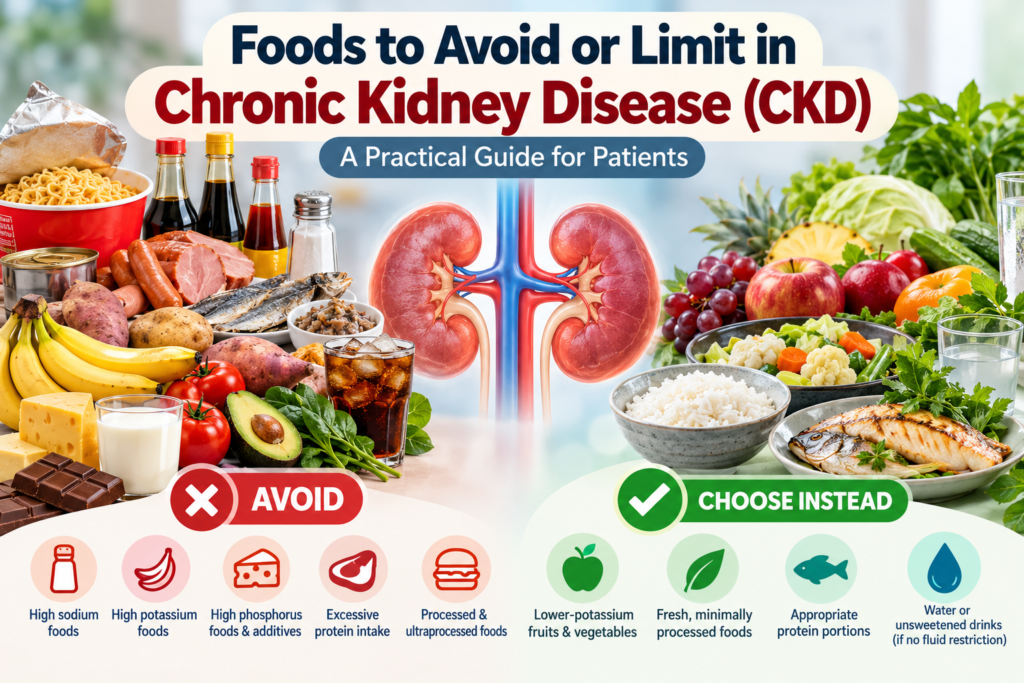
The KDIGO 2024 Clinical Practice Guideline recommends a healthy, diverse diet with more plant-based foods, fewer ultraprocessed foods, and individualized advice about sodium, potassium, phosphorus, and protein intake.
This article explains which foods patients with CKD should avoid or limit and how to make practical, kidney-friendly choices.
1. Foods high in sodium (salt)
Excessive sodium intake can increase blood pressure, worsen swelling, increase thirst, and contribute to fluid retention. These effects are particularly important in patients with CKD, hypertension, heart failure, or edema.
KDIGO recommends a sodium intake of less than 2,000 mg per day for most adults with CKD, equivalent to less than approximately 5 g of salt daily.
Foods to avoid or limit
- Instant noodles and their seasoning packets.
- Fish sauce, soy sauce, oyster sauce, and other salty condiments.
- Pickled vegetables and heavily salted foods.
- Salted fish, dried fish, and salted seafood.
- Processed meats, sausages, ham, and canned meats.
- Packaged chips, crackers, and other salty snacks.
- Bouillon cubes, soup powders, and concentrated stock.
- Fast food, restaurant meals, and heavily salted soups.
Healthier alternatives
- Prepare meals using fresh ingredients.
- Reduce the amount of salt, fish sauce, and soy sauce used during cooking.
- Flavor food with garlic, ginger, lime, lemon, herbs, or spices.
- Compare food labels and select products with less sodium.
- Avoid adding extra salt at the table.
Practical tip for Cambodian patients: Traditional soups, fermented fish products, prahok, dipping sauces, and instant noodle seasonings can contain substantial sodium. Reducing their quantity and frequency may be more practical than eliminating every familiar food.
2. High-potassium foods: Restrict only when necessary
Potassium is essential for normal nerve function, muscle contraction, and heart rhythm. However, some patients with advanced CKD develop hyperkalemia, which can cause dangerous cardiac arrhythmias.
Not every patient with CKD needs a low-potassium diet. Dietary restriction should be based on serum potassium levels, kidney function, medications, and the overall clinical situation.
Foods that may need to be limited when potassium is elevated
Fruits
- Bananas.
- Oranges and orange juice.
- Avocados.
- Papaya.
- Mangoes.
- Jackfruit.
- Dried fruits, including raisins and prunes.
Vegetables and starches
- Potatoes and sweet potatoes.
- Tomatoes and concentrated tomato products.
- Spinach and certain other leafy vegetables.
- Large portions of pumpkin or other potassium-rich vegetables.
Other sources
- Coconut water.
- Some fruit and vegetable juices.
- Salt substitutes containing potassium chloride.
- Packaged foods containing potassium-based additives.
The potassium content of a food depends on its serving size, preparation, and variety. Therefore, these foods are not automatically prohibited for every patient with CKD.
Lower-potassium alternatives
Depending on portion size and individual needs, suitable choices may include:
- Apples and grapes.
- Pineapple.
- Pears.
- Cabbage.
- Cucumber.
- Cauliflower.
- Lettuce.
- Onion and bell pepper.
Boiling certain vegetables in water and discarding the cooking water can reduce their potassium content. However, this method does not remove all potassium.
Important: Patients taking ACE inhibitors, ARBs, mineralocorticoid receptor antagonists, or other medications that increase potassium may require closer monitoring. Do not discontinue prescribed medications without medical advice.
3. Foods high in phosphorus and phosphate additives
Phosphorus is important for bone health and cellular function. In advanced CKD, the kidneys may have difficulty eliminating excess phosphorus, contributing to CKD-mineral and bone disorder.
Persistent phosphate abnormalities can affect bone strength and may contribute to vascular calcification.
The need for phosphorus restriction depends on kidney function, serum phosphate, calcium, parathyroid hormone (PTH), and the overall treatment plan.
Foods to limit when phosphorus is elevated
- Processed cheese and some cheese products.
- Large amounts of milk, yogurt, and other phosphorus-rich dairy foods.
- Organ meats, including liver.
- Certain dried fish and seafood products.
- Cola beverages containing phosphoric acid.
- Chocolate and cocoa products in large quantities.
- Processed meats and convenience foods containing phosphate additives.
- Packaged foods with added inorganic phosphorus.
Why phosphate additives matter
Phosphorus from additives is generally more readily absorbed than phosphorus naturally present in many plant foods.
Check ingredient lists for terms containing “phos,” such as:
- Phosphoric acid.
- Sodium phosphate.
- Calcium phosphate.
- Pyrophosphate.
- Polyphosphate.
Reducing processed foods with phosphate additives may help lower phosphorus intake without unnecessarily restricting nutritious foods.
What can patients eat instead?
Depending on laboratory results and individual needs, options may include fresh vegetables, fruits, rice, and other suitable grains. Protein sources should be selected in portions appropriate for the patient’s nutritional requirements.
Beans, lentils, nuts, and whole grains contain phosphorus, but much of their phosphorus is bound to phytate and is less bioavailable than phosphorus additives. They should not automatically be excluded from every CKD diet.
Patients prescribed phosphate binders should take them as directed, generally with meals or snacks according to the specific prescription.
4. Excessive protein intake
Protein is necessary for maintaining muscle mass, repairing tissues, and supporting immune function. However, excessive protein intake may increase the kidney’s workload and is not recommended for many patients with nondialysis CKD.
KDIGO 2024 suggests a protein intake of approximately 0.8 g/kg body weight per day for adults with CKD stages G3–G5. Patients at risk of progression should generally avoid high protein intake exceeding 1.3 g/kg/day.
Foods and dietary patterns to avoid or reduce
- Very high-protein diets.
- Unsupervised bodybuilding protein supplements.
- Excessive portions of meat at every meal.
- High-protein diets based heavily on processed meats.
- Unnecessary protein shakes or powders.
This does not mean that patients with CKD should stop eating meat, fish, eggs, or other protein-containing foods.
Important differences between dialysis and nondialysis patients
Patients receiving hemodialysis or peritoneal dialysis usually need more protein because treatment can increase protein losses and requirements.
Older adults, patients with frailty, and those experiencing malnutrition may also need individualized protein targets.
Do not prescribe severe protein restriction without professional supervision. Inappropriate restriction can cause protein-energy wasting, muscle loss, and poor clinical outcomes.
5. Processed foods and ultraprocessed products
Many ultraprocessed foods contain substantial amounts of sodium, phosphate additives, saturated fat, or added sugar. Frequent consumption can make blood pressure, diabetes, cardiovascular risk, and CKD management more difficult.
Foods to limit
- Instant noodles and packaged convenience meals.
- Processed meats and canned meat products.
- Packaged snacks with high sodium content.
- Fast food and heavily processed ready-made meals.
- Sugary drinks and sweetened packaged beverages.
- Products containing substantial phosphate additives.
Choose fresh or minimally processed foods whenever practical. Read nutrition labels and pay attention to sodium, added sugars, saturated fat, and ingredient lists.
A kidney-friendly diet should emphasize overall dietary quality rather than focusing exclusively on individual minerals.
6. Sugary drinks and excessive added sugar
Many people with CKD also have diabetes, obesity, hypertension, or cardiovascular disease. Excessive added sugar can contribute to poor glycemic control, excess calorie intake, and metabolic complications.
Drinks and foods to limit
- Soft drinks and sweetened iced tea.
- Energy drinks.
- Sweetened fruit drinks.
- Large quantities of desserts, cakes, and confectionery.
- Sweetened condensed milk and heavily sweetened beverages.
Whole fruit is generally preferable to sugary drinks because it provides fiber and other nutrients.
Patients with diabetes should individualize carbohydrate intake and monitor blood glucose. Patients with fluid restrictions must also consider the total volume of beverages consumed.
7. Foods and drinks containing hidden potassium or sodium
Some products marketed as healthier alternatives can still be problematic for selected CKD patients.
Examples
- Low-sodium salt substitutes containing potassium chloride.
- Packaged products with potassium chloride or potassium phosphate.
- Concentrated seasoning sauces.
- Bouillon cubes and meat extracts.
- Certain herbal products and nutritional supplements with undisclosed mineral content.
Patients should check ingredient labels carefully. Salt substitutes should not be used without medical advice when potassium is elevated or the patient takes medications that increase potassium.
Herbal remedies and supplements should also be reviewed with a healthcare professional because some may contain potassium, phosphorus, heavy metals, or other potentially harmful ingredients.
8. Should patients with CKD avoid all fruits and vegetables?
No. This is a common misconception.
Fruits and vegetables provide fiber, vitamins, minerals, and beneficial plant compounds. KDIGO encourages a healthy dietary pattern with greater consumption of plant-based foods compared with animal-based foods.
The appropriate selection depends on the patient’s serum potassium, CKD stage, medications, nutritional status, and portion sizes.
If potassium is normal, many patients can continue eating a wide variety of fruits and vegetables.
If potassium is elevated, a dietitian can help select lower-potassium varieties, adjust serving sizes, and recommend preparation techniques.
Avoid unnecessary dietary restrictions that reduce food variety or contribute to malnutrition.
9. Do patients with CKD need to restrict fluids?
Not every patient with CKD needs fluid restriction.
Fluid intake may need to be limited in patients with significant edema, heart failure, low urine output, or advanced kidney failure, particularly those receiving dialysis.
Patients with early CKD who have normal fluid balance and adequate urine output may not require a prescribed fluid limit.
Follow the fluid target recommended by the treating clinician. Remember that soup, ice, and other foods that are liquid at room temperature may contribute to total fluid intake when a restriction is prescribed.
10. A practical kidney-friendly diet for Cambodian patients
A healthy CKD diet can incorporate familiar Cambodian foods while adjusting salt, portion sizes, protein, and mineral intake according to individual needs.
| Meal | Example |
|---|---|
| Breakfast | Rice porridge with egg, prepared with minimal salt |
| Mid-morning snack | A small apple or a suitable portion of grapes |
| Lunch | Rice, steamed fish in an appropriate portion, and cabbage |
| Afternoon snack | Unsalted crackers or a suitable fruit portion |
| Dinner | Rice, chicken or fish in an appropriate portion, and cooked cauliflower or cabbage |
| Drinks | Water or unsweetened tea, unless fluid restriction is prescribed |
This is a general example, not a universal prescription. Patients with hyperkalemia, hyperphosphatemia, diabetes, malnutrition, or dialysis-related nutritional needs may require different food choices and portions.
Five practical rules for patients
- Reduce salt: Use less fish sauce, prahok, salty seasonings, and instant noodle seasoning.
- Check potassium: Restrict high-potassium foods only when clinically indicated.
- Avoid phosphate additives: Choose fresh foods more often and read product labels.
- Eat appropriate protein portions: Avoid excessive protein intake but do not eliminate protein.
- Review your laboratory results: Adjust your diet according to potassium, phosphorus, kidney function, and nutritional status.
Frequently Asked Questions (FAQ)
1. What are the most important foods to avoid in CKD?
The first priority is usually to reduce high-sodium foods, especially processed foods, salty condiments, and instant noodle seasoning. Patients may also need to limit potassium-rich foods, phosphate additives, or excessive protein depending on laboratory results and CKD stage.
There is no single list of prohibited foods for every patient.
2. Can patients with CKD eat bananas?
Yes, some can. Bananas contain potassium, so patients with hyperkalemia or a prescribed potassium restriction may need to limit portion size or choose alternatives. Patients with normal potassium do not necessarily need to avoid bananas completely.
3. Can patients with CKD eat eggs?
Yes. Eggs provide high-quality protein. Appropriate portions can fit into many CKD diets. The total protein requirement and phosphorus intake should be considered, especially in advanced CKD or dialysis.
4. Is rice safe for patients with CKD?
Rice can generally be included in a kidney-friendly diet. Portion sizes should reflect calorie requirements, diabetes control, and overall nutritional needs. Patients with diabetes should avoid excessive portions that cause poor glucose control.
5. Can patients with CKD eat fish?
Yes. Fish provides high-quality protein and can be part of a healthy diet. Fresh fish prepared by steaming, grilling, or baking is often preferable to heavily salted, dried, or processed fish. The portion should fit the patient’s protein target.
6. Can patients with CKD eat tomatoes and potatoes?
Many patients can eat them in appropriate portions. Patients with elevated serum potassium may need to reduce their intake or use suitable preparation methods, such as boiling potatoes and discarding the cooking water.
7. Should all patients with CKD avoid dairy products?
No. Dairy products contain phosphorus, potassium, protein, and calcium in varying amounts. The appropriate amount depends on laboratory findings, nutritional requirements, and the overall dietary plan.
8. Is coconut water safe for CKD?
Coconut water can contain substantial potassium. Patients with hyperkalemia, advanced CKD, or a prescribed potassium restriction should generally avoid or limit it unless their healthcare professional confirms it is appropriate.
9. Can patients with CKD take protein supplements?
Not routinely without assessing their nutritional needs. Excessive protein supplementation may be inappropriate for nondialysis CKD, while dialysis patients may need additional protein. Discuss supplements with a nephrologist or renal dietitian before starting them.
10. Do patients with stage 3 CKD need a strict renal diet?
Not necessarily. Many patients with stage 3 CKD benefit primarily from reducing sodium, eating a balanced diet, maintaining appropriate protein intake, and controlling diabetes and blood pressure.
Potassium, phosphorus, and fluid restrictions should be based on individual clinical indications rather than the CKD stage alone.
11. Can patients with CKD eat beans, nuts, and whole grains?
Often, yes. These foods provide fiber and plant-based nutrients. Although they contain phosphorus and sometimes potassium, their mineral bioavailability and overall nutritional benefits differ from those of processed foods containing phosphate additives. Portion sizes and laboratory results should guide individual decisions.
12. Who should help patients plan a CKD diet?
A nephrologist, primary care physician, or appropriately trained renal dietitian can help develop an individualized dietary plan. Monitoring should include kidney function, serum potassium, phosphorus when indicated, nutritional status, blood pressure, and weight.
Conclusion
Knowing which foods to avoid or limit in chronic kidney disease can help patients control blood pressure, maintain electrolyte balance, reduce fluid retention, and support long-term health.
The most important principles are to reduce excessive sodium, avoid unnecessary protein supplementation, limit phosphate additives, and adjust potassium intake when laboratory results indicate a need.
The key message is that CKD nutrition must be individualized. Patients should not eliminate entire food groups without a clear clinical reason. A balanced, culturally appropriate diet guided by laboratory results and professional advice is generally more beneficial than an unnecessarily restrictive diet.
References
- Kidney Disease: Improving Global Outcomes (KDIGO) CKD Work Group. KDIGO 2024 Clinical Practice Guideline for the Evaluation and Management of Chronic Kidney Disease. Kidney International. 2024. Official KDIGO guideline.
- Ikizler TA, Burrowes JD, Byham-Gray LD, et al. KDOQI Clinical Practice Guideline for Nutrition in CKD: 2020 Update. American Journal of Kidney Diseases. 2020;76(3 Suppl 1)–S107. doi:10.1053/j.ajkd.2020.05.006. PubMed.
- National Institute of Diabetes and Digestive and Kidney Diseases (NIDDK). Healthy Eating for Adults with Chronic Kidney Disease. Official patient guidance.
- National Kidney Foundation. Potassium in Your CKD Diet. Patient education resource.
- National Kidney Foundation. Creating a Kidney Friendly Plate. 2026. Dietary guidance.
Medical disclaimer: This article is intended for educational purposes and does not replace individualized medical advice. Patients with CKD should consult their healthcare professional before making major dietary changes, particularly if they have abnormal potassium or phosphorus levels, diabetes, malnutrition, heart failure, or are receiving dialysis.
About the author: Dr. Cheang Chandarith, Internist, Medical Tourism Cambodia. Website: https://www.rescennt.com