
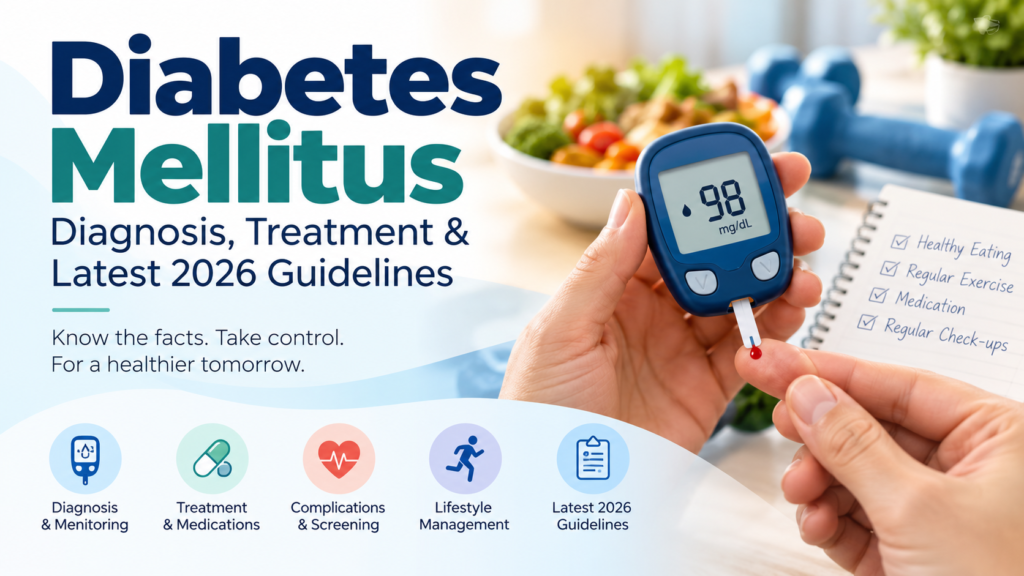
Diabetes mellitus (DM) is a group of metabolic disorders characterized by chronic hyperglycemia resulting from inadequate insulin secretion, impaired insulin action, or both. Persistent hyperglycemia can damage the cardiovascular system, kidneys, eyes, nerves, and feet and is associated with substantial morbidity and mortality.
Modern diabetes management has moved beyond simply lowering blood glucose. Current guidelines emphasize individualized glycemic targets, cardiovascular and kidney protection, weight management, prevention of complications, patient education, and shared decision-making.
The recommendations below are based primarily on the American Diabetes Association (ADA) Standards of Care in Diabetes—2026, with additional guidance from KDIGO for diabetes and chronic kidney disease (CKD).
1. Types of Diabetes Mellitus
Diabetes is generally classified into four major categories:
Type 1 diabetes
Type 1 diabetes results from autoimmune destruction of pancreatic β-cells, leading to severe or absolute insulin deficiency.
Patients require insulin therapy for survival.
Type 1 diabetes can occur at any age, although it commonly develops in children and young adults. Adult-onset autoimmune diabetes may develop more gradually and can sometimes initially resemble type 2 diabetes.
Type 2 diabetes
Type 2 diabetes is characterized by progressive loss of adequate β-cell insulin secretion, usually occurring in the setting of insulin resistance.
Risk factors include:
- Overweight or obesity
- Physical inactivity
- Family history of diabetes
- Increasing age
- Previous gestational diabetes
- Hypertension
- Dyslipidemia
- Cardiovascular disease
- Polycystic ovary syndrome
- Certain ethnic and genetic risk factors
Type 2 diabetes accounts for the majority of diabetes cases.
Gestational diabetes mellitus
Gestational diabetes mellitus (GDM) is diabetes diagnosed during pregnancy that was not clearly present before pregnancy.
Women with previous GDM have a substantially increased lifetime risk of developing type 2 diabetes.
Other specific types
Other forms include:
- Monogenic diabetes
- Diabetes associated with pancreatic disease
- Cystic-fibrosis-related diabetes
- Endocrine disorders
- Drug- or chemical-induced diabetes
- Diabetes associated with genetic syndromes
Correct classification is important because treatment can differ substantially between diabetes types.
2. Diagnostic Criteria for Diabetes
According to the ADA Standards of Care 2026, diabetes can be diagnosed using A1C or plasma glucose criteria.
Diagnostic criteria
| Test | Diabetes |
|---|---|
| HbA1c | ≥6.5% |
| Fasting plasma glucose | ≥126 mg/dL (7.0 mmol/L) |
| 2-hour plasma glucose during 75-g OGTT | ≥200 mg/dL (11.1 mmol/L) |
| Random plasma glucose + classic symptoms | ≥200 mg/dL (11.1 mmol/L) |
Classic symptoms include:
- Polyuria
- Polydipsia
- Unexplained weight loss
If there is no unequivocal hyperglycemia or hyperglycemic crisis, the diagnosis generally requires confirmatory testing.
3. Prediabetes
Prediabetes represents an intermediate state of abnormal glucose regulation and identifies people at increased risk of developing type 2 diabetes.
ADA 2026 criteria
| Test | Prediabetes |
|---|---|
| HbA1c | 5.7–6.4% |
| Fasting plasma glucose | 100–125 mg/dL (5.6–6.9 mmol/L) |
| 2-hour OGTT | 140–199 mg/dL (7.8–11.0 mmol/L) |
Prediabetes is also associated with increased cardiovascular risk.
Lifestyle intervention, weight management, physical activity, and management of cardiovascular risk factors are important components of prevention.
4. Who Should Be Screened?
Diabetes screening should be considered in adults with risk factors and according to age- and risk-based recommendations.
Important risk factors include:
- Overweight or obesity
- Family history of diabetes
- Hypertension
- Dyslipidemia
- Cardiovascular disease
- Physical inactivity
- History of gestational diabetes
- Polycystic ovary syndrome
- Other conditions associated with insulin resistance
A1C, fasting plasma glucose, and the 75-g OGTT are established tests for screening and diagnosis.
The choice of test should consider the clinical situation because different tests may identify somewhat different groups of people.
5. Symptoms of Diabetes
Some people with type 2 diabetes have few or no symptoms, particularly early in the disease.
Common symptoms include:
- Increased thirst
- Frequent urination
- Increased hunger
- Unintentional weight loss
- Fatigue
- Blurred vision
- Recurrent skin infections
- Recurrent urinary or genital infections
- Slow wound healing
- Numbness or tingling of the feet
Type 1 diabetes may develop rapidly and can present with diabetic ketoacidosis (DKA).
6. Initial Evaluation After Diagnosis
A comprehensive assessment should not focus only on glucose.
The initial evaluation should include:
Glycemic assessment
- HbA1c
- Fasting and/or postprandial glucose
- Hypoglycemia risk
- Current medications
Cardiovascular risk
- Blood pressure
- Lipid profile
- Smoking status
- Obesity/central adiposity
- Cardiovascular disease history
Kidney assessment
- Serum creatinine
- eGFR
- Urine albumin-to-creatinine ratio (UACR)
Diabetes complications
- Retinal assessment
- Peripheral neuropathy
- Foot examination
- Cardiovascular disease
- Kidney disease
Other considerations
- Nutrition
- Physical activity
- Mental and psychosocial health
- Medication adherence
- Financial/access barriers
- Patient preferences and treatment goals
The ADA emphasizes comprehensive and individualized assessment rather than glucose management alone.
7. Glycemic Targets
Glycemic goals should be individualized.
For many nonpregnant adults with diabetes, the ADA 2026 recommends:
- HbA1c <7%
- Premeal glucose: 80–130 mg/dL (4.4–7.2 mmol/L)
- Peak postmeal glucose: <180 mg/dL (<10.0 mmol/L)
For people using continuous glucose monitoring (CGM), a common goal is:
- Time in range 70–180 mg/dL: >70%
- Time below 70 mg/dL: <4%
- Time below 54 mg/dL: <1%
Lower HbA1c targets may be appropriate in selected individuals if they can be achieved safely without significant hypoglycemia or treatment burden.
Less stringent targets may be appropriate for people with frailty, major comorbidities, cognitive impairment, functional limitations, or high hypoglycemia risk.
8. Lifestyle Management
Lifestyle management remains a fundamental component of diabetes treatment.
Nutrition
A healthy eating pattern should emphasize:
- Non-starchy vegetables
- Whole grains
- Legumes
- Nuts and seeds
- Fish
- Lean protein
- High-fiber foods
- Appropriate portions of fruit
Limit:
- Sugar-sweetened beverages
- Highly processed foods
- Excess refined carbohydrates
- Excess saturated fat
- Excess sodium
- Excess calorie intake
There is no single diet that is appropriate for every person with diabetes.
Nutrition should be individualized according to culture, affordability, preferences, comorbidities, and treatment goals.
For Cambodian patients, dietary counseling should take local foods and eating patterns into account rather than simply applying Western meal plans.
9. Physical Activity
Regular physical activity improves:
- Insulin sensitivity
- Glycemic control
- Cardiovascular health
- Body composition
- Physical function
- Quality of life
A practical goal for many adults is at least:
150 minutes per week of moderate-to-vigorous aerobic activity, distributed over several days, with no more than two consecutive days without activity when possible.
Resistance exercise should also be incorporated when appropriate.
Patients should gradually increase activity according to their age, fitness, cardiovascular status, neuropathy, kidney disease, and other comorbidities.
10. Weight Management
Weight management is a major component of modern type 2 diabetes treatment.
The ADA 2026 emphasizes that even 5–7% weight loss can improve glycemia and cardiovascular risk factors, while sustained weight loss of >10% can provide greater metabolic benefits and may allow diabetes remission in some individuals.
Treatment may include:
- Nutrition therapy
- Physical activity
- Behavioral intervention
- Anti-obesity medication
- Glucose-lowering medications with weight-loss effects
- Metabolic surgery when appropriate
For people with diabetes and overweight/obesity, medications such as GLP-1 receptor agonists or dual GIP/GLP-1 receptor agonists may provide substantial weight loss in appropriate patients.
11. Pharmacological Treatment of Type 2 Diabetes
Treatment should be individualized according to:
- HbA1c
- Symptoms
- Weight
- Cardiovascular disease
- Heart failure
- CKD
- Hypoglycemia risk
- Cost and access
- Adverse effects
- Patient preference
The ADA 2026 emphasizes choosing medications according to their overall benefits rather than considering glucose lowering alone.
Metformin
Metformin remains an important glucose-lowering medication for many people with type 2 diabetes.
Advantages include:
- Effective glucose lowering
- Low hypoglycemia risk when used alone
- Generally weight neutral or modest weight loss
- Low cost
- Long clinical experience
Gastrointestinal adverse effects are common initially and may be reduced by gradual dose escalation and taking the medication with food.
Renal function should be considered when prescribing metformin.
12. GLP-1 Receptor Agonists and Dual GIP/GLP-1 Therapy
GLP-1-based therapies can:
- Reduce HbA1c
- Promote weight loss
- Reduce appetite
- Reduce cardiovascular risk with specific agents
- Provide kidney-related benefits in selected populations
Dual GIP/GLP-1 therapy, such as tirzepatide, can produce substantial glucose lowering and weight loss.
These agents are particularly relevant when obesity, cardiovascular disease, CKD, or other metabolic complications are present.
Treatment should consider gastrointestinal adverse effects, contraindications, cost, availability, and individual patient factors.
13. SGLT2 Inhibitors
SGLT2 inhibitors have transformed diabetes management because their benefits extend beyond glucose lowering.
They can:
- Reduce heart failure hospitalization
- Slow CKD progression
- Provide cardiovascular protection in appropriate patients
- Produce modest weight loss
- Lower blood pressure modestly
For people with type 2 diabetes and CKD, the ADA 2026 recommends an SGLT2 inhibitor with demonstrated benefit when eGFR is ≥20 mL/min/1.73 m², independent of the HbA1c level in appropriate patients.
Potential adverse effects include:
- Genital mycotic infections
- Volume depletion
- Hypotension
- Euglycemic DKA in selected situations
Temporary interruption may be appropriate during significant acute illness, prolonged fasting, or around certain surgical procedures.
14. Diabetes With Cardiovascular Disease
Cardiovascular disease is one of the major causes of morbidity and mortality in people with diabetes.
Management should address:
- Glycemia
- Blood pressure
- Lipids
- Smoking
- Weight
- Physical activity
- Kidney disease
For people with type 2 diabetes and established or high-risk atherosclerotic cardiovascular disease, medications with demonstrated cardiovascular benefit—including selected GLP-1 receptor agonists and/or SGLT2 inhibitors—should be considered regardless of whether the patient has already achieved the individualized HbA1c goal.
15. Diabetes and Heart Failure
Heart failure should be actively considered in people with diabetes who have:
- Dyspnea
- Peripheral edema
- Orthopnea
- Reduced exercise tolerance
- Unexplained fatigue
For people with type 2 diabetes and heart failure, an SGLT2 inhibitor is recommended because of its heart failure benefits, independent of baseline HbA1c in appropriate patients.
16. Diabetes and Chronic Kidney Disease
Diabetic kidney disease is a major complication of diabetes.
Kidney screening should include:
- eGFR
- Urine albumin-to-creatinine ratio (UACR)
The ADA 2026 recommends at least annual assessment of UACR and eGFR in:
- All people with type 2 diabetes
- People with type 1 diabetes after ≥5 years of diabetes
Patients with established CKD require more frequent monitoring depending on disease severity.
Treatment may include:
- Optimized glycemic management
- Blood pressure control
- ACE inhibitor or ARB when indicated
- SGLT2 inhibitor
- GLP-1-based therapy when appropriate
- Lipid management
- Lifestyle intervention
KDIGO also emphasizes comprehensive kidney and cardiovascular risk reduction in diabetes-associated CKD.
17. Diabetic Retinopathy
Diabetic retinopathy can progress without visual symptoms.
Therefore, regular eye examinations are essential.
Type 2 diabetes
A comprehensive dilated eye examination should generally be performed at the time of diagnosis, because hyperglycemia may have been present for years before diagnosis.
Type 1 diabetes
A comprehensive eye examination should generally begin approximately 5 years after diagnosis.
Patients should seek urgent assessment for:
- Sudden visual loss
- New floaters
- Flashes
- Visual field changes
18. Diabetic Neuropathy
Diabetic peripheral neuropathy may cause:
- Burning pain
- Tingling
- Numbness
- Loss of sensation
- Balance problems
- Foot injuries
All people with type 2 diabetes should be assessed for peripheral neuropathy beginning at diagnosis, while screening generally begins 5 years after diagnosis of type 1 diabetes.
Assessment should be repeated at least annually.
The 10-g monofilament test is an important component of foot-risk assessment.
Painful diabetic neuropathy can be treated with medications such as:
- Gabapentinoids
- SNRIs
- Selected tricyclic antidepressants
- Sodium-channel blockers
Routine opioid therapy is generally discouraged for diabetic neuropathic pain because of unfavorable risk-benefit considerations.
19. Diabetic Foot Care
Diabetes increases the risk of:
- Peripheral neuropathy
- Peripheral arterial disease
- Foot ulcers
- Infection
- Charcot neuroarthropathy
- Amputation
A comprehensive foot examination should be performed at least annually.
Assessment should include:
- Skin inspection
- Foot deformities
- Pulses
- Neurological examination
- 10-g monofilament testing
- Assessment for previous ulcers or amputation
Patients with high-risk feet may require more frequent assessment.
People with diabetes should inspect their feet daily and avoid walking barefoot.
Any diabetic patient with a new ulcer, rapidly increasing redness/swelling, fever, necrosis, or a warm swollen foot suspicious for Charcot neuroarthropathy should receive prompt medical evaluation.
20. Hypoglycemia
Hypoglycemia is particularly important in patients receiving:
- Insulin
- Sulfonylureas
- Other insulin-secretagogue therapies
Symptoms may include:
- Sweating
- Tremor
- Hunger
- Palpitations
- Anxiety
- Dizziness
- Confusion
- Behavioral changes
- Seizure
- Loss of consciousness
A glucose level <70 mg/dL (3.9 mmol/L) is generally considered an important threshold for hypoglycemia.
Patients using insulin or medications that can cause hypoglycemia should be educated about recognition and treatment.
21. Hyperglycemic Emergencies
Two important acute metabolic emergencies are:
Diabetic ketoacidosis (DKA)
DKA is characterized by:
- Hyperglycemia or, in some cases, euglycemia
- Ketosis
- Metabolic acidosis
It is particularly associated with type 1 diabetes but can also occur in type 2 diabetes.
Hyperosmolar hyperglycemic state (HHS)
HHS is characterized by severe hyperglycemia, hyperosmolarity, and dehydration, usually with less prominent ketosis than DKA.
Both conditions require urgent hospital management.
22. Diabetes in Pregnancy
Pregnancy requires more stringent glucose management.
For many pregnancies complicated by diabetes, commonly used glucose targets include:
- Fasting: <95 mg/dL (<5.3 mmol/L)
- 1-hour postprandial: <140 mg/dL (<7.8 mmol/L)
- 2-hour postprandial: <120 mg/dL (<6.7 mmol/L)
For preexisting diabetes, preconception care is extremely important.
The ADA 2026 recommends aiming for an A1C of approximately <6.5% before conception, when this can be achieved safely without significant hypoglycemia.
Insulin remains the preferred treatment for type 1 diabetes in pregnancy and is also preferred for type 2 diabetes and gestational diabetes when medication is required.
23. Diabetes in Older Adults
Treatment goals should be individualized according to:
- Functional status
- Cognitive status
- Comorbidities
- Frailty
- Life expectancy
- Hypoglycemia risk
- Treatment burden
Healthy older adults may reasonably have an HbA1c target around <7.0–7.5%, whereas people with significant comorbidities, cognitive impairment, frailty, or functional limitations may require less stringent targets, such as <8%, or an approach focused primarily on avoiding symptomatic hyperglycemia and hypoglycemia.
24. Continuous Glucose Monitoring
Continuous glucose monitoring (CGM) provides information about:
- Current glucose
- Glucose trends
- Time in range
- Time below range
- Time above range
- Glucose variability
CGM can be particularly useful for:
- Type 1 diabetes
- Patients using intensive insulin therapy
- Patients with recurrent hypoglycemia
- Selected people with type 2 diabetes
For many adults using CGM, an important treatment target is time in range >70%.
25. Prevention of Diabetes Complications
The most effective approach to preventing complications is comprehensive risk-factor management.
Important strategies include:
Glycemic control
Individualized HbA1c target.
Blood pressure control
Treat hypertension according to cardiovascular and kidney risk.
Lipid management
Use statin therapy when indicated according to age, cardiovascular risk, diabetes status, and established ASCVD.
Kidney protection
Monitor UACR and eGFR and use kidney-protective therapies when indicated.
Smoking cessation
Smoking substantially increases cardiovascular and vascular risk.
Weight management
Address overweight and obesity.
Physical activity
Promote regular aerobic and resistance exercise.
Eye care
Perform regular retinal screening.
Foot care
Perform regular foot examinations and daily self-inspection.
26. Practical Approach to a Newly Diagnosed Patient With Type 2 Diabetes
A practical clinical approach is:
Step 1 — Confirm the diagnosis
HbA1c, fasting glucose, or OGTT according to the clinical situation.
Step 2 — Determine severity
Assess:
- HbA1c
- Symptoms
- Weight loss
- Ketones
- Risk of DKA/HHS
Step 3 — Assess cardiovascular and kidney disease
Check:
- BP
- Lipids
- eGFR
- UACR
- Cardiovascular history
Step 4 — Assess complications
Perform:
- Eye assessment
- Foot examination
- Neuropathy assessment
Step 5 — Establish individualized goals
Discuss:
- HbA1c
- Weight
- BP
- Lipids
- Lifestyle
Step 6 — Choose therapy according to the patient’s clinical profile
Consider:
- Metformin
- GLP-1 RA
- Dual GIP/GLP-1 therapy
- SGLT2 inhibitor
- DPP-4 inhibitor
- Sulfonylurea
- Pioglitazone
- Insulin
The medication choice should be based on glucose-lowering efficacy as well as cardiovascular, kidney, weight, hypoglycemia, adverse-effect, cost, and patient-preference considerations.
Step 7 — Follow up and intensify therapy when needed
Diabetes treatment should be reassessed regularly rather than waiting for prolonged periods of uncontrolled hyperglycemia.
27. When Should Insulin Be Considered?
Insulin should be strongly considered when there is:
- Severe symptomatic hyperglycemia
- Catabolic symptoms or substantial weight loss
- DKA
- HHS
- Very high glucose levels
- Very high HbA1c when rapid glucose control is necessary
- Type 1 diabetes
- Pregnancy when insulin is indicated
- Failure of noninsulin therapies to achieve individualized goals
Once glucose toxicity improves, some patients with type 2 diabetes initially treated with insulin may be able to transition to a noninsulin regimen depending on the underlying clinical situation.
28. Key Messages for Patients
Diabetes is a manageable chronic disease, but successful treatment requires more than controlling blood sugar.
The major goals are to:
- Maintain individualized glucose targets.
- Prevent hypoglycemia.
- Maintain a healthy body weight.
- Control blood pressure.
- Control cholesterol.
- Protect the kidneys.
- Protect the eyes.
- Examine the feet regularly.
- Stop smoking.
- Stay physically active.
- Take medications consistently.
- Attend regular medical follow-up.
Modern diabetes treatment increasingly focuses on protecting the heart and kidneys while improving metabolic health, not simply reducing HbA1c.
Frequently Asked Questions (FAQ)
1. Can diabetes be cured?
Type 1 diabetes currently requires lifelong insulin therapy.
Type 2 diabetes is generally considered a chronic disease, but some people can achieve diabetes remission, particularly after substantial and sustained weight loss or metabolic surgery.
Remission does not necessarily mean permanent cure, because hyperglycemia can return.
2. Is HbA1c 6.5% diabetes?
Yes. An HbA1c of ≥6.5% meets the ADA diagnostic threshold for diabetes when the test is appropriately performed.
If there is no unequivocal hyperglycemia, confirmation is generally required.
3. What is the normal HbA1c?
For people without diabetes, HbA1c is generally below the prediabetes range.
An HbA1c of:
- <5.7%: generally normal
- 5.7–6.4%: prediabetes
- ≥6.5%: diabetes
4. What HbA1c should a diabetic patient aim for?
For many nonpregnant adults, the ADA recommends <7%.
However, the target should be individualized. Some patients may need a less stringent target because of age, frailty, comorbidities, cognitive impairment, hypoglycemia risk, or treatment burden.
5. Is metformin still the best diabetes medication?
Metformin remains an important treatment option, but there is no single best medication for every patient.
For patients with ASCVD, heart failure, CKD, or obesity, medications such as SGLT2 inhibitors and GLP-1-based therapies may have important benefits beyond glucose lowering.
6. Can a patient with CKD take an SGLT2 inhibitor?
Yes, when clinically appropriate.
The ADA 2026 recommends SGLT2 inhibitors with demonstrated benefit for appropriate people with type 2 diabetes and CKD, including patients with eGFR ≥20 mL/min/1.73 m².
7. Can people with diabetes eat rice?
Yes.
The goal is not necessarily to eliminate rice but to control:
- Portion size
- Total carbohydrate intake
- Meal composition
- Overall calorie intake
Combining carbohydrates with vegetables, fiber, and appropriate protein can improve meal quality and glycemic control.
8. Can diabetes cause kidney failure?
Yes.
Diabetes is one of the major causes of CKD and kidney failure.
Regular measurement of UACR and eGFR is therefore an essential component of diabetes care.
9. Does diabetes always cause complications?
No.
Good long-term management of glucose, blood pressure, lipids, weight, smoking, kidney disease, and other risk factors can substantially reduce the risk and progression of complications.
10. Does a person with diabetes need an eye examination even if vision is normal?
Yes.
Diabetic retinopathy can develop before visual symptoms occur. People with type 2 diabetes should generally have a comprehensive eye examination at diagnosis.
11. Why should diabetic patients check their feet?
Peripheral neuropathy can reduce protective sensation, meaning a patient may not notice a wound or injury.
Regular foot examination and daily self-inspection can help identify problems before they become serious.
12. Can diabetes cause numbness and burning feet?
Yes.
These symptoms may indicate diabetic peripheral neuropathy, although other causes should also be considered, including vitamin B12 deficiency, thyroid disease, kidney disease, medications, alcohol, and other neurologic disorders.
13. Is insulin addictive?
No.
Insulin is a hormone that the body requires. It is not addictive.
People with type 1 diabetes require insulin for survival, while some people with type 2 diabetes may need insulin temporarily or permanently depending on disease progression and clinical circumstances.
14. Can a person stop diabetes medication when glucose becomes normal?
Medication should not be stopped without medical advice.
Normal glucose may be the result of effective treatment. Stopping therapy without appropriate monitoring can cause hyperglycemia to return.
15. What is the most important thing a person with diabetes can do?
There is no single intervention that is best for everyone.
Successful diabetes management combines individualized glucose control, healthy nutrition, physical activity, weight management, cardiovascular risk reduction, kidney protection, complication screening, appropriate medication, and regular follow-up.
Conclusion
Diabetes mellitus is a complex metabolic disease that requires lifelong, individualized care.
The 2026 ADA Standards of Care emphasize a person-centered approach in which treatment decisions consider not only HbA1c but also cardiovascular disease, heart failure, CKD, obesity, hypoglycemia, treatment burden, cost, access, and patient preferences.
For many patients with type 2 diabetes, modern treatment increasingly involves therapies that provide cardiovascular, kidney, and weight benefits in addition to glucose lowering.
Early diagnosis, comprehensive risk-factor management, regular screening for complications, and appropriate use of modern therapies can significantly improve long-term outcomes.
Medical Disclaimer: This article is intended for educational purposes and does not replace individualized medical evaluation or treatment by a qualified healthcare professional. Diabetes medications and treatment targets should be individualized according to the patient’s clinical condition, kidney function, cardiovascular risk, pregnancy status, age, and other factors.
References
- American Diabetes Association Professional Practice Committee. Standards of Care in Diabetes—2026. Diabetes Care. 2026;49(Suppl 1).
- American Diabetes Association Professional Practice Committee. 2. Diagnosis and Classification of Diabetes: Standards of Care in Diabetes—2026. Diabetes Care. 2026;49(Suppl 1):S27–S49. doi:10.2337/dc26-S002.
- American Diabetes Association Professional Practice Committee. 3. Prevention or Delay of Diabetes and Associated Comorbidities: Standards of Care in Diabetes—2026. Diabetes Care. 2026;49(Suppl 1):S50–S60.
- American Diabetes Association Professional Practice Committee. 6. Glycemic Goals, Hypoglycemia, and Hyperglycemic Crises: Standards of Care in Diabetes—2026. Diabetes Care. 2026;49(Suppl 1):S132–S165.
- American Diabetes Association Professional Practice Committee. 8. Obesity and Weight Management for the Prevention and Treatment of Diabetes: Standards of Care in Diabetes—2026. Diabetes Care. 2026;49(Suppl 1):S166–S182.
- American Diabetes Association Professional Practice Committee. 9. Pharmacologic Approaches to Glycemic Treatment: Standards of Care in Diabetes—2026. Diabetes Care. 2026;49(Suppl 1):S183–S215.
- American Diabetes Association Professional Practice Committee. 10. Cardiovascular Disease and Risk Management: Standards of Care in Diabetes—2026. Diabetes Care. 2026;49(Suppl 1):S216–S245.
- American Diabetes Association Professional Practice Committee. 11. Chronic Kidney Disease and Risk Management: Standards of Care in Diabetes—2026. Diabetes Care. 2026;49(Suppl 1):S246–S260.
- American Diabetes Association Professional Practice Committee. 12. Retinopathy, Neuropathy, and Foot Care: Standards of Care in Diabetes—2026. Diabetes Care. 2026;49(Suppl 1):S261–S276.
- American Diabetes Association Professional Practice Committee. 13. Older Adults: Standards of Care in Diabetes—2026. Diabetes Care. 2026;49(Suppl 1):S277–S320.
- American Diabetes Association Professional Practice Committee. 15. Management of Diabetes in Pregnancy: Standards of Care in Diabetes—2026. Diabetes Care. 2026;49(Suppl 1):S321–S344.
- Kidney Disease: Improving Global Outcomes (KDIGO). KDIGO 2024 Clinical Practice Guideline for the Evaluation and Management of Chronic Kidney Disease. Kidney Int. 2024.