
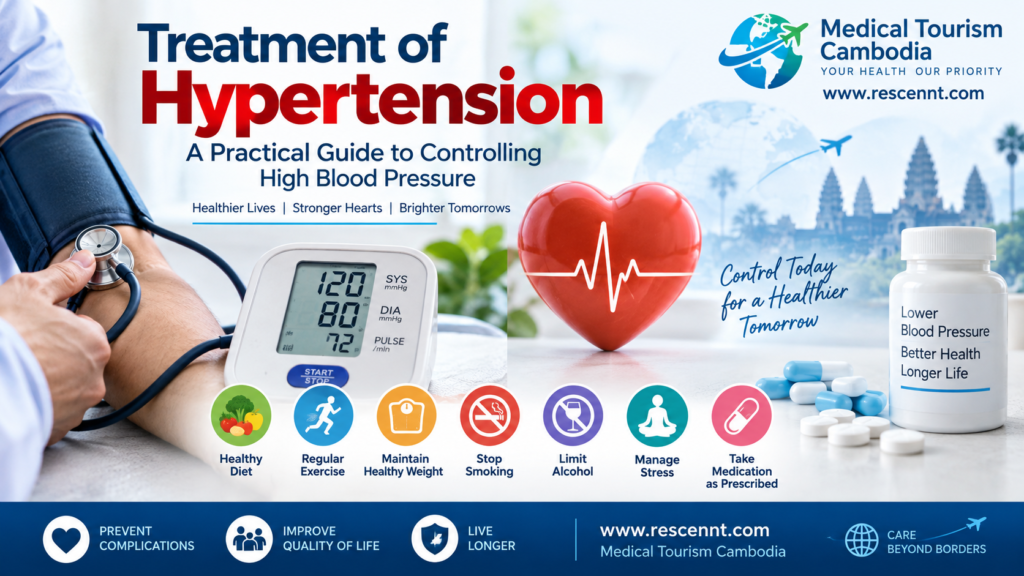
Hypertension, or high blood pressure, is one of the most common chronic medical conditions worldwide. If left untreated, it can damage the heart, brain, kidneys, eyes, and blood vessels, increasing the risk of heart attack, stroke, heart failure, and chronic kidney disease.
The good news is that hypertension can usually be controlled effectively through a combination of lifestyle changes and medications. Treatment should be individualized according to blood pressure level, cardiovascular risk, kidney function, diabetes, age, and other medical conditions.
What Is Hypertension?
Blood pressure is the force exerted by circulating blood against the walls of the arteries.
Hypertension is generally diagnosed when blood pressure remains persistently elevated on properly performed measurements. Diagnosis should not usually be based on a single reading. Home blood pressure monitoring or ambulatory blood pressure monitoring can help confirm the diagnosis and identify conditions such as white-coat or masked hypertension.
For many adults receiving treatment, a commonly used goal is to achieve blood pressure below 130/80 mmHg, provided this can be achieved safely and is appropriate for the individual patient.
1. Lifestyle Changes
Lifestyle modification is an important part of hypertension treatment for everyone, whether or not medication is required.
Reduce Salt Intake
Excess dietary sodium can increase blood pressure. Reducing salt intake is particularly important for people who are salt-sensitive.
Practical measures include:
- Avoid adding extra salt at the table.
- Reduce processed and packaged foods.
- Limit instant noodles, processed meats, salty snacks, and preserved foods.
- Choose fresh foods whenever possible.
- Read food labels for sodium content.
Follow a Healthy Diet
A heart-healthy dietary pattern can help lower blood pressure.
A diet rich in:
- Vegetables and fruits
- Whole grains
- Legumes
- Nuts and seeds
- Fish
- Lean protein
and lower in highly processed foods, saturated fat, and excess sodium is generally recommended.
Maintain a Healthy Weight
Weight reduction can significantly improve blood pressure in people who are overweight or obese.
Even a modest reduction in body weight may provide meaningful cardiovascular benefits.
Exercise Regularly
Adults should generally aim for at least 150 minutes of moderate-intensity aerobic physical activity per week, or an equivalent amount of vigorous activity, when medically appropriate.
Examples include:
- Brisk walking
- Cycling
- Swimming
- Jogging
- Aerobic exercise
Resistance training can also be incorporated into a regular exercise program.
Stop Smoking
Smoking does not necessarily cause persistent hypertension in every individual, but it substantially increases cardiovascular risk. Smoking cessation is therefore an important component of cardiovascular risk reduction.
Limit Alcohol
Excessive alcohol consumption can raise blood pressure. Reducing alcohol intake or avoiding alcohol can improve blood pressure control and overall cardiovascular health.
Manage Stress and Sleep
Chronic stress, inadequate sleep, and untreated sleep disorders may contribute to poor blood pressure control.
Regular sleep, physical activity, relaxation techniques, and appropriate management of conditions such as obstructive sleep apnea can be helpful.
2. When Are Blood Pressure Medications Needed?
Not every patient with mildly elevated blood pressure requires medication immediately.
The decision depends on several factors, including:
- Level of blood pressure
- Overall cardiovascular risk
- Diabetes
- Chronic kidney disease
- Established cardiovascular disease
- Target-organ damage
- Age and frailty
- Response to lifestyle modification
Patients with substantially elevated blood pressure or a high cardiovascular risk may require medication in addition to lifestyle modification.
Patients with very high blood pressure, particularly when accompanied by symptoms or evidence of acute organ damage, require prompt medical assessment.
3. Common Medications Used to Treat Hypertension
Several medication classes are effective for treating hypertension.
ACE Inhibitors
Examples include:
- Enalapril
- Lisinopril
- Ramipril
- Perindopril
ACE inhibitors reduce the activity of the renin-angiotensin-aldosterone system and are particularly useful in certain patients with chronic kidney disease, albuminuria, heart failure, or diabetes.
A common adverse effect is a persistent dry cough. Rarely, ACE inhibitors can cause angioedema.
Angiotensin II Receptor Blockers (ARBs)
Examples include:
- Losartan
- Valsartan
- Telmisartan
- Irbesartan
- Candesartan
ARBs are commonly used when an ACE inhibitor is not tolerated, particularly because of cough.
ACE inhibitors and ARBs should generally not be combined because the combination increases the risk of adverse effects, including kidney dysfunction and hyperkalemia, without providing routine additional benefit.
Calcium Channel Blockers
Examples include:
- Amlodipine
- Felodipine
- Nifedipine
Dihydropyridine calcium channel blockers are widely used for hypertension.
A common adverse effect is ankle or leg swelling.
Thiazide and Thiazide-Like Diuretics
Examples include:
- Hydrochlorothiazide
- Chlorthalidone
- Indapamide
These medications increase urinary sodium and water excretion and are effective antihypertensive agents.
Electrolytes, kidney function, and other metabolic effects should be monitored when appropriate.
Beta-Blockers
Examples include:
- Bisoprolol
- Metoprolol
- Carvedilol
- Atenolol
Beta-blockers are not necessarily the first medication choice for uncomplicated hypertension in every patient. However, they have important roles when hypertension occurs together with conditions such as coronary artery disease, certain arrhythmias, or heart failure.
4. Combination Therapy
Many patients require more than one medication to achieve their blood pressure target.
Instead of increasing one medication repeatedly, clinicians may use two complementary medications at appropriate doses.
Common combinations include:
ACE inhibitor or ARB + calcium channel blocker
or
ACE inhibitor or ARB + thiazide/thiazide-like diuretic
For many patients requiring treatment, combination therapy using two complementary agents can achieve better blood pressure control than monotherapy.
A single-pill combination can also simplify treatment and potentially improve medication adherence.
5. Resistant Hypertension
Resistant hypertension refers to blood pressure that remains above target despite treatment with an appropriate multidrug regimen, typically including a renin-angiotensin system blocker, a calcium channel blocker, and a thiazide-like diuretic at appropriate doses.
Before diagnosing resistant hypertension, clinicians should check for:
- Incorrect blood pressure measurement
- Poor medication adherence
- White-coat hypertension
- Excess sodium intake
- Obesity
- Excess alcohol consumption
- Drug interactions
- Secondary causes of hypertension
Possible medications that can raise blood pressure include certain NSAIDs, corticosteroids, sympathomimetic drugs, some oral contraceptives, and other agents.
When appropriate, additional therapy such as a mineralocorticoid receptor antagonist may be considered under medical supervision.
6. Look for Secondary Causes When Appropriate
Most hypertension is primary hypertension, meaning no single reversible cause is identified.
However, secondary hypertension should be considered when clinical features suggest an underlying condition.
Possible causes include:
- Chronic kidney disease
- Renovascular disease
- Primary aldosteronism
- Obstructive sleep apnea
- Thyroid disease
- Pheochromocytoma
- Cushing syndrome
- Certain medications and substances
Secondary hypertension is particularly important to consider in patients with unusually early-onset hypertension, resistant hypertension, sudden worsening of previously controlled blood pressure, or specific clinical clues.
7. Monitor Blood Pressure at Home
Home blood pressure monitoring can be very useful.
For accurate measurement:
- Avoid caffeine, exercise, and smoking shortly before measurement.
- Sit quietly for about 5 minutes.
- Keep the back supported.
- Keep both feet on the floor.
- Support the arm at heart level.
- Use an appropriately sized validated upper-arm cuff.
- Take two readings approximately 1 minute apart.
- Record the readings consistently.
Repeated home measurements provide more useful information than relying on a single reading.
8. Regular Follow-Up Is Important
Hypertension treatment is not simply about lowering one blood pressure reading.
During follow-up, healthcare professionals should assess:
- Blood pressure control
- Medication adherence
- Side effects
- Kidney function
- Electrolytes when appropriate
- Cardiovascular risk factors
- Diabetes and lipid status
- Evidence of target-organ damage
Medication doses may need to be adjusted over time.
When Is High Blood Pressure an Emergency?
Very high blood pressure accompanied by symptoms or signs of acute organ damage requires urgent medical evaluation.
Seek emergency medical attention for severe hypertension accompanied by symptoms such as:
- Chest pain
- Severe shortness of breath
- New neurological weakness or difficulty speaking
- Confusion
- Severe or unusual headache
- Visual loss
- Seizure
- Severe back pain
The important issue is not only the blood pressure number but whether there is acute target-organ damage.
Key Takeaways
Hypertension is a major but treatable risk factor for cardiovascular and kidney disease.
Effective management usually involves:
1. Confirming the diagnosis accurately
2. Assessing overall cardiovascular risk
3. Implementing lifestyle modifications
4. Starting antihypertensive medication when indicated
5. Using combination therapy when necessary
6. Monitoring blood pressure and treatment safety
7. Investigating secondary hypertension when clinically appropriate
8. Maintaining long-term follow-up and medication adherence
The goal of treatment is not simply to achieve a lower number on the blood pressure monitor. The ultimate objective is to reduce the patient’s risk of stroke, heart disease, heart failure, kidney disease, and premature death while minimizing treatment-related adverse effects.
If you have high blood pressure, do not stop or change your medication without discussing it with your healthcare professional.