
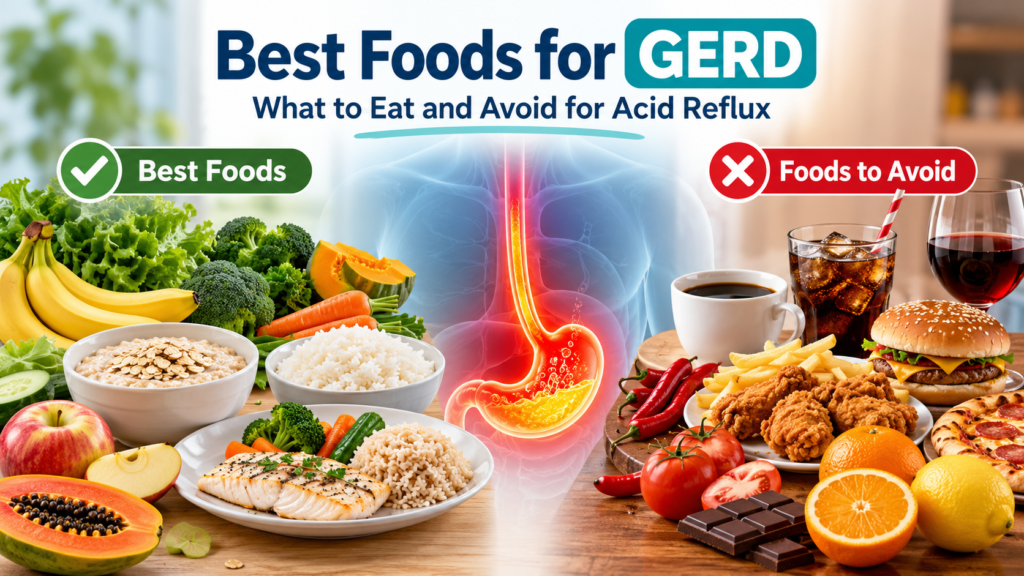
Best Foods to Eat and Avoid for GERD: A Complete Dietary Guide for Acid Reflux
Category: Gastroenterology / Digestive Health
Suggested reading time: 8–10 minutes
Medical review: Dr. Cheang Chandarith
Specialty: Internal Medicine
Introduction
Gastroesophageal reflux disease (GERD) is a common digestive condition that occurs when stomach contents flow backward into the esophagus, causing troublesome symptoms such as heartburn, acid regurgitation, chest discomfort, and sometimes a sour taste in the mouth.
Diet plays an important role in managing GERD symptoms. Certain foods and beverages may trigger acid reflux, while healthier eating habits, appropriate meal portions, and proper meal timing can help reduce symptoms.
However, there is no single GERD diet that works for everyone. Current clinical guidelines emphasize identifying individual food triggers rather than unnecessarily eliminating large groups of foods.
This article explains which foods are generally suitable for people with GERD, which foods may worsen symptoms, and how to develop a practical daily eating plan.
1. Understanding the Relationship Between Food and GERD
GERD occurs when the lower esophageal sphincter (LES), the muscular valve between the esophagus and stomach, does not function properly.
Several dietary factors can contribute to reflux symptoms:
- High-fat meals may delay gastric emptying and promote reflux in susceptible individuals.
- Large meals increase stomach distension and may encourage reflux.
- Certain foods may influence LES pressure.
- Acidic foods can irritate an already sensitive esophagus.
- Carbonated beverages may increase belching and reflux symptoms.
It is important to understand that foods do not necessarily cause GERD. Rather, some foods can aggravate symptoms in people who already have the condition.
2. Best Foods to Eat for GERD
A GERD-friendly diet generally emphasizes smaller meals, moderate fat intake, lean protein, vegetables, and less acidic fruits.
A. Vegetables
Vegetables are generally good choices because they provide fiber, vitamins, minerals, and antioxidants while usually containing relatively little fat.
Recommended vegetables include:
- Broccoli
- Carrots
- Cucumber
- Spinach
- Lettuce
- Green beans
- Pumpkin
- Sweet potatoes
- Cauliflower
- Zucchini
Practical advice: Steamed, boiled, or lightly cooked vegetables may be easier to tolerate than heavily fried vegetables.
Some people may experience bloating after eating certain vegetables, particularly cabbage, cauliflower, or broccoli. Individual tolerance is important.
B. Fruits
Choose fruits that are generally less acidic and well tolerated.
Good options include:
- Bananas
- Melons
- Papaya
- Pears
- Apples (if tolerated)
- Watermelon
These fruits provide vitamins, minerals, and dietary fiber.
Fruits that may trigger symptoms in some people:
- Oranges
- Lemons
- Grapefruits
- Pineapples
- Other highly acidic fruits
Citrus fruits do not cause reflux in everyone, but their acidity may aggravate heartburn in susceptible individuals.
C. Whole Grains
Whole grains provide dietary fiber and support digestive health.
Recommended choices include:
- Oatmeal
- Brown rice
- Whole-wheat bread
- Whole-grain cereals
- Barley
- Whole-grain crackers
Rice and oatmeal are particularly practical choices for many Asian patients.
Avoid adding excessive butter, cream, or high-fat toppings.
D. Lean Protein
Protein is an important part of a balanced diet. Choose lean protein sources and prepare them using healthier cooking methods.
Recommended foods include:
- Skinless chicken
- Fish
- Turkey
- Egg whites
- Lean pork
- Tofu
- Beans, if tolerated
Preferred cooking methods:
- Steaming
- Boiling
- Grilling with minimal oil
- Baking
- Stir-frying with small amounts of oil
Avoid frequent consumption of deep-fried meats, fatty pork, processed meats, and heavily seasoned meat dishes if they trigger symptoms.
E. Low-Fat Dairy Products
Some people with GERD tolerate low-fat dairy products better than full-fat alternatives.
Possible choices include:
- Low-fat milk
- Low-fat yogurt
- Low-fat cheese
- Lactose-free low-fat milk, if lactose intolerant
High-fat dairy products may worsen symptoms in some individuals.
F. Healthy Fats in Moderation
Not all fats need to be eliminated. Healthy fats can be included in moderate amounts.
Examples include:
- Olive oil
- Avocado
- Nuts
- Seeds
However, even healthy fats can contribute to symptoms when consumed in large quantities.
3. Foods and Drinks to Avoid or Limit
There is no universally prohibited food list for GERD. However, several food groups are commonly associated with worsening reflux symptoms.
A. High-Fat and Fried Foods
High-fat foods may aggravate reflux in susceptible individuals.
Examples include:
- French fries
- Fried chicken
- Deep-fried fish
- Fatty pork
- Sausages
- Bacon
- Cream-based sauces
- High-fat fast food
Recommendation: Choose steamed, boiled, grilled, or baked foods instead of deep-fried meals.
B. Spicy Foods
Spicy foods may aggravate heartburn, particularly in people with esophageal sensitivity.
Examples include:
- Chili peppers
- Chili sauce
- Spicy curries
- Hot pot with chili oil
- Heavily spiced dishes
Capsaicin, the active compound in chili peppers, can cause a burning sensation and may worsen symptoms in some individuals.
Patients who tolerate mild spices do not necessarily need to eliminate them completely.
C. Acidic Foods
Acidic foods may worsen heartburn or cause discomfort in people with sensitive esophageal mucosa.
Examples include:
- Tomatoes
- Tomato sauce
- Oranges
- Lemons
- Grapefruit
- Pineapple
- Vinegar-based dressings
Patients should reduce these foods if they consistently experience symptoms after consumption.
D. Chocolate
Chocolate may aggravate reflux in some individuals because of its fat content and potential effects on LES function.
Reduce or avoid chocolate if it triggers heartburn.
E. Coffee and Caffeinated Beverages
Coffee and other caffeinated beverages may trigger symptoms in some people.
Examples include:
- Regular coffee
- Strong iced coffee
- Energy drinks
- Strong tea
- Some caffeinated soft drinks
However, coffee does not worsen GERD in every patient.
Consider reducing the quantity or trying decaffeinated coffee if symptoms are associated with caffeine consumption.
F. Carbonated Beverages
Carbonated drinks can increase stomach gas and belching, potentially aggravating reflux.
Examples include:
- Soft drinks
- Soda water
- Sparkling beverages
- Carbonated energy drinks
Water is generally a better everyday choice.
G. Alcohol
Alcohol may aggravate reflux symptoms in susceptible individuals.
Common examples include:
- Beer
- Wine
- Spirits
- Alcoholic cocktails
Patients with GERD should consider avoiding alcohol, particularly if symptoms occur after drinking.
H. Mint and Peppermint
Peppermint and spearmint may reduce LES pressure in some individuals and potentially increase reflux.
Avoid peppermint tea, mint candies, and peppermint-containing products if they trigger symptoms.
4. GERD-Friendly Food Choices: Quick Reference
| Food group | Generally suitable choices | Limit if symptomatic |
|---|---|---|
| Fruits | Banana, papaya, melon, pear | Citrus, pineapple |
| Vegetables | Carrot, pumpkin, cucumber, spinach | Chili-heavy vegetables |
| Grains | Oatmeal, brown rice, bread | High-fat pastries |
| Protein | Fish, chicken, tofu | Fatty meat, sausage |
| Dairy | Low-fat milk, yogurt | Full-fat cream, cheese |
| Drinks | Water, tolerated non-mint herbal tea | Coffee, alcohol, soda |
| Snacks | Banana, oatmeal, plain crackers | Chocolate, fried snacks |
5. Practical GERD-Friendly Diet for Cambodian and Asian Patients
People living in Cambodia and other Asian countries do not need to follow a complicated Western diet to control GERD.
Traditional foods can be adapted using healthier ingredients and cooking methods.
Recommended Cambodian and Asian food choices
Breakfast
- Plain oatmeal with banana.
- Rice porridge with lean chicken.
- Whole-grain bread with boiled egg.
- Low-fat milk, if tolerated.
Lunch
- Steamed fish with rice.
- Chicken soup with vegetables.
- Rice with steamed pumpkin and lean protein.
- Boiled vegetables with grilled fish.
Dinner
- Rice porridge with lean meat.
- Steamed fish with cooked vegetables.
- Chicken soup with rice.
- Rice with tofu and lightly cooked vegetables.
Healthy snacks
- Banana
- Papaya
- Pear
- Plain crackers
- Low-fat yogurt, if tolerated
Cambodian foods that may need modification
Some traditional Cambodian dishes contain ingredients that may aggravate reflux.
| Traditional food | Suggested modification |
|---|---|
| Samlor machu (sour soup) | Reduce sour ingredients if they trigger symptoms |
| Samlor korko | Reduce chili and excess oil |
| Fried fish | Choose steamed or grilled fish |
| Prahok-based dishes | Reduce chili and fatty ingredients if symptomatic |
| Lok lak | Use lean beef and less pepper-heavy seasoning |
| Kuy teav | Choose lean meat and avoid excessive chili |
| Nom banh chok | Reduce spicy or sour sauces if they trigger symptoms |
The objective is not to eliminate traditional Cambodian cuisine but to modify ingredients and cooking methods according to individual tolerance.
6. Important Eating Habits to Reduce GERD Symptoms
Food selection is only one part of GERD management. Eating behavior and meal timing are also important.
A. Eat Smaller, More Frequent Meals
Large meals increase stomach distension and may increase reflux.
Consider:
- Eating moderate portions.
- Avoiding very large meals.
- Eating slowly.
- Avoiding overeating, particularly at dinner.
B. Avoid Eating Before Bedtime
The American College of Gastroenterology recommends avoiding meals within 2–3 hours of bedtime.
Eating shortly before lying down increases the likelihood of nighttime reflux.
Practical advice: Finish dinner at least 3 hours before going to sleep.
C. Remain Upright After Eating
Avoid lying down immediately after meals.
Remain upright for approximately 2–3 hours after eating, especially after dinner.
A gentle walk after meals may be helpful.
D. Maintain a Healthy Body Weight
Weight reduction is one of the most consistently supported lifestyle interventions for overweight or obese patients with GERD.
Excess abdominal fat increases intra-abdominal pressure and may promote reflux.
Gradual weight reduction can improve symptoms.
E. Elevate the Head of the Bed
For patients with nighttime reflux:
- Elevate the head of the bed by approximately 6–8 inches (15–20 cm).
- Use a wedge pillow or an appropriate bed elevation device.
- Sleeping on the left side may reduce nighttime reflux.
Simply adding several ordinary pillows may not provide the same benefit as elevating the upper body.
F. Keep a Food and Symptom Diary
A food diary can help identify individual triggers.
Record:
- Foods and beverages consumed.
- Meal timing.
- Symptom severity.
- Time when symptoms occur.
- Other factors, such as stress and sleep.
If a particular food consistently triggers symptoms, reduce or avoid it and assess whether symptoms improve.
Avoid unnecessary long-term dietary restrictions.
7. Sample One-Day GERD-Friendly Meal Plan
The following is an example of a balanced daily eating plan. Individual nutritional needs and food tolerance may differ.
| Meal | Suggested foods |
|---|---|
| Breakfast | Oatmeal, banana, low-fat milk |
| Mid-morning snack | Papaya |
| Lunch | Steamed fish, rice, cooked vegetables |
| Afternoon snack | Plain crackers or pear |
| Dinner | Chicken soup, rice, steamed pumpkin |
| Evening | Water if thirsty; avoid late-night meals |
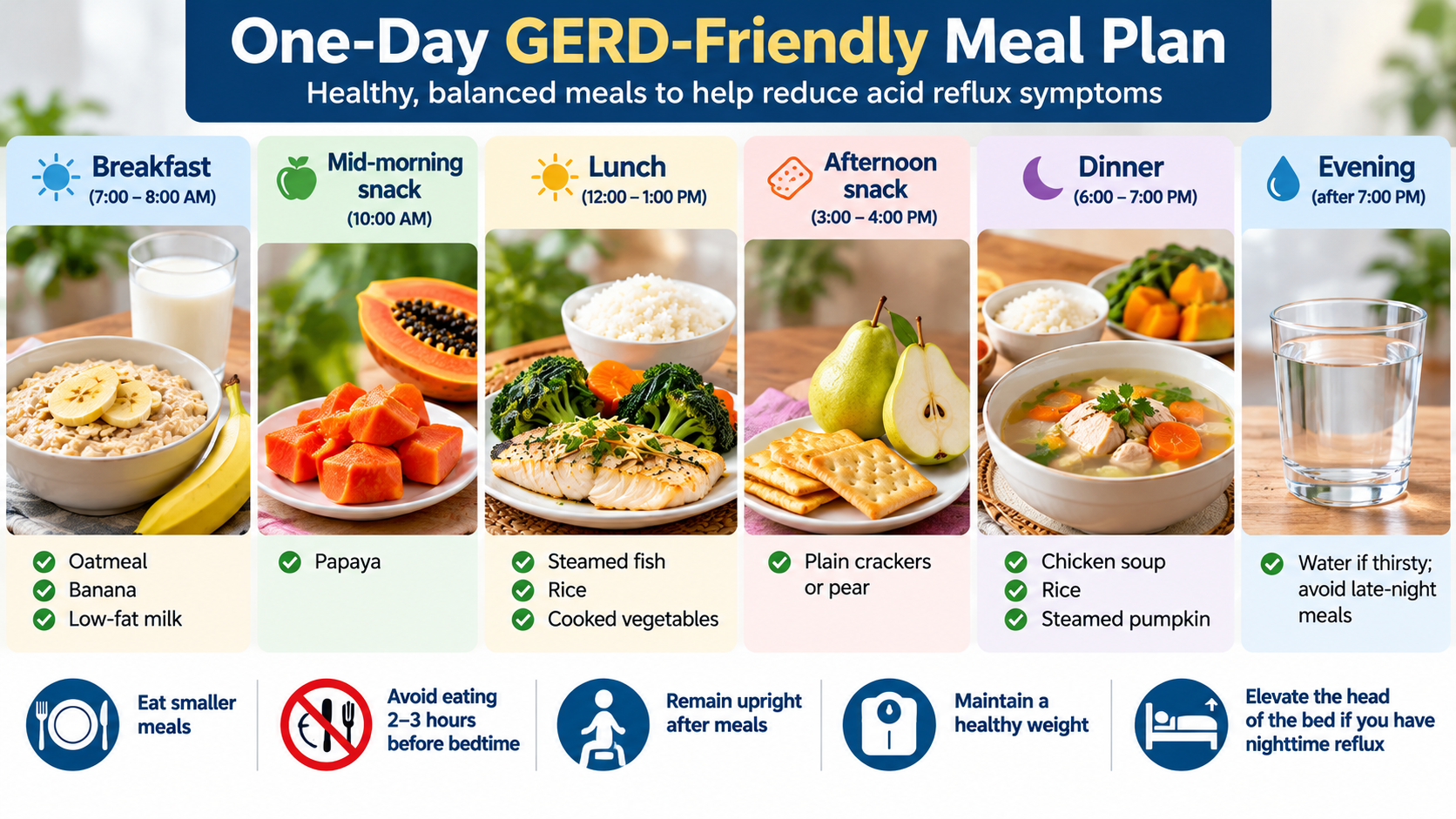
Important: Portion size matters. Even foods generally considered suitable for GERD may cause symptoms when consumed in excessive quantities.
8. Can Diet Alone Treat GERD?
Dietary modification can improve symptoms in many patients, particularly those with mild GERD.
However, diet alone may not be sufficient for patients with:
- Frequent or persistent heartburn.
- Moderate-to-severe reflux symptoms.
- Erosive esophagitis.
- Complications of GERD.
- Symptoms that significantly interfere with sleep or daily activities.
The 2022 American College of Gastroenterology (ACG) guideline recommends proton pump inhibitors (PPIs) as the preferred medical treatment for appropriate patients with GERD, particularly for healing erosive esophagitis.
For patients with typical heartburn and regurgitation without alarm symptoms, an initial 8-week trial of once-daily PPI therapy before a meal is recommended.
Dietary and lifestyle modifications should complement appropriate medical treatment rather than replace it when medication is indicated.
9. When Should You See a Doctor?
Do not rely on dietary changes alone if you experience warning symptoms.
Seek medical evaluation if you have:
- Difficulty swallowing (dysphagia).
- Painful swallowing (odynophagia).
- Unexplained weight loss.
- Persistent vomiting.
- Vomiting blood.
- Black, tarry stools.
- Persistent or worsening symptoms despite treatment.
- Anemia without an established explanation.
Chest pain should not automatically be attributed to GERD. Seek urgent medical assessment for new or severe chest pain, particularly when associated with shortness of breath, sweating, faintness, or pain radiating to the arm or jaw.
Endoscopy may be necessary when alarm symptoms or other clinical indications are present.
10. Frequently Asked Questions (FAQ)
1. What is the best breakfast for GERD?
Oatmeal, bananas, rice porridge, whole-grain bread, and boiled eggs are reasonable breakfast choices. Avoid high-fat fried foods and coffee if they trigger your symptoms.
2. Is banana good for acid reflux?
Yes. Bananas are generally well tolerated and are a convenient, relatively low-acid fruit choice for many people with GERD.
3. Can I eat rice if I have GERD?
Yes. Plain rice, including white and brown rice, is generally suitable for people with GERD. Avoid adding excessive oil, chili, or fatty sauces.
4. Is milk good for GERD?
Low-fat milk may be tolerated by some patients. However, full-fat milk can aggravate reflux in susceptible individuals because of its fat content.
5. Can I drink coffee if I have GERD?
Some patients can drink coffee without symptoms, while others experience heartburn. If coffee triggers symptoms, reduce the amount or try decaffeinated alternatives.
6. Is yogurt good for GERD?
Low-fat, non-acidic yogurt may be tolerated by some patients. However, individual responses differ, and high-fat or strongly acidic yogurt products may aggravate symptoms.
7. Can I eat eggs if I have GERD?
Yes. Boiled or poached eggs are generally reasonable choices. Some patients may experience symptoms after eating fried eggs or egg dishes prepared with excessive butter or oil.
8. Are tomatoes bad for GERD?
Tomatoes and tomato-based products are acidic and may aggravate heartburn in some people. You do not need to avoid them if they do not cause symptoms.
9. Is spicy food responsible for GERD?
Spicy foods may trigger or worsen heartburn, but they are not necessarily the underlying cause of GERD. Individual tolerance varies.
10. Should I stop eating after 6 PM?
Not necessarily. The important recommendation is to avoid eating within 2–3 hours before bedtime. The appropriate dinner time depends on your sleeping schedule.
11. Can drinking water help acid reflux?
Water supports normal hydration and may help clear refluxed material from the esophagus. However, drinking large amounts at once may increase stomach distension in some patients. Water is preferable to carbonated or acidic beverages.
12. Can GERD be cured by changing my diet?
Dietary modification can significantly improve symptoms, but it does not cure every case of GERD. Some patients require medication and further medical evaluation.
13. How long does it take for a GERD diet to work?
Some patients notice improvement within days, while others require several weeks of consistent dietary and lifestyle changes. If symptoms persist, consult a healthcare professional.
14. Can I eat fruit at night if I have GERD?
You may eat fruit if tolerated, but avoid large meals or snacks close to bedtime. Finish eating at least 2–3 hours before lying down.
Conclusion
A healthy, balanced diet is an important part of managing gastroesophageal reflux disease (GERD).
Patients should emphasize vegetables, less acidic fruits, whole grains, lean protein, and moderate portions while reducing foods that consistently trigger their symptoms.
The most important strategies include:
- Eat smaller meals and avoid overeating.
- Reduce high-fat and deep-fried foods.
- Identify and limit individual food triggers.
- Avoid eating within 2–3 hours of bedtime.
- Maintain a healthy body weight.
- Elevate the head of the bed if experiencing nighttime reflux.
Remember that there is no universal GERD diet. A personalized eating plan, combined with appropriate medical treatment and lifestyle modification, offers the best approach to long-term symptom control.
Medical Disclaimer: This article is intended for educational purposes and should not replace professional medical advice, diagnosis, or treatment. Consult your doctor for individualized assessment and management of GERD.
References
- Katz PO, Dunbar KB, Schnoll-Sussman FH, et al. ACG Clinical Guideline for the Diagnosis and Management of Gastroesophageal Reflux Disease. The American Journal of Gastroenterology. 2022;117(1):27–56. doi:10.14309/ajg.0000000000001538.
- ASGE Standards of Practice Committee. American Society for Gastrointestinal Endoscopy guideline on the diagnosis and management of GERD: summary and recommendations. Gastrointestinal Endoscopy. 2025;101(2):267–284. doi:10.1016/j.gie.2024.10.008.
- Yadlapati R, Gyawali CP, Pandolfino JE. Personalized approach to the evaluation and management of gastroesophageal reflux disease (GERD). American Gastroenterological Association. 2022.
- National Institute of Diabetes and Digestive and Kidney Diseases (NIDDK). Eating, Diet, & Nutrition for GER & GERD. https://www.niddk.nih.gov/health-information/digestive-diseases/acid-reflux-ger-gerd-adults/eating-diet-nutrition
- Gastroesophageal Reflux Disease (GERD). 2025 narrative review integrating contemporary guidelines and dietary evidence. PubMed PMID: 41132014.
- 2025 Focused Update of the Seoul Consensus on Gastroesophageal Reflux Disease: Evidence-based Recommendations on Acid Suppressive Therapy. PubMed PMID: 41017123.