
Introduction
Acute abdomen is a clinical condition characterized by sudden or rapidly developing abdominal pain that may indicate a serious underlying disease requiring urgent medical evaluation, emergency treatment, or surgical intervention.
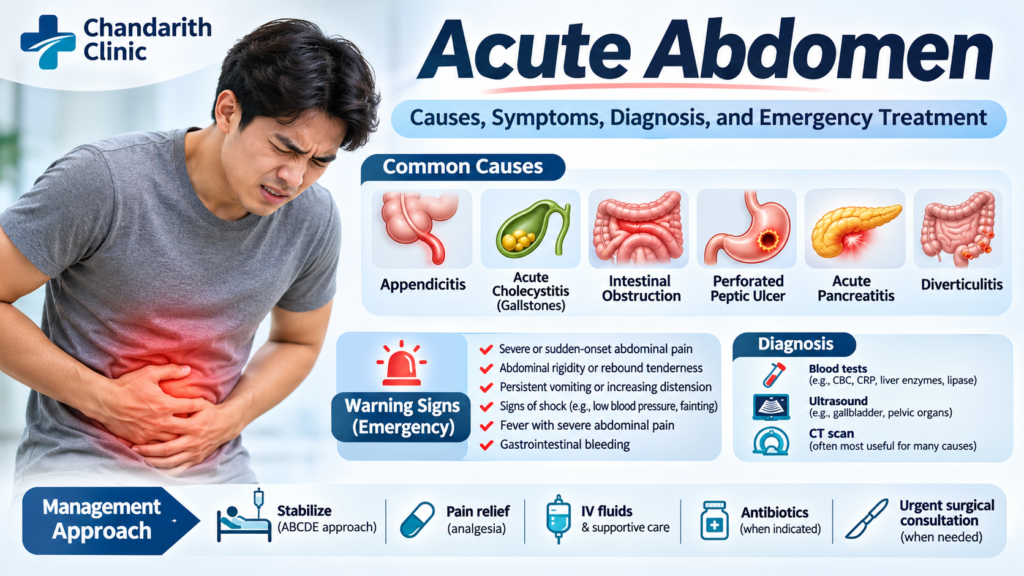
Although some patients with acute abdominal pain have relatively minor conditions, such as gastroenteritis or constipation, others may have life-threatening diseases, including acute appendicitis, intestinal obstruction, perforated peptic ulcer, acute pancreatitis, mesenteric ischemia, ruptured abdominal aortic aneurysm, or ectopic pregnancy.
Early recognition and appropriate management are essential to prevent complications such as peritonitis, sepsis, hemorrhage, organ failure, and death.
Acute abdomen is not a final diagnosis. It is a clinical presentation that requires systematic assessment to identify the underlying cause.
1. What Is Acute Abdomen?
Acute abdomen refers to an acute abdominal clinical syndrome, usually presenting with significant abdominal pain, with or without associated gastrointestinal symptoms and signs of peritoneal irritation.
It may result from:
- Inflammation or infection of abdominal organs.
- Gastrointestinal obstruction.
- Perforation of a hollow abdominal organ.
- Intra-abdominal bleeding.
- Vascular occlusion or ischemia.
- Trauma.
- Gynecological or urological emergencies.
Acute abdominal pain is commonly defined as nontraumatic abdominal pain lasting less than seven days, although serious abdominal emergencies may develop over a much shorter period.
Not every patient with acute abdominal pain requires surgery. However, every patient with suspected acute abdomen needs careful assessment to exclude life-threatening conditions.
2. Common Causes of Acute Abdomen
The causes of acute abdomen can be classified into gastrointestinal, hepatobiliary, vascular, genitourinary, gynecological, and extra-abdominal conditions.
A. Gastrointestinal Causes
1. Acute appendicitis
Acute appendicitis is one of the most common surgical emergencies.
Typical symptoms include:
- Periumbilical pain that migrates to the right lower quadrant.
- Anorexia.
- Nausea and vomiting.
- Low-grade fever.
- Right lower quadrant tenderness.
Complications include perforation, abscess formation, and generalized peritonitis.
2. Intestinal obstruction
Intestinal obstruction may be caused by:
- Postoperative adhesions.
- Hernias.
- Colorectal cancer.
- Volvulus.
- Intussusception.
- Inflammatory bowel disease.
Clinical features include:
- Colicky abdominal pain.
- Abdominal distension.
- Vomiting.
- Constipation or inability to pass flatus.
Persistent pain, fever, peritoneal signs, metabolic acidosis, or hemodynamic instability may suggest strangulation or bowel ischemia.
3. Perforated peptic ulcer
Perforation of a gastric or duodenal ulcer can cause sudden, severe abdominal pain.
Typical findings include:
- Sudden onset of severe epigastric pain.
- Pain spreading throughout the abdomen.
- Abdominal guarding and rigidity.
- Reduced bowel sounds.
- Signs of sepsis or shock in advanced cases.
This is a surgical emergency requiring urgent assessment and treatment.
4. Acute pancreatitis
Common causes include gallstones and alcohol, although hypertriglyceridemia, medications, and other conditions may also contribute.
Clinical manifestations:
- Severe epigastric pain radiating to the back.
- Nausea and vomiting.
- Abdominal tenderness.
- Abdominal distension.
- Systemic inflammatory response in severe cases.
Diagnosis is generally established when at least two of the following three criteria are present:
- Characteristic abdominal pain.
- Serum lipase or amylase at least three times the upper limit of normal.
- Characteristic imaging findings.
5. Acute diverticulitis
Acute diverticulitis commonly presents with:
- Left lower quadrant pain.
- Fever.
- Change in bowel habits.
- Localized abdominal tenderness.
Complications include abscess, perforation, fistula, and bowel obstruction.
B. Hepatobiliary Causes
Important hepatobiliary conditions include:
- Biliary colic.
- Acute cholecystitis.
- Choledocholithiasis.
- Acute cholangitis.
- Acute hepatitis.
Acute cholecystitis typically presents with right upper quadrant pain, fever, nausea, vomiting, and a positive Murphy sign.
Acute cholangitis should be suspected in patients with fever, right upper quadrant pain, and jaundice. Severe cases may progress to septic shock and require urgent biliary drainage.
C. Vascular Causes
Vascular emergencies are particularly important because delayed diagnosis can lead to intestinal necrosis or death.
1. Acute mesenteric ischemia
Acute mesenteric ischemia occurs when intestinal blood supply is significantly reduced or interrupted.
Risk factors include:
- Atrial fibrillation.
- Atherosclerotic vascular disease.
- Heart failure.
- Recent myocardial infarction.
- Hypercoagulable conditions.
A classic presentation is severe abdominal pain disproportionate to the physical examination findings.
Other features include nausea, vomiting, diarrhea, gastrointestinal bleeding, and metabolic acidosis.
CT angiography should be performed urgently when acute mesenteric ischemia is suspected.
2. Ruptured abdominal aortic aneurysm
Consider this diagnosis particularly in older patients presenting with sudden abdominal, flank, or back pain.
Clinical features may include:
- Sudden severe abdominal or back pain.
- Hypotension.
- Syncope.
- Pulsatile abdominal mass.
The classic triad is not always present. Immediate vascular and emergency surgical assessment is essential.
D. Genitourinary Causes
Important conditions include:
- Renal colic due to ureteric stones.
- Acute pyelonephritis.
- Infected obstructing urinary stones.
- Urinary retention.
- Testicular torsion.
An infected obstructed urinary system is a urological emergency requiring antibiotics and urgent decompression.
E. Gynecological Causes
In women of reproductive age, important diagnoses include:
- Ectopic pregnancy.
- Ovarian torsion.
- Ruptured ovarian cyst.
- Pelvic inflammatory disease.
- Hemorrhagic ovarian cyst.
- Endometriosis-related complications.
Pregnancy testing should be performed early in women of reproductive potential, regardless of whether pregnancy is initially suspected.
Ectopic pregnancy with suspected rupture or hemodynamic instability requires immediate intervention.
F. Extra-abdominal Causes
Not all abdominal pain originates from abdominal organs.
Other possible causes include:
- Acute myocardial infarction, particularly inferior wall infarction.
- Lower-lobe pneumonia.
- Pulmonary embolism.
- Diabetic ketoacidosis.
- Herpes zoster.
- Abdominal wall muscle pain.
- Spinal or radicular disorders.
3. Symptoms and Clinical Presentation
The clinical presentation depends on the underlying pathology, the affected organ, and the severity of the disease.
Common symptoms include:
- Sudden or progressive abdominal pain.
- Nausea and vomiting.
- Fever or chills.
- Abdominal distension.
- Diarrhea or constipation.
- Inability to pass stool or flatus.
- Loss of appetite.
- Gastrointestinal bleeding.
- Dysuria or urinary frequency.
- Jaundice.
Characteristics of abdominal pain
A systematic pain history is essential.
Onset: Sudden, gradual, or intermittent.
Location: Epigastric, right upper quadrant, left upper quadrant, periumbilical, right lower quadrant, left lower quadrant, or generalized.
Character: Sharp, dull, burning, colicky, stabbing, or constant.
Radiation: Back, shoulder, groin, chest, or other abdominal regions.
Duration: Hours, days, or recurrent episodes.
Associated symptoms: Vomiting, fever, diarrhea, constipation, jaundice, urinary symptoms, or vaginal bleeding.
Aggravating and relieving factors: Movement, coughing, eating, defecation, urination, or body position.
Pain patterns that provide diagnostic clues
| Pain pattern | Possible diagnosis |
|---|---|
| Periumbilical pain migrating to the right lower quadrant | Appendicitis |
| Right upper quadrant pain after fatty meals | Biliary colic |
| Right upper quadrant pain with fever | Acute cholecystitis |
| Epigastric pain radiating to the back | Acute pancreatitis |
| Sudden severe generalized abdominal pain | Perforated viscus |
| Colicky pain with abdominal distension and vomiting | Intestinal obstruction |
| Severe pain disproportionate to examination | Mesenteric ischemia |
| Flank pain radiating to the groin | Ureteric stone |
| Left lower quadrant pain with fever | Diverticulitis |
These patterns are helpful but are not sufficiently specific to establish a diagnosis without further evaluation.
4. Red Flags: When Is Acute Abdomen an Emergency?
Early identification of life-threatening conditions is the most important step in managing acute abdomen.
The following findings require urgent emergency assessment:
- Severe, sudden-onset abdominal pain.
- Hemodynamic instability or hypotension.
- Persistent tachycardia.
- Syncope or altered mental status.
- Abdominal rigidity or involuntary guarding.
- Rebound tenderness or generalized peritonitis.
- Significant abdominal distension with persistent vomiting.
- Hematemesis, melena, or significant rectal bleeding.
- Fever with suspected sepsis.
- Pain disproportionate to physical examination findings.
- Pulsatile abdominal mass.
- Suspected ectopic pregnancy.
- Inability to pass stool or flatus with progressive distension.
Older adults, immunocompromised patients, and patients taking corticosteroids or anticoagulants may present atypically.
Important: Do not delay emergency referral or surgical consultation while waiting for complete laboratory investigations or imaging when a life-threatening condition is strongly suspected.
5. Physical Examination
A systematic physical examination helps identify the severity and possible source of abdominal pain.
A. General Assessment
Assess:
- General appearance and level of consciousness.
- Hydration status.
- Pallor and diaphoresis.
- Respiratory distress.
- Signs of shock or sepsis.
B. Vital Signs
Record:
- Blood pressure.
- Heart rate.
- Respiratory rate.
- Temperature.
- Oxygen saturation.
- Mental status.
Repeat abnormal vital signs and assess trends.
C. Abdominal Examination
Inspection
- Abdominal distension.
- Surgical scars.
- Visible peristalsis.
- Bruising.
- Hernias.
- Abdominal asymmetry.
Auscultation
- Bowel sounds may be reduced or absent in ileus or peritonitis.
- High-pitched or frequent bowel sounds may occur in mechanical obstruction.
Bowel sounds alone have limited diagnostic accuracy and should not determine management.
Palpation
- Localized or generalized tenderness.
- Involuntary guarding.
- Abdominal rigidity.
- Rebound tenderness.
- Palpable masses.
- Organ enlargement.
- Pulsatile abdominal mass.
Percussion
- Tympanic sounds associated with gaseous distension.
- Dullness that may indicate fluid or an enlarged organ.
D. Additional Examinations
Depending on clinical suspicion, consider:
- Cardiovascular examination.
- Respiratory examination.
- Costovertebral angle tenderness.
- Inguinal and femoral hernia examination.
- Pelvic examination when indicated.
- Testicular examination when indicated.
Rectal examination should be performed selectively when it is likely to change clinical management.
6. Investigations for Acute Abdomen
Investigations should be guided by the clinical presentation and suspected diagnosis. No single laboratory test can exclude all serious causes of acute abdomen.
A. Laboratory Investigations
1. Complete blood count (CBC)
- Leukocytosis may suggest infection or inflammation.
- Hemoglobin may help identify anemia or blood loss.
- Platelet count is relevant when bleeding, sepsis, or surgery is suspected.
A normal white blood cell count does not exclude appendicitis or other serious abdominal conditions.
2. C-reactive protein (CRP)
May support the assessment of inflammation and infection. It should be interpreted together with clinical findings.
3. Renal function and electrolytes
- Urea.
- Creatinine.
- Sodium.
- Potassium.
- Chloride.
- Bicarbonate.
These help assess dehydration, renal impairment, and electrolyte disturbances.
4. Liver function tests
- AST and ALT.
- ALP.
- GGT.
- Total and direct bilirubin.
Useful when hepatobiliary disease is suspected.
5. Serum lipase
Preferred for evaluating suspected acute pancreatitis.
6. Urinalysis
May identify:
- Hematuria.
- Pyuria.
- Urinary tract infection.
- Possible urinary stone disease.
Absence of hematuria does not exclude ureteric stones.
7. Pregnancy test
Urine or serum beta-hCG should be obtained in women of reproductive potential when pregnancy is possible.
8. Additional investigations when indicated
- Serum lactate and blood gas analysis in suspected shock, sepsis, or intestinal ischemia.
- Blood cultures in suspected sepsis when appropriate, without delaying antibiotics.
- Coagulation profile in patients with bleeding risk or anticipated surgery.
- ECG and cardiac troponin when acute coronary syndrome is a possible cause.
- Blood glucose and ketones when diabetic ketoacidosis is suspected.
- Type and crossmatch in suspected significant hemorrhage.
B. Imaging Studies
Imaging is frequently essential for identifying the cause of acute abdomen.
1. Abdominal ultrasonography
Ultrasound is particularly useful for:
- Gallstones and acute cholecystitis.
- Biliary dilatation.
- Hydronephrosis.
- Abdominal aortic aneurysm screening.
- Pelvic and gynecological conditions.
- Free intraperitoneal fluid.
- Selected cases of appendicitis.
Advantages include no ionizing radiation, portability, and availability for bedside assessment.
Limitations include operator dependence, bowel gas, obesity, and reduced visualization of some abdominal structures.
2. Computed tomography (CT) of the abdomen and pelvis
CT is one of the most valuable imaging modalities for evaluating acute abdominal pain in nonpregnant adults.
CT with intravenous contrast is frequently appropriate when evaluating:
- Appendicitis.
- Diverticulitis.
- Bowel obstruction.
- Intra-abdominal abscess.
- Perforation.
- Complicated intra-abdominal infection.
- Unexplained severe abdominal pain.
CT angiography is preferred when acute mesenteric ischemia or an aortic vascular emergency is suspected.
The imaging protocol should be tailored to the suspected pathology and renal function, while avoiding unnecessary delays in emergency diagnosis.
3. Magnetic resonance imaging (MRI)
MRI is particularly useful in selected patients, including pregnant women with suspected appendicitis when ultrasound is inconclusive.
It avoids ionizing radiation but may be less available and slower than CT.
4. Plain abdominal X-ray
Plain radiography has a more limited role than CT and ultrasound.
It may help identify:
- Marked bowel dilatation.
- Certain patterns of bowel obstruction.
- Free intraperitoneal air.
- Radiopaque foreign bodies.
A normal abdominal X-ray does not exclude bowel obstruction or gastrointestinal perforation.
7. Initial Management of Acute Abdomen
Management begins with stabilization, identification of life-threatening conditions, and early involvement of the appropriate specialist.
A. Initial Stabilization: ABCDE Approach
Airway and Breathing
- Ensure airway patency.
- Assess respiratory status.
- Provide supplemental oxygen when clinically indicated.
Circulation
- Establish intravenous access.
- Monitor blood pressure and heart rate.
- Assess peripheral perfusion.
- Administer appropriate IV crystalloid fluids in patients with hypovolemia or shock.
- Reassess response to fluid resuscitation.
Patients with suspected hemorrhage require prompt blood product resuscitation and appropriate source control rather than excessive crystalloid administration.
Disability
- Assess consciousness.
- Check blood glucose.
- Evaluate for altered mental status.
Exposure
- Examine the entire abdomen.
- Look for hernias, bruising, skin changes, and signs of trauma.
- Maintain patient warmth.
B. Pain Control
Adequate analgesia should be provided early.
Options depend on the clinical condition and may include:
- Paracetamol.
- Appropriate NSAIDs when not contraindicated.
- Opioid analgesics for severe pain with suitable monitoring.
Early analgesia does not significantly reduce diagnostic accuracy and should not be withheld simply because the diagnosis is not yet established.
C. Other Supportive Measures
Depending on the presentation:
- Keep patients nil by mouth when emergency surgery or anesthesia may be required.
- Administer antiemetics for significant nausea and vomiting.
- Correct electrolyte abnormalities.
- Monitor urine output in critically ill patients.
- Insert a nasogastric tube when clinically indicated, such as selected patients with bowel obstruction and persistent vomiting.
D. Antibiotic Therapy
Empirical antibiotics are indicated when bacterial infection, complicated intra-abdominal infection, perforation, or sepsis is suspected.
Antibiotic selection should consider:
- Likely organisms.
- Community-acquired versus healthcare-associated infection.
- Disease severity.
- Local antimicrobial resistance patterns.
- Renal and hepatic function.
- Patient allergies.
Commonly used options in appropriate clinical settings include:
- Ceftriaxone plus metronidazole.
- Piperacillin-tazobactam.
- Other broad-spectrum regimens according to local protocols and resistance patterns.
Antibiotics should not replace necessary source control in patients with perforation, abscess, or other surgically treatable infections.
8. When Is Surgery Required?
Not all cases of acute abdomen require surgery. However, urgent surgical consultation is necessary when a surgical emergency is suspected.
Common indications include:
| Condition | Potential intervention |
|---|---|
| Acute appendicitis | Appendectomy or selected nonoperative management |
| Perforated peptic ulcer | Emergency operative management and source control |
| Strangulated bowel obstruction | Urgent surgical exploration |
| Bowel perforation | Surgical or other appropriate source control |
| Mesenteric ischemia | Urgent vascular and surgical intervention |
| Ruptured abdominal aortic aneurysm | Emergency vascular repair |
| Ectopic pregnancy with rupture | Emergency gynecological intervention |
| Complicated intra-abdominal abscess | Antibiotics and drainage or surgery |
The choice of procedure depends on the diagnosis, disease severity, patient stability, and available expertise.
9. Special Considerations in High-Risk Patients
Older Adults
Older patients may present with vague symptoms and minimal fever or tenderness despite serious disease.
Important diagnoses to consider include:
- Abdominal aortic aneurysm.
- Mesenteric ischemia.
- Bowel obstruction.
- Perforated peptic ulcer.
- Diverticulitis.
- Acute cholecystitis.
Maintain a low threshold for appropriate imaging and specialist assessment.
Pregnant Women
Pregnancy changes abdominal anatomy and may alter the presentation of abdominal emergencies.
Important conditions include ectopic pregnancy, ovarian torsion, appendicitis, and pregnancy-related complications.
Ultrasound is generally the first imaging modality, followed by MRI when appropriate and available. CT should not be withheld when essential for diagnosing a serious maternal emergency and alternative imaging is inadequate.
Patients With Diabetes
Diabetic patients may have atypical presentations because of neuropathy, autonomic dysfunction, or other comorbidities.
Consider:
- Diabetic ketoacidosis.
- Acute pancreatitis.
- Biliary disease.
- Mesenteric ischemia.
- Severe intra-abdominal infection.
Check blood glucose and ketones when clinically indicated.
Immunocompromised Patients
Patients receiving chemotherapy, corticosteroids, or immunosuppressive treatment may have muted inflammatory signs.
A normal temperature or relatively mild abdominal tenderness should not provide false reassurance.
10. Complications of Delayed Diagnosis
Failure to recognize and treat acute abdomen promptly can lead to:
- Generalized peritonitis.
- Intra-abdominal abscess.
- Sepsis and septic shock.
- Intestinal necrosis.
- Multiple organ dysfunction syndrome.
- Acute kidney injury.
- Hemorrhagic shock.
- Death.
Early diagnosis, appropriate resuscitation, antibiotics when indicated, and timely source control are central to improving outcomes.
11. Prevention and Patient Education
Not every cause of acute abdomen is preventable. However, several measures can reduce the risk of specific conditions:
- Maintain a healthy diet and adequate hydration.
- Seek early medical care for persistent or worsening abdominal pain.
- Manage gallstone-related symptoms appropriately.
- Avoid unnecessary use of NSAIDs, especially in patients at risk of peptic ulcer disease.
- Follow appropriate colorectal cancer screening recommendations.
- Manage cardiovascular risk factors.
- Seek urgent care for sudden severe abdominal pain rather than self-medicating at home.
12. Key Take-Home Messages
- Acute abdomen is a clinical syndrome, not a final diagnosis.
- The first priority is to identify hemodynamic instability and life-threatening conditions.
- Severe pain, peritoneal signs, shock, and pain disproportionate to examination findings are important warning signs.
- A systematic history and physical examination guide investigations.
- CBC, CRP, renal function, electrolytes, liver tests, lipase, urinalysis, and pregnancy testing are useful depending on clinical suspicion.
- Ultrasound and CT are the major imaging modalities, selected according to the suspected diagnosis and patient characteristics.
- Early analgesia and appropriate resuscitation are important.
- Suspected perforation, bowel ischemia, strangulation, hemorrhage, or peritonitis requires urgent specialist involvement.
- Early diagnosis and timely source control can prevent serious complications and save lives.
Frequently Asked Questions (FAQ)
1. What is the most common cause of acute abdomen?
There is no single most common cause across all populations and clinical settings. Gastroenteritis and nonspecific abdominal pain are common presentations, while appendicitis, biliary disease, diverticulitis, and intestinal obstruction are important causes requiring specific evaluation.
2. What are the five main causes of acute abdomen?
Five important categories are:
- Inflammatory or infectious conditions, such as appendicitis and cholecystitis.
- Gastrointestinal obstruction.
- Gastrointestinal perforation.
- Intra-abdominal hemorrhage.
- Vascular emergencies, such as mesenteric ischemia.
3. How do I know if abdominal pain is serious?
Seek immediate medical attention for sudden severe pain, persistent vomiting, abdominal rigidity, fainting, hypotension, gastrointestinal bleeding, fever with severe pain, or progressive abdominal distension.
4. Can acute abdomen occur without fever?
Yes. Many serious abdominal conditions, including perforated peptic ulcer, mesenteric ischemia, ruptured abdominal aortic aneurysm, and early appendicitis, may occur without fever.
5. What is the best imaging test for acute abdomen?
There is no single best imaging test for every patient.
- Ultrasound is preferred for suspected biliary disease and many pelvic conditions.
- CT abdomen and pelvis with IV contrast is frequently preferred for unexplained acute abdominal pain and suspected intra-abdominal pathology in nonpregnant adults.
- CT angiography is preferred for suspected acute mesenteric ischemia.
- MRI is useful in selected pregnant patients and other situations where radiation avoidance is important.
6. Can a normal CBC exclude appendicitis?
No. A normal white blood cell count does not exclude appendicitis. Clinical assessment, risk stratification, and appropriate imaging are important.
7. Should painkillers be given before the diagnosis is confirmed?
Yes. Appropriate analgesia should not be withheld. Evidence indicates that early pain relief does not significantly compromise diagnostic accuracy.
8. Does every patient with acute abdomen need surgery?
No. Some conditions can be managed conservatively or medically. However, suspected perforation, strangulated obstruction, bowel ischemia, ruptured aneurysm, or other surgical emergencies require urgent specialist assessment.
9. What is the difference between acute abdominal pain and acute abdomen?
Acute abdominal pain is a symptom. Acute abdomen generally describes a clinical presentation in which the pain and associated findings raise concern for significant intra-abdominal pathology that may require urgent intervention.
10. What is the first step in managing acute abdomen?
The first step is rapid assessment of airway, breathing, circulation, vital signs, and hemodynamic stability. Resuscitation and identification of life-threatening conditions should occur alongside diagnostic evaluation.
11. Can acute abdomen occur in elderly patients without severe pain?
Yes. Older adults may have atypical symptoms, mild tenderness, or no fever despite serious abdominal disease. A low threshold for imaging and specialist assessment is appropriate.
12. When should a patient with abdominal pain be referred to the emergency department?
Immediate emergency referral is appropriate for severe or sudden abdominal pain, shock, syncope, peritoneal signs, persistent vomiting with distension, suspected gastrointestinal perforation, intestinal ischemia, ruptured aneurysm, or ectopic pregnancy.
References
- Yew KS, George MK, Allred HB. Acute Abdominal Pain in Adults: Evaluation and Diagnosis. American Family Physician. 2023;107(6):585–596.
https://www.aafp.org/pubs/afp/issues/2023/0600/acute-abdominal-pain-adults.html - The Acute Abdomen: Structured Diagnosis and Treatment. Deutsches Ärzteblatt International. 2025.
https://pmc.ncbi.nlm.nih.gov/articles/PMC12452643/ - American College of Radiology (ACR). ACR Appropriateness Criteria: Acute Abdominal Pain and related imaging guidance.
https://acsearch.acr.org/ - Infectious Diseases Society of America (IDSA). 2024 Guideline Update on Risk Assessment, Diagnostic Imaging, and Microbiological Evaluation of Complicated Intra-abdominal Infections.
https://www.idsociety.org/practice-guideline/intra-abdominal-infections/ - Podda M, Ceresoli M, De Simone B, et al. Diagnosis and Treatment of Acute Appendicitis: 2025 Edition of the World Society of Emergency Surgery Jerusalem Guidelines. JAMA Surgery. 2026;161(3):283–295.
doi:10.1001/jamasurg.2025.6218 - NSW Agency for Clinical Innovation. Adult Emergency Care Assessment and Treatment Protocol: Abdominal Pain. Updated June 2024.
https://aci.health.nsw.gov.au/ecat/adult/abdominal-pain
Medical Disclaimer: This article is intended for educational purposes and general medical information. It does not replace professional medical assessment, diagnosis, or treatment. Acute severe abdominal pain may represent a life-threatening emergency and requires immediate medical evaluation.