
Introduction
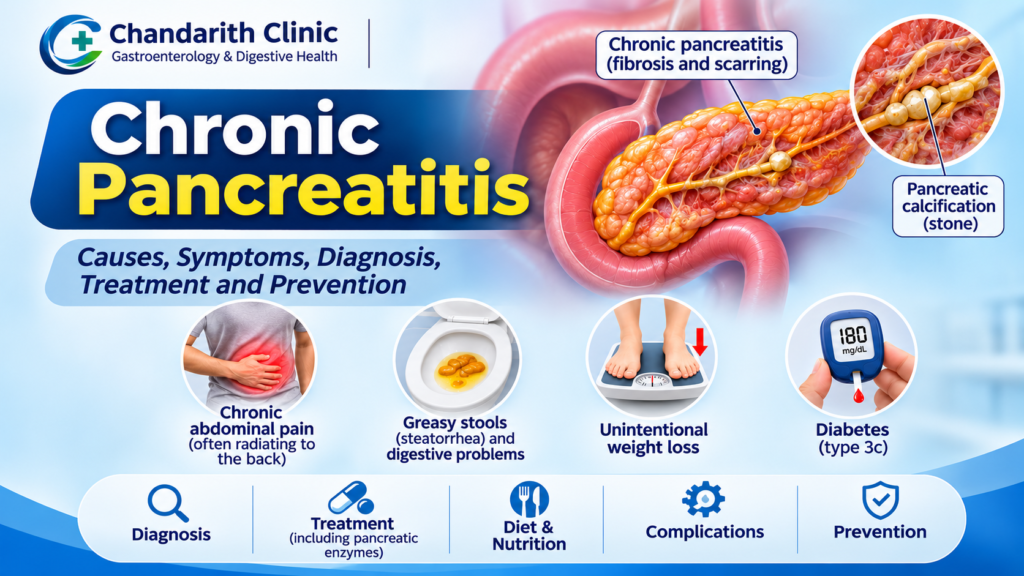
Chronic pancreatitis is a progressive inflammatory disease of the pancreas characterized by persistent inflammation, irreversible structural damage, fibrosis, and gradual loss of pancreatic function.
The pancreas is an important organ located behind the stomach. It performs two essential functions:
-
Exocrine function: Produces digestive enzymes, including lipase, amylase, and proteases, which help break down fats, carbohydrates, and proteins.
-
Endocrine function: Produces hormones such as insulin and glucagon, which regulate blood glucose levels.
As chronic pancreatitis progresses, damage to pancreatic tissue can lead to two major problems:
-
Exocrine pancreatic insufficiency (EPI): Reduced production of digestive enzymes, resulting in malabsorption, diarrhea, and weight loss.
-
Endocrine pancreatic insufficiency: Impaired insulin production, potentially leading to pancreatogenic diabetes mellitus (type 3c diabetes).
Chronic pancreatitis can significantly affect quality of life and may cause serious complications if not diagnosed and treated appropriately.
1. What Causes Chronic Pancreatitis?
Chronic pancreatitis develops through repeated or persistent pancreatic injury, resulting in inflammation and progressive fibrosis.
Several risk factors and underlying conditions are associated with this disease.
Major causes and risk factors
1. Alcohol consumption
Long-term heavy alcohol consumption is an important risk factor. Alcohol can cause pancreatic inflammation, oxidative stress, and damage to pancreatic cells.
2. Smoking
Cigarette smoking is an independent risk factor for chronic pancreatitis. It can accelerate disease progression and increase the risk of pancreatic cancer.
3. Genetic factors
Inherited genetic mutations can increase susceptibility to chronic pancreatitis, including:
-
PRSS1
-
SPINK1
-
CFTR
-
CTRC
Genetic causes should be considered in patients with early-onset disease, recurrent acute pancreatitis, or a family history of pancreatic disease.
4. Recurrent acute pancreatitis
Repeated episodes of acute pancreatitis can lead to progressive pancreatic damage and eventually chronic pancreatitis.
5. Autoimmune pancreatitis
Autoimmune pancreatitis is an immune-mediated condition that can cause pancreatic inflammation and fibrosis. It includes:
-
Type 1 autoimmune pancreatitis, commonly associated with IgG4-related disease.
-
Type 2 autoimmune pancreatitis, which is not typically associated with elevated serum IgG4.
6. Obstructive causes
Pancreatic duct obstruction can result from:
-
Pancreatic duct stones.
-
Pancreatic duct strictures.
-
Congenital duct abnormalities.
-
Pancreatic tumors.
7. Metabolic causes
Hypercalcemia and severe hypertriglyceridemia may contribute to recurrent acute pancreatitis and subsequent chronic pancreatic injury.
8. Idiopathic chronic pancreatitis
In some patients, no identifiable cause is found despite appropriate investigation.
2. Symptoms of Chronic Pancreatitis
Symptoms may develop gradually over several years. Some patients have recurrent abdominal pain, while others initially present with digestive problems or unexplained weight loss.
Common symptoms
1. Chronic abdominal pain
-
Persistent or recurrent pain in the upper abdomen (epigastric region).
-
Pain may radiate to the back.
-
Pain can worsen after eating.
-
Pain may improve when leaning forward.
-
Severe episodes may interfere with sleep and daily activities.
2. Digestive problems
As pancreatic enzyme production decreases, patients may develop:
-
Steatorrhea (bulky, greasy, foul-smelling stools).
-
Chronic diarrhea.
-
Abdominal bloating.
-
Excessive gas.
-
Difficulty digesting fatty foods.
3. Unintentional weight loss
Patients may lose weight because of poor digestion, malabsorption, reduced food intake, and chronic pain.
4. Symptoms of diabetes
Progressive pancreatic damage can reduce insulin production, causing:
-
Increased thirst.
-
Frequent urination.
-
Increased hunger.
-
Unexplained weight loss.
-
Fatigue and blurred vision.
When should you see a doctor?
Seek medical evaluation if you experience recurrent upper abdominal pain, unexplained weight loss, persistent diarrhea, greasy stools, or new-onset diabetes, particularly when accompanied by a history of alcohol consumption, smoking, or recurrent acute pancreatitis.
Sudden severe abdominal pain, persistent vomiting, fever, jaundice, fainting, or gastrointestinal bleeding requires urgent medical assessment.
3. Complications of Chronic Pancreatitis
Chronic pancreatitis can cause several important complications.
| Complication | Clinical features |
|---|---|
| Exocrine pancreatic insufficiency | Steatorrhea, diarrhea, malnutrition |
| Type 3c diabetes mellitus | Hyperglycemia due to pancreatic damage |
| Pancreatic pseudocyst | Abdominal pain, infection, compression |
| Pancreatic duct stones | Duct obstruction and recurrent pain |
| Biliary obstruction | Jaundice and cholestasis |
| Duodenal obstruction | Nausea, vomiting, early satiety |
| Splenic vein thrombosis | Gastric varices and gastrointestinal bleeding |
| Osteoporosis | Increased fracture risk |
| Pancreatic cancer | Increased risk, particularly in selected high-risk groups |
Exocrine pancreatic insufficiency
Exocrine pancreatic insufficiency is one of the most important consequences of chronic pancreatitis.
When the pancreas cannot produce sufficient digestive enzymes, nutrients are not properly absorbed. Fat malabsorption is particularly common.
Possible consequences include:
-
Deficiency of vitamins A, D, E, and K.
-
Protein-calorie malnutrition.
-
Low body weight.
-
Reduced muscle mass.
-
Osteopenia and osteoporosis.
Type 3c diabetes mellitus
Type 3c diabetes, also called pancreatogenic diabetes, occurs when pancreatic damage affects insulin-producing beta cells and other endocrine cells.
Unlike typical type 2 diabetes, patients may have impaired glucagon secretion as well, increasing the risk of hypoglycemia, especially during insulin treatment.
Pancreatic cancer
Chronic pancreatitis is associated with an increased risk of pancreatic cancer. However, most patients with chronic pancreatitis do not develop pancreatic cancer.
New or worsening pain, unexplained weight loss, progressive jaundice, or a change in clinical status should prompt evaluation for malignancy.
Routine pancreatic cancer screening is not recommended for every patient with chronic pancreatitis. Surveillance is generally reserved for selected hereditary high-risk populations and should follow specialist recommendations.
4. How Is Chronic Pancreatitis Diagnosed?
Diagnosis is based on clinical history, risk factors, pancreatic imaging, and pancreatic function assessment.
There is no single test that identifies every case, particularly during early disease.
A. Blood tests
Blood tests help identify complications, nutritional deficiencies, and possible underlying causes.
Recommended investigations may include:
| Investigation | Clinical purpose |
|---|---|
| Serum lipase and amylase | May be normal or mildly elevated in established disease |
| Fasting blood glucose | Assess diabetes |
| HbA1c | Assess glycemic control |
| Liver function tests | Identify biliary obstruction |
| Calcium | Identify hypercalcemia |
| Triglycerides | Identify metabolic risk |
| Serum IgG4 | Evaluate suspected type 1 autoimmune pancreatitis |
| Albumin | Assess nutritional status |
| Vitamin D, A, E, K | Evaluate nutritional deficiencies |
Important: Normal serum amylase and lipase do not exclude chronic pancreatitis. In advanced disease, pancreatic enzyme levels may be normal because of substantial loss of functional pancreatic tissue.
B. Imaging studies
1. Abdominal ultrasound
Useful for identifying:
-
Pancreatic calcifications.
-
Pancreatic duct dilatation.
-
Gallstones.
-
Biliary duct dilatation.
-
Other abdominal abnormalities.
However, ultrasound may not adequately visualize the pancreas in some patients.
2. Contrast-enhanced CT scan
CT is useful for detecting:
-
Pancreatic calcifications.
-
Pancreatic atrophy.
-
Main pancreatic duct dilatation.
-
Pancreatic pseudocysts.
-
Complications and suspected malignancy.
3. Magnetic resonance imaging and MRCP
MRI/MRCP provides detailed assessment of pancreatic duct anatomy and pancreatic parenchyma.
It is particularly useful when CT findings are inconclusive or when pancreatic duct abnormalities need further evaluation.
Secretin-enhanced MRCP may provide additional information in selected patients.
4. Endoscopic ultrasound (EUS)
EUS is particularly helpful when early chronic pancreatitis is suspected but CT or MRI findings are inconclusive.
It can identify subtle parenchymal and ductal abnormalities and help evaluate suspicious pancreatic lesions.
C. Pancreatic function tests
Fecal elastase-1
Fecal elastase is a commonly used non-invasive test for evaluating exocrine pancreatic insufficiency.
Interpretation:
| Fecal elastase-1 | Interpretation |
|---|---|
| Greater than 200 µg/g | Usually normal |
| 100–200 µg/g | Suggests mild to moderate insufficiency |
| Less than 100 µg/g | Strongly suggests severe insufficiency |
The sample should preferably be formed or semi-formed stool. Watery diarrhea can dilute fecal elastase and produce falsely low results.
A normal fecal elastase does not exclude early chronic pancreatitis.
5. Treatment of Chronic Pancreatitis
There is currently no treatment that can completely reverse established pancreatic fibrosis. Management focuses on controlling pain, treating the underlying cause, maintaining nutrition, replacing deficient pancreatic enzymes, and managing complications.
Treatment should be individualized according to disease severity and pancreatic function.
A. Lifestyle modification
1. Stop alcohol consumption
Complete alcohol abstinence is recommended, particularly in alcohol-associated chronic pancreatitis.
2. Stop smoking
Smoking cessation is essential because smoking accelerates pancreatic damage and increases the risk of pancreatic cancer.
3. Healthy nutrition
Patients should:
-
Eat balanced meals.
-
Consume adequate protein and calories.
-
Avoid unnecessary dietary restrictions.
-
Eat smaller, more frequent meals if large meals worsen symptoms.
-
Avoid very-low-fat diets unless specifically indicated for another medical reason.
B. Pain management
Chronic abdominal pain is one of the most challenging aspects of chronic pancreatitis.
Treatment should follow a stepwise, individualized approach.
1. Initial management
-
Paracetamol (acetaminophen), when appropriate.
-
Non-steroidal anti-inflammatory drugs (NSAIDs), when renal, gastrointestinal, and cardiovascular risks permit.
-
Avoid excessive or prolonged analgesic use without reassessment.
2. Neuropathic pain medications
Selected patients may benefit from:
-
Pregabalin.
-
Gabapentin.
-
Tricyclic antidepressants, such as amitriptyline.
These medicines may be considered when neuropathic mechanisms contribute to persistent pain.
3. Opioids
Opioids should generally be reserved for carefully selected patients with severe refractory pain, with close monitoring for dependence, tolerance, constipation, and other adverse effects.
4. Celiac plexus block
Endoscopic ultrasound-guided celiac plexus block may provide temporary pain relief in selected patients. However, the response is variable, and it is not a definitive treatment.
C. Pancreatic enzyme replacement therapy (PERT)
Pancreatic enzyme replacement therapy is indicated for patients with confirmed or strongly suspected exocrine pancreatic insufficiency.
Common preparations contain:
-
Lipase.
-
Amylase.
-
Protease.
Examples include pancrelipase and pancreatin preparations.
Recommended starting dose for adults:
| Meal | Starting lipase dose |
|---|---|
| Main meal | 40,000–50,000 units |
| Snack | 20,000–25,000 units |
Administration:
-
Take enzymes with meals and snacks.
-
Divide the dose throughout the meal where practical.
-
Swallow capsules according to the manufacturer’s instructions.
-
Do not crush or chew enteric-coated microspheres.
If symptoms persist, assess adherence, timing, dose, dietary intake, and alternative causes of diarrhea before escalating treatment. A proton pump inhibitor may be considered in selected patients with an inadequate response.
Important clinical point: Pancreatic enzyme replacement improves digestion, nutrient absorption, and nutritional status. It should not be prescribed solely as a treatment for chronic pancreatic pain.
D. Management of diabetes mellitus
Patients with chronic pancreatitis may develop type 3c diabetes.
Management includes:
-
Regular blood glucose monitoring.
-
HbA1c assessment.
-
Nutritional counseling.
-
Screening for hypoglycemia.
-
Individualized glucose-lowering therapy.
Insulin is often required in patients with significant insulin deficiency. Treatment should be individualized because malnutrition and impaired glucagon responses can increase hypoglycemia risk.
E. Endoscopic treatment
Endoscopic intervention may be appropriate for selected patients with pancreatic duct obstruction, stones, strictures, or symptomatic pseudocysts.
Common procedures include:
1. ERCP (Endoscopic Retrograde Cholangiopancreatography)
Used in selected patients to:
-
Remove pancreatic duct stones.
-
Dilate pancreatic duct strictures.
-
Insert pancreatic duct stents.
2. Extracorporeal shock wave lithotripsy (ESWL)
ESWL can break large pancreatic duct stones into smaller fragments to facilitate endoscopic removal.
3. EUS-guided pseudocyst drainage
This procedure is useful for symptomatic pancreatic pseudocysts, particularly when they cause pain, gastric outlet obstruction, or infection.
F. Surgical treatment
Surgery may be considered for patients with persistent severe pain, obstructed pancreatic ducts, complications, or suspected malignancy.
Surgical options include:
-
Pancreaticojejunostomy (Puestow procedure).
-
Frey procedure.
-
Beger procedure.
-
Pancreatic resection in selected cases.
Important update: The 2024 American Society for Gastrointestinal Endoscopy (ASGE) guideline recommends surgical evaluation before endoscopic treatment in suitable patients with painful chronic pancreatitis and an obstructed main pancreatic duct. Endoscopic management may be preferred when surgery is contraindicated or a less-invasive approach is selected after shared decision-making.
asge.org+1
6. Nutrition and Dietary Recommendations
Nutrition plays an important role in the long-term management of chronic pancreatitis.
Patients with pancreatic insufficiency may develop malnutrition even when their food intake appears adequate.
Recommended foods
-
Lean protein: Fish, chicken, eggs, tofu, and legumes.
-
Vegetables: Broccoli, carrots, spinach, and other vegetables.
-
Fruits: Bananas, apples, papaya, and oranges.
-
Whole grains: Oats, brown rice, and whole-grain bread.
-
Healthy fats: Olive oil, avocado, and nuts, according to individual tolerance.
-
Adequate fluids: Maintain appropriate hydration.
Foods and substances to avoid or limit
-
Alcohol: Avoid completely.
-
Smoking: Stop smoking.
-
Very high-fat meals if they worsen symptoms.
-
Excessive processed foods.
-
Unnecessary dietary supplements without medical advice.
Clinical note: Routine severe fat restriction is not recommended for patients receiving adequate pancreatic enzyme replacement. Adequate calorie and fat intake is important to prevent malnutrition.
7. Monitoring and Follow-up
Chronic pancreatitis requires long-term follow-up to identify progressive pancreatic dysfunction and complications.
Recommended monitoring includes:
| Assessment | Suggested monitoring |
|---|---|
| Abdominal pain | Every clinical visit |
| Body weight and BMI | Every 3–6 months |
| Fasting glucose and HbA1c | At least annually, more frequently if diabetic |
| Nutritional status | Periodically |
| Fat-soluble vitamins | Periodically, especially with EPI |
| Bone mineral density (DEXA) | At baseline and periodically according to risk |
| Fecal elastase | When EPI is suspected or reassessment is clinically indicated |
| Pancreatic imaging | When symptoms change or complications are suspected |
Patients with established EPI require monitoring of treatment response, nutritional status, weight, and vitamin deficiencies.
8. Can Chronic Pancreatitis Be Prevented?
Although not all cases are preventable, several measures can reduce the risk of developing chronic pancreatitis or slow disease progression.
-
Avoid alcohol consumption.
-
Stop smoking.
-
Treat hypertriglyceridemia.
-
Investigate and manage hypercalcemia.
-
Identify and treat recurrent acute pancreatitis.
-
Seek medical evaluation for recurrent abdominal pain.
-
Follow appropriate medical advice for hereditary or autoimmune pancreatic disorders.
Early diagnosis and appropriate treatment can help reduce complications and improve quality of life.
Frequently Asked Questions (FAQ)
1. Is chronic pancreatitis a serious disease?
Yes. Chronic pancreatitis is a progressive disease that can cause permanent pancreatic damage, chronic abdominal pain, malnutrition, diabetes, and other complications.
2. Can chronic pancreatitis be cured?
Established chronic pancreatitis cannot usually be reversed because pancreatic fibrosis and structural damage are permanent. However, appropriate treatment can control symptoms, improve nutrition, and reduce complications.
3. What is the difference between acute and chronic pancreatitis?
| Feature | Acute pancreatitis | Chronic pancreatitis |
|---|---|---|
| Disease course | Sudden onset | Progressive or persistent |
| Inflammation | Acute | Chronic |
| Pancreatic damage | May be reversible | Usually irreversible |
| Pain | Often severe and acute | Recurrent or persistent |
| Pancreatic function | May recover | May progressively decline |
| Calcification | Uncommon | Common in advanced disease |
| Diabetes | Possible | Increased risk |
4. Can chronic pancreatitis cause diabetes?
Yes. Progressive destruction of pancreatic tissue can impair insulin production and cause type 3c diabetes mellitus.
5. Can chronic pancreatitis cause weight loss?
Yes. Reduced digestive enzyme production leads to malabsorption, nutritional deficiencies, and unintended weight loss.
6. What is the best test for chronic pancreatitis?
CT and MRI/MRCP are important imaging tests. EUS is useful when early disease is suspected and conventional imaging is inconclusive.
There is no single universally accepted gold-standard test for all stages of chronic pancreatitis.
7. Can pancreatic enzymes treat chronic pancreatitis?
Pancreatic enzyme replacement therapy helps patients with exocrine pancreatic insufficiency digest and absorb nutrients. It improves nutritional status but is not recommended solely to relieve pancreatic pain.
8. Can patients with chronic pancreatitis eat fatty foods?
Patients with adequate enzyme replacement can generally consume a balanced diet containing appropriate amounts of fat. Severe fat restriction may worsen malnutrition.
9. Does chronic pancreatitis increase the risk of pancreatic cancer?
Yes. Chronic pancreatitis is associated with increased pancreatic cancer risk, particularly in certain hereditary forms. However, most patients will not develop pancreatic cancer.
10. How long can a patient live with chronic pancreatitis?
Life expectancy varies depending on the underlying cause, severity, nutritional status, complications, and lifestyle factors. Alcohol abstinence, smoking cessation, adequate nutrition, and appropriate medical care can improve outcomes.
11. Is chronic pancreatitis associated with osteoporosis?
Yes. Malabsorption of vitamin D and calcium, chronic inflammation, and malnutrition can contribute to reduced bone density. Bone health assessment is important.
12. When is surgery needed for chronic pancreatitis?
Surgery may be considered for persistent severe pain, pancreatic duct obstruction, complications, or suspected malignancy. Patients should be assessed by a multidisciplinary pancreatic team.
Conclusion
Chronic pancreatitis is a progressive disease characterized by irreversible pancreatic inflammation, fibrosis, and loss of pancreatic function.
The most important aspects of management are early diagnosis, alcohol abstinence, smoking cessation, appropriate pain control, pancreatic enzyme replacement when indicated, nutritional support, and treatment of diabetes and other complications.
A multidisciplinary approach involving gastroenterologists, pancreatic surgeons, endocrinologists, nutritionists, and pain specialists can improve patient outcomes and quality of life.
If you experience recurrent upper abdominal pain, unexplained weight loss, or persistent digestive problems, consult a healthcare professional for appropriate evaluation.
References and Clinical Guidelines
The following publications and guidelines provide the scientific basis for this article.
1. Gardner TB, Adler DG, Forsmark CE, et al. ACG Clinical Guideline: Chronic Pancreatitis. American Journal of Gastroenterology. 2020;115(3):322–339. doi:10.14309/ajg.0000000000000535.
2. Sheth SG, Machicado JD, Chalhoub JM, et al. American Society for Gastrointestinal Endoscopy guideline on the role of endoscopy in the management of chronic pancreatitis: summary and recommendations. Gastrointestinal Endoscopy. 2024;100(4):584–594. doi:10.1016/j.gie.2024.05.016.
asge.org+1
3. Dominguez-Muñoz JE, et al. European guidelines for the diagnosis and treatment of pancreatic exocrine insufficiency: UEG, EPC, EDS, ESPEN, ESPGHAN, ESDO, and ESPCG evidence-based recommendations. United European Gastroenterology Journal. 2025;13(1):125–172. doi:10.1002/ueg2.12674.
PubMed
4. Whitcomb DC, Buchner AM, Forsmark CE. AGA Clinical Practice Update on the Epidemiology, Evaluation, and Management of Exocrine Pancreatic Insufficiency: Expert Review. Gastroenterology. 2023. Read AGA clinical guidance.
5. Sezgin O, Oğuz D, Soytürk M, et al. Clinical practice update on the evaluation, diagnosis, and management of pancreatic exocrine insufficiency: Expert review. Turkish Journal of Gastroenterology. 2026;37(5):534–554.
PubMed Central (PMC)
6. National Institute for Health and Care Excellence (NICE). Pancreatitis: Diagnosis and Management. Guideline NG104. Read NICE guideline.
7. American Society for Gastrointestinal Endoscopy. ASGE guideline on endoscopy in chronic pancreatitis. 2024. Read ASGE guideline summary.