
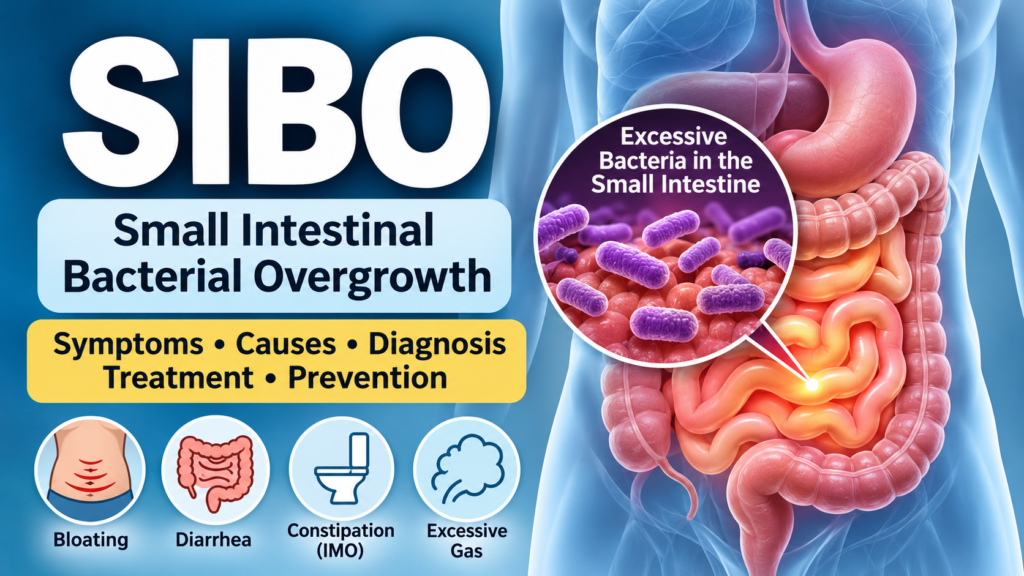
Small Intestinal Bacterial Overgrowth (SIBO) is a gastrointestinal condition characterized by an excessive number or abnormal composition of microorganisms in the small intestine. It can interfere with normal digestion and nutrient absorption, leading to abdominal bloating, excessive gas, abdominal discomfort, diarrhea, and sometimes nutritional deficiencies.
SIBO is increasingly recognized in patients with gastrointestinal motility disorders, previous abdominal surgery, and certain chronic diseases. However, its symptoms overlap with irritable bowel syndrome (IBS) and other digestive disorders, making accurate diagnosis important.
This article explains the causes, symptoms, diagnosis, treatment options, and prevention strategies based on current clinical evidence and professional recommendations.
1. What Is Small Intestinal Bacterial Overgrowth (SIBO)?
The small intestine normally contains fewer bacteria than the large intestine. Its relatively low bacterial population is maintained by several protective mechanisms:
- Normal intestinal motility and the migrating motor complex (MMC).
- Gastric acid secretion.
- Bile and pancreatic digestive secretions.
- An intact ileocecal valve.
- Normal intestinal immune function.
When these protective mechanisms are impaired, bacteria can accumulate excessively in the small intestine.
This may result in abnormal fermentation of carbohydrates, gas production, intestinal inflammation, impaired nutrient absorption, and gastrointestinal symptoms.
SIBO is not simply the presence of bacteria in the intestine. It is a clinical condition in which microbial changes are associated with symptoms and, in some patients, malabsorption.
2. Causes and Risk Factors of SIBO
Several conditions can interfere with normal intestinal bacterial control and increase the risk of SIBO.
A. Gastrointestinal motility disorders
Reduced intestinal motility allows bacteria to remain in the small intestine for longer periods.
Associated conditions include:
- Diabetic autonomic neuropathy.
- Systemic sclerosis (scleroderma).
- Intestinal pseudo-obstruction.
- Parkinson’s disease.
- Other neurological or neuromuscular disorders affecting intestinal motility.
B. Previous gastrointestinal surgery
Anatomical changes can promote bacterial accumulation.
Examples include:
- Gastric bypass surgery.
- Small bowel resection.
- Blind-loop syndrome.
- Intestinal bypass procedures.
- Surgical alterations of the ileocecal valve.
C. Reduced gastric acid secretion
Gastric acid helps prevent excessive bacterial survival in the upper gastrointestinal tract.
Potential contributing factors include:
- Long-term proton pump inhibitor (PPI) use.
- Atrophic gastritis.
- Previous gastric surgery.
PPI exposure may be associated with SIBO in some studies, but it does not establish the diagnosis. Patients should not discontinue necessary acid-suppressive therapy without medical advice.
D. Chronic gastrointestinal diseases
SIBO may occur in association with:
- Crohn’s disease.
- Celiac disease.
- Chronic pancreatitis.
- Cirrhosis.
- Irritable bowel syndrome (IBS).
- Diverticulosis of the small intestine.
E. Other risk factors
- Advanced age.
- Chronic intestinal dysmotility.
- Structural abnormalities of the gastrointestinal tract.
- Immunodeficiency in selected patients.
3. Symptoms and Clinical Manifestations
Symptoms vary depending on the degree of bacterial overgrowth, the underlying disease, and the presence of nutritional malabsorption.
Common symptoms include:
Gastrointestinal symptoms
- Abdominal bloating, particularly after meals.
- Excessive flatulence.
- Abdominal distension.
- Abdominal pain or discomfort.
- Diarrhea.
- Altered bowel habits.
- Excessive belching.
- Nausea.
- Sometimes constipation, particularly in methane-associated overgrowth.
Symptoms associated with malabsorption
In more severe or prolonged cases, patients may develop:
- Unexplained weight loss.
- Fatigue and weakness.
- Vitamin B12 deficiency.
- Iron deficiency.
- Fat-soluble vitamin deficiencies (A, D, E, and K).
- Steatorrhea (fatty stools).
- Protein-calorie malnutrition in advanced cases.
The presence of nutritional deficiencies should prompt evaluation for other causes of malabsorption as well.
4. Understanding Hydrogen SIBO and Methane Overgrowth (IMO)
An important distinction in clinical practice is the difference between SIBO and intestinal methanogen overgrowth (IMO).
Hydrogen-predominant SIBO
Certain intestinal bacteria ferment carbohydrates and produce hydrogen gas.
Clinical manifestations commonly include:
- Abdominal bloating.
- Excessive flatulence.
- Abdominal discomfort.
- Diarrhea or loose stools.
Methane-predominant overgrowth (IMO)
Methane is produced by methanogenic archaea rather than bacteria.
These organisms may be present in both the small and large intestines. Therefore, methane-positive breath testing is referred to as intestinal methanogen overgrowth (IMO), not SIBO.
IMO is particularly associated with:
- Chronic constipation.
- Slow intestinal transit.
- Abdominal bloating.
- Excessive gas.
Hydrogen and methane should ideally be measured together when evaluating suspected SIBO or IMO.
5. Diagnosis of SIBO
Diagnosis should be based on clinical symptoms, predisposing conditions, and appropriate diagnostic investigations.
A. Hydrogen and methane breath testing
Breath testing is the most commonly used non-invasive diagnostic method.
It measures hydrogen and methane concentrations in exhaled breath after the patient ingests a carbohydrate substrate.
The two commonly used substrates are:
1. Glucose breath test
Glucose is absorbed in the proximal small intestine.
Advantages:
- Generally more specific than lactulose testing in some settings.
- Less affected by rapid orocecal transit than lactulose.
Limitations:
- May miss bacterial overgrowth in the distal small intestine because glucose is absorbed before reaching it.
2. Lactulose breath test
Lactulose is not absorbed in the small intestine and passes through the gastrointestinal tract.
Advantages:
- Can detect fermentation throughout a greater length of the intestine.
Limitations:
- Rapid intestinal transit can cause early colonic fermentation and false-positive results.
The choice of substrate should consider the clinical context and local laboratory protocols.
B. Interpretation of breath test results
According to commonly used North American Consensus and ACG criteria:
| Measurement | Positive result |
|---|---|
| Hydrogen | Increase of ≥20 ppm above baseline within 90 minutes |
| Methane | ≥10 ppm at any time during the test |
These criteria are widely used, but breath testing has important limitations. Results should be interpreted in the context of pretest probability, preparation, intestinal transit, and symptoms.
A positive result alone does not establish that all symptoms are caused by microbial overgrowth.
C. Preparation before breath testing
Proper preparation helps reduce false-positive and false-negative results.
General recommendations include:
- Avoid antibiotics for approximately four weeks before testing, when clinically safe.
- Avoid laxatives and prokinetic agents for approximately one week if tolerated and according to laboratory instructions.
- Follow the prescribed low-fermentable-food preparation diet on the day before testing.
- Fast for approximately 8–12 hours before the test.
- Avoid smoking and strenuous exercise during testing.
- Follow the laboratory’s instructions regarding oral hygiene and medication use.
Patients should not stop essential medications without discussing this with their healthcare professional.
D. Small intestinal aspirate and culture
Small intestinal fluid can be collected during upper gastrointestinal endoscopy and sent for quantitative bacterial culture.
This is an invasive method and is not routinely required.
Limitations include:
- Invasiveness.
- Risk of contamination during sampling.
- Difficulty sampling the entire small intestine.
- Lack of universal standardization of culture methods and thresholds.
A bacterial count of at least 10³ CFU/mL in small intestinal aspirate is commonly used in contemporary clinical definitions, although older studies have used higher thresholds.
E. Additional laboratory investigations
In patients with suspected malabsorption, consider:
- Complete blood count (CBC).
- Vitamin B12.
- Folate.
- Ferritin and iron studies.
- Albumin and total protein.
- Vitamin D when clinically indicated.
- Liver function tests.
- Other nutritional assessments according to clinical presentation.
Additional investigations may be necessary to identify underlying diseases, including celiac disease, pancreatic insufficiency, and inflammatory bowel disease.
6. Differential Diagnosis
Because symptoms are nonspecific, other gastrointestinal conditions should be considered.
Important differential diagnoses include:
- Irritable bowel syndrome (IBS).
- Functional abdominal bloating and distension.
- Lactose intolerance.
- Fructose malabsorption.
- Celiac disease.
- Inflammatory bowel disease.
- Chronic pancreatitis and pancreatic exocrine insufficiency.
- Gastroparesis.
- Functional dyspepsia.
- Colorectal or other gastrointestinal malignancy when clinically suspected.
Unexplained weight loss, gastrointestinal bleeding, iron-deficiency anemia, persistent vomiting, progressive symptoms, or a family history of gastrointestinal malignancy warrant further evaluation.
7. Treatment and Management of SIBO
The main objectives of treatment are:
- Reduce excessive microbial overgrowth.
- Improve gastrointestinal symptoms.
- Correct nutritional deficiencies.
- Identify and treat underlying causes.
- Prevent recurrence.
Treatment should be individualized rather than based on symptoms alone.
A. Antibiotic therapy
Antibiotics are commonly used for symptomatic patients with an adequately supported diagnosis.
1. Rifaximin
Rifaximin is a minimally absorbed antibiotic and one of the best-studied treatments for SIBO.
A commonly used adult regimen is:
- Rifaximin 550 mg orally three times daily for 14 days.
The exact regimen should follow local prescribing guidance, availability, and patient-specific considerations.
2. Alternative antibiotics
Other antibiotics have been used in selected patients, including:
- Metronidazole.
- Ciprofloxacin.
- Amoxicillin-clavulanate.
- Doxycycline.
- Norfloxacin.
- Trimethoprim-sulfamethoxazole.
Selection depends on clinical circumstances, allergies, drug interactions, local resistance patterns, and previous antibiotic exposure.
Evidence supporting alternative regimens is generally less robust than for rifaximin.
3. Treatment of methane-positive IMO
Methane-associated overgrowth is particularly relevant in patients with constipation.
Rifaximin combined with neomycin has been studied in methane-positive patients.
One commonly discussed regimen is:
- Rifaximin 550 mg orally three times daily.
- Neomycin 500 mg orally twice daily.
- Duration: 14 days.
However, evidence is limited, and this combination is not appropriate for every patient.
Oral neomycin has potentially serious adverse effects, including nephrotoxicity and ototoxicity. It requires careful patient selection and assessment of renal function, hearing risk, and contraindications.
Specialist consultation is advisable.
B. Dietary management
Dietary modifications may help reduce symptoms, but they should not be considered a proven method of eradicating SIBO.
Low-FODMAP diet
A low-FODMAP diet reduces fermentable carbohydrates that may contribute to gas production and bloating.
Potentially restricted foods include:
- Certain onions and garlic.
- Some wheat-based products.
- Certain legumes.
- Some fruits containing excess fructose.
- Milk containing lactose in lactose-intolerant individuals.
The diet should generally be implemented as a short-term elimination phase followed by systematic reintroduction and personalization, preferably with a qualified dietitian.
Long-term restrictive diets can cause nutritional inadequacy and should be avoided.
Other dietary recommendations
- Eat balanced meals.
- Identify individual food triggers.
- Avoid excessive intake of highly fermentable foods if they worsen symptoms.
- Maintain adequate hydration.
- Ensure sufficient protein and micronutrient intake.
There is insufficient high-quality evidence to recommend a specific SIBO eradication diet.
C. Correction of nutritional deficiencies
Patients with malabsorption may require targeted replacement.
Examples include:
- Vitamin B12 supplementation for documented deficiency.
- Iron replacement for iron deficiency.
- Vitamin D supplementation when deficient.
- Fat-soluble vitamin replacement when indicated.
- Nutritional support in patients with significant weight loss.
Treatment should be guided by laboratory findings and clinical assessment.
D. Address underlying conditions
Successful long-term management requires identifying and correcting predisposing factors whenever possible.
Examples include:
- Improving glycemic control in diabetic patients.
- Managing systemic sclerosis and associated dysmotility.
- Treating underlying celiac disease.
- Evaluating and managing structural intestinal abnormalities.
- Reviewing medications that may affect gastrointestinal motility.
Prokinetic therapy may be considered in selected patients with documented or suspected dysmotility, but evidence for preventing SIBO recurrence remains limited.
E. Probiotics
Evidence supporting probiotics in SIBO remains inconsistent.
Some studies suggest possible symptom improvement, but there is insufficient high-quality evidence to recommend probiotics routinely as an established eradication treatment.
They should not replace appropriate investigation and treatment.
8. Recurrence of SIBO
SIBO can recur after successful antibiotic treatment, particularly when the underlying predisposing condition remains untreated.
Factors associated with recurrence include:
- Persistent intestinal dysmotility.
- Diabetes with autonomic neuropathy.
- Previous gastrointestinal surgery.
- Structural intestinal abnormalities.
- Chronic systemic diseases.
Patients with recurrent symptoms should be reassessed rather than automatically receiving repeated antibiotic courses.
The clinician should reconsider the diagnosis, evaluate alternative causes, and determine whether repeat testing or targeted treatment is appropriate.
9. Complications of Untreated SIBO
Mild cases may cause chronic gastrointestinal discomfort, while severe or prolonged cases can result in clinically important complications.
Potential complications include:
- Vitamin B12 deficiency.
- Fat-soluble vitamin deficiencies.
- Iron deficiency and anemia.
- Weight loss.
- Malnutrition.
- Steatorrhea.
- Metabolic bone disease in patients with prolonged nutritional deficiencies.
Early identification of underlying disease and nutritional complications is important.
10. Prevention of SIBO
There is no guaranteed method of preventing SIBO, but several measures may reduce recurrence in susceptible patients.
- Maintain good control of diabetes.
- Treat underlying gastrointestinal motility disorders.
- Review medications that may contribute to impaired gastrointestinal function.
- Maintain a balanced and nutritionally adequate diet.
- Avoid unnecessary antibiotic use.
- Investigate persistent gastrointestinal symptoms rather than repeatedly treating them empirically.
11. When Should You See a Doctor?
Consult a healthcare professional if you experience:
- Persistent abdominal bloating.
- Recurrent diarrhea or constipation.
- Chronic abdominal discomfort.
- Unexplained weight loss.
- Persistent fatigue.
- Symptoms suggesting vitamin or nutritional deficiencies.
Seek urgent medical attention for severe abdominal pain, gastrointestinal bleeding, persistent vomiting, or signs of significant dehydration.
12. Frequently Asked Questions (FAQ)
1. What is the main cause of SIBO?
SIBO commonly develops when normal intestinal protective mechanisms are impaired, particularly intestinal motility. Diabetes, systemic sclerosis, previous gastrointestinal surgery, and structural abnormalities are important risk factors.
2. What are the most common symptoms of SIBO?
The most common symptoms are abdominal bloating, excessive gas, abdominal discomfort, diarrhea, and altered bowel habits. Constipation is particularly associated with methane-producing organisms.
3. How is SIBO diagnosed?
Hydrogen and methane breath testing using glucose or lactulose is the most commonly used non-invasive diagnostic method. Small intestinal aspirate culture is an alternative in selected cases.
4. What is the difference between SIBO and IMO?
SIBO refers to excessive bacterial growth in the small intestine. IMO refers to an increased presence of methane-producing archaea, which may occur in both the small and large intestines.
5. Can SIBO cause constipation?
Methane-associated intestinal methanogen overgrowth is associated with constipation and slower intestinal transit.
6. What is the best antibiotic for SIBO?
Rifaximin is one of the best-studied antibiotics for SIBO because it is minimally absorbed. Treatment selection should depend on the clinical presentation and diagnostic findings.
7. How long does SIBO treatment take?
A commonly used rifaximin regimen lasts 14 days. Treatment duration and antibiotic choice vary depending on the patient, diagnosis, and local clinical guidance.
8. Can SIBO come back after treatment?
Yes. Recurrence is common, especially when the underlying cause, such as intestinal dysmotility or structural abnormalities, persists.
9. Does a low-FODMAP diet cure SIBO?
No. A low-FODMAP diet may improve bloating and other gastrointestinal symptoms, but it has not been established as a definitive treatment for bacterial overgrowth.
10. Are probiotics effective for SIBO?
Current evidence is inconsistent. Probiotics may help selected patients with symptoms, but they are not established as a reliable method of eradicating SIBO.
11. Is SIBO dangerous?
Many patients experience mild symptoms, but prolonged or severe disease can cause malabsorption, vitamin deficiencies, anemia, and malnutrition.
12. Can SIBO be confused with IBS?
Yes. Both conditions can cause bloating, abdominal pain, diarrhea, and altered bowel habits. Clinical evaluation is important because a positive breath test does not automatically establish SIBO as the cause of IBS symptoms.
Conclusion
Small Intestinal Bacterial Overgrowth is an important but sometimes challenging gastrointestinal condition. It is associated with abdominal bloating, excessive gas, abdominal discomfort, diarrhea, and nutritional deficiencies.
Hydrogen and methane breath testing can support diagnosis in appropriately selected patients, although test limitations must be considered.
Management involves individualized antibiotic therapy when indicated, correction of nutritional deficiencies, dietary symptom management, and treatment of underlying gastrointestinal disorders.
Because SIBO can recur, addressing the underlying cause is essential for long-term management.
Medical Disclaimer: This article is intended for educational purposes and does not replace professional medical advice, diagnosis, or treatment. Patients should consult a qualified healthcare professional before starting antibiotics or restrictive diets.
References and clinical guidelines
The following references should be included at the end of the website article.
1. Pimentel M, Saad RJ, Long MD, Rao SSC. ACG Clinical Guideline: Small Intestinal Bacterial Overgrowth. American Journal of Gastroenterology. 2020;115(2):165–178. doi: 10.14309/ajg.0000000000000501.
2. Quigley EMM, Murray JA, Pimentel M. AGA Clinical Practice Update on Small Intestinal Bacterial Overgrowth: Expert Review. Gastroenterology. 2020;159(4):1526–1532. AGA guideline.
3. Rezaie A, Buresi M, Lembo A, et al. Hydrogen and Methane-Based Breath Testing in Gastrointestinal Disorders: The North American Consensus. American Journal of Gastroenterology. 2017;112:775–784. doi: 10.1038/ajg.2017.46.
4. Kashyap P, Moayyedi P, Quigley EMM, et al. Critical Appraisal of the SIBO Hypothesis and Breath Testing: A Clinical Practice Update Endorsed by ESNM and ANMS. Neurogastroenterology & Motility. 2024;36(6):e14817. doi: 10.1111/nmo.14817.
5. Perets TT, Thurm T, Ben-Yehoyada M, et al. A National Consensus Guideline on the Performance and Interpretation of Hydrogen- and Methane-Based Breath Tests for Carbohydrate Malabsorption, SIBO, and IMO. Annals of Gastroenterology. 2026;39(4):383–389. doi: 10.20524/aog.2026.1082.
6. Choudhary AK, Hait A, Ganesan S, et al. SIBO and Intestinal Methanogen Overgrowth: Breath Test Performance, Treatment Response, and Relapse – A Systematic Review and Meta-analysis. The Egyptian Journal of Internal Medicine. 2026. Read the publication.